




Kenworth Shows off Electric Trucks
Customers and trucking reporters converged on the Paccar Innovation Center in Silicon Valley this week to experience Kenworth’s battery-electric and fuel-cell-electric commercial trucks.

Kenworth showed off its electric trucks at the Paccar Innovation Center.
Photo: Jack Roberts
Currently, Kenworth offers the Class 6/7 K270 and K370 medium-duty trucks in a battery-electric configuration, as well as its Class 8 T680E, which was just coming off of its public debut at the CES electronics show. Kenworth is also operating 10 fuel-cell-electric trucks developed with Toyota in California port operations.
The 26,000-square-foot center with its five-truck-bay lab “allows us to bring our products in and engage and show these tech start-up companies what it is we make,” said Stephan Olsen, general manager of the Paccar Innovation Center. He noted there are more than 100 automotive labs in the immediate vicinity. “We get out face to face, meet with these people in person and discover the technologies that bring value to our products,” he said.
California is where the biggest push to electrify transportation is coming from. By 2024, the state will require OEMS to ensure 9% of truck and 5% of tractor sales are of the zero-emission variety, with that jumping to 20% of trucks and 15% of tractors by 2027.
Kenworth is seeing other regions follow suit. But Joe Adams, Kenworth chief engineer, said it’s not just government pushing the move to electrify. Corporations are also seeing it as an opportunity to promote their environmental achievements.
“So many companies have come to us and said they’re interested in knowing what we do to reduce emissions and how we can help them with zero-emissions technology,” Adams told a group of trucking editors.
With electric trucks gaining real-world mileage, Adams said total cost of ownership benefits are becoming clearer. Fuel cost savings amount to about 50% versus diesel, with maintenance costs decreasing by about 30%.
“There’s just fewer moving parts,” Adams said of the maintenance savings. “It’s simplified over an internal combustion engine.”
But financial incentives are still required for fleets to justify the higher up-front acquisition costs. Adams said Kenworth has hired grant writers who work with customers – including in Canada – to learn what incentives are available, and how to access them.
More About Kenworth’s Electric Trucks
The T680E, with an e-axle design, has a 150-mile range and can produce about 536 hp/1,623 lb.-ft. torque. The motors are mounted on the drive axles and the batteries along the frame rails. The engine compartment is now occupied by electric accessories, pumps for the various coolants and lubricants required, and software.
The batteries add about 7,000 pounds of weight to the truck, so it’s a not a great fit for weight-sensitive truckers, Adams acknowledged.
The K270 E and K370 E provide a range of 100 to 200 miles, depending on configuration, making them ideal for urban P&D-type applications, the company says. They can be had with a 141 kWh or 282 kWh battery pack, which would dictate the range. These trucks put out 469 hp/2,540 lb.-ft. of torque and are available in three wheelbase configurations.
Kenworth also has a group that works with fleets to assess their site and determine the appropriate charging infrastructure requirements.
The fuel-cell-electric T680 is expected to get 300 to 500 miles of range and can fuel in 15 minutes, similar to diesel. Battery-electric trucks, by contrast, will take one to 16 hours to charge, depending on the capability of the charger.
Adams said a hydrogen fueling network will need to be established, but he believes private corporations will be eager to develop one, due to the fast fueling times associated with hydrogen and increased opportunity to profit based on greater throughput than electric charging.
Kenworth’s current hydrogen trucks produce 560 hp, house a 12-kW battery pack to aid in propulsion and take pressure off the fuel cells, and hold up to 60 kg of hydrogen.
James Menzies is editor of Today's Trucking, has been covering the Canadian trucking industry for more than 18 years and holds a CDL. This article is a version of one that appears on www.trucknews.com and is used with permission.
More Fuel Smarts

How GP Transco Builds Fuel Savings a Fraction at a Time
Aerodynamic specs, solar panels, and driver incentives help GP Transco turn small efficiency gains into savings it can reinvest in its people.
Read More →
Trucking’s Diesel Squeeze Isn’t Letting Up
With diesel topping $6 a gallon nationally, ATA's Bob Costello explains why fleets should prepare for continued pressure at the pump.
Read More →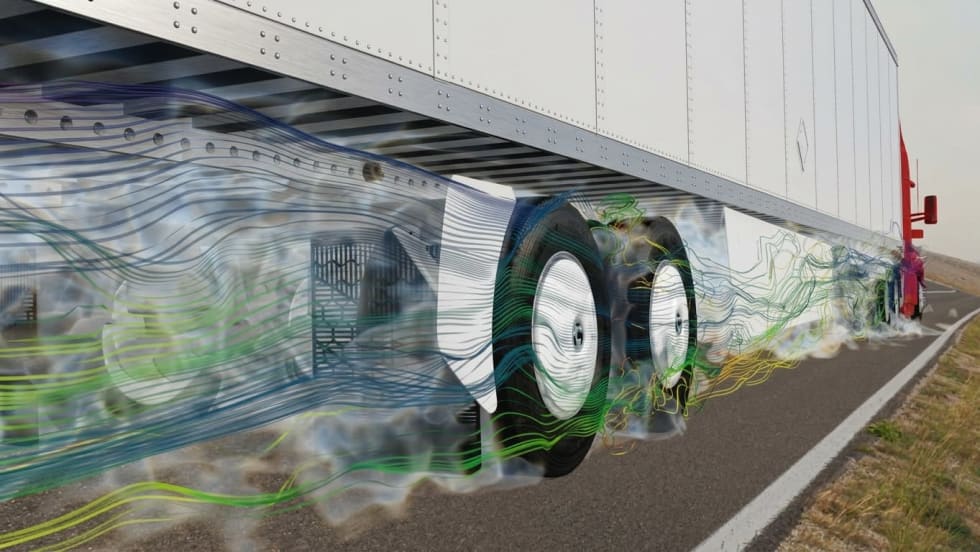
FlowBelow Redesigns Trailer AeroSlider to Cut Fuel Use
The lighter trailer aerodynamic system installs in less than 45 minutes, according to the company, with potential payback in under a year depending on fuel prices and trailer mileage.
Read More →
Why Diesel Price Relief Efforts May Fall Short
Diesel prices have eased from September’s record high, but doubts about additional Russian supply and limits on dyed-diesel tax relief mean trucking fleets still face expensive fuel. And prices could go higher.
Read More →
Why Small Fuel Savings Matter in Trucking
Can better fuel economy help pay for driver raises? In this podcast, GP Transco explains how small efficiency gains create room to reinvest in its people.
Read More →
How GP Transco Cuts Trucking Fuel Costs, a Tenth of a Gallon at a Time
What’s another tenth of a mile per gallon worth? GP Transco shares how equipment upgrades and driver coaching turn small gains into meaningful fuel savings.
Read More →
Electric Yard Tractors Move Beyond Pilots
Operating-cost savings have overtaken sustainability goals as the leading reason surveyed fleets are adopting battery-electric terminal tractors, according to new NACFE research.
Read More →
Geotab Links Fleet Card to Vehicle Data
The new card combines fuel discounts with telematics-based purchase controls. Geotab’s analysis also points to potential savings from choosing lower-priced fuel stops.
Read More →
Fleet Economics Shape Electric Truck Outlook
ACT Research expects costs, charging infrastructure, and technology improvements to drive zero-emission commercial vehicle adoption as federal regulations and incentives retreat.
Read More →
Wex Adds Cardless Fuel Payments for Over-the-Road Customers
A new fuel card feature for Wex customers offers convenience and security.
Read More →