





NRF: U.S. Container Port Traffic Expected to Grow Dramatically
Intermodal Woes Challenge Logistics and Supply Chains
Intermodal freight transportation is booming, but port congestion and problems getting enough containers and chassis to the right place at the right time are snarling logistics for many companies.
April 27, 2021
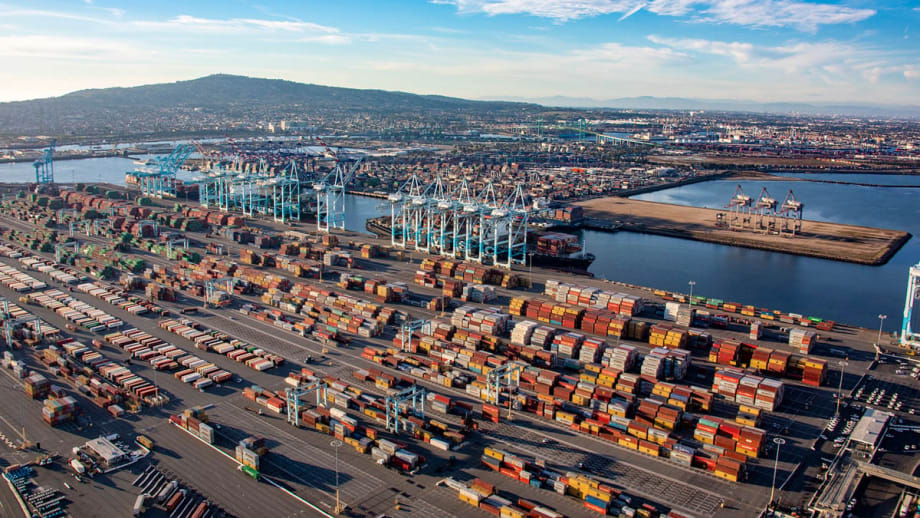
The Port of Los Angeles processed 957,599 Twenty-Foot Equivalent Units (TEUs) in March, the strongest March in the port’s 114-year history.
File Photo: Port of Los Angeles
5 min to read
Intermodal freight transportation is booming, but port congestion and problems getting enough containers and chassis to the right place at the right time are snarling logistics for many companies.
Total intermodal volumes for the first quarter of 2021 rose 2.6% above the previous year, despite extreme weather conditions depressing economic activity across much of North America, according to the Intermodal Association of North America. But that's only part of the story.
The ports of Los Angeles and Long Beach saw their busiest March on record. Intermodal container volume was up 97% from the same month last year. That may not be the best comparison, given that's when the COVID-19 pandemic was depressing shipping volumes from China, but this March's numbers were also 65% ahead of more normal March 2019 imports, according to the Wall Street Journal. An average of 30 container ships a day have been stuck outside the ports waiting to unload, the journal reports. Gene Seroka, executive director of the Port of Los Angeles, called it a “once in a decade” situation in an interview with WSJ, noting that before the pandemic, they were handling an average of 10 vessels per day. Recently it's been 15 – a 50% increase.
And the ships are getting bigger, carrying more containers. While more efficient at sea, they take longer to get unloaded.
And it’s not just the West Coast ports. South Carolina Ports and the Port of Savannah in Georgia both handled all-time record levels of containers in March. Both are working on growing their capacity. The New York/New Jersey ports also reported cargo volume set a new all-time monthly record in March, 35% higher than two years earlier.
Why the backlogs? Experts say the pandemic has resulted in more online shopping as customers were stuck at home, and many of the goods ordered must come from China or other overseas locations by intermodal container ship. At the same time, the goods movement systems – terminals, trains, trucks, warehouses, forklift drivers – have had some number of workers out due to COVID-19 infection or quarantine from being exposed.
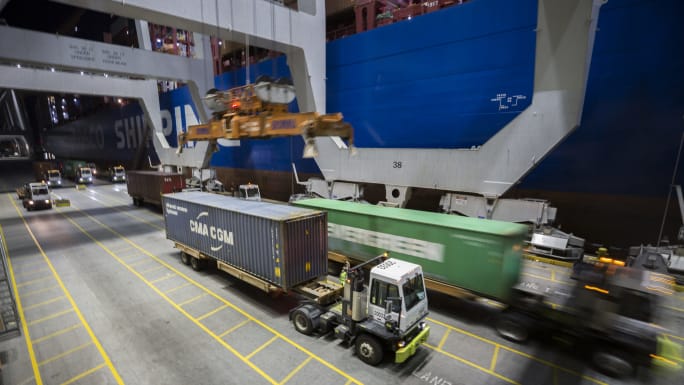
The Garden City Terminal at the Georgia Ports in April 2021.
Photo: Georgia Ports Authority
Inland Intermodal Ports Too
Inland rail intermodal ports have also been affected. Domestic intermodal volume was up 7.7% between June 2020 and February 2021 compared with the same nine months a year earlier, according to the Intermodal Association of North America.
The Journal of Commerce reported that shortages of containers, chassis, terminal appointments, and draymen limited freight rail capacity in major intermodal markets such as Chicago, Dallas, Memphis, Jacksonville, and Kansas City during the first quarter. JOC said that shippers could be saving more money than ever on intermodal – if they could find enough equipment and drayage drivers to move their cargo to and from rail terminals.
In short, the entire supply chain is inundated with cargo. Costs for shippers have gone up, and even worse for some is the delay in delivering goods to customers and resulting buyer disatisfaction. Some shippers have lost patience with delays and have been trying to shift freight to other transportation modes, including trucks, but trucking is also experiencing tight capacity and a truck driver shortage.
Peloton, for instance, which has been in the news for its difficulties in getting its high-end exercise equipment to customers, said it will spend $100 million on transportation in the first half of the year to get around the port bottlenecks.
How Long Will Intermodal Issues Go On?
By mid-April, the southern California logjam had thinned somewhat from the first-quarter backups, but most analysts expect intermodal problems to continue, but it's harder to know for how long.
Traditional peak season kicks off in August for back to school, year end holiday. With new round of stimulus checks, the bottleneck could get worse – but if things open up, people will shift buying to services like dining and vacations rather than “stuff” being transportaed by container or truck.
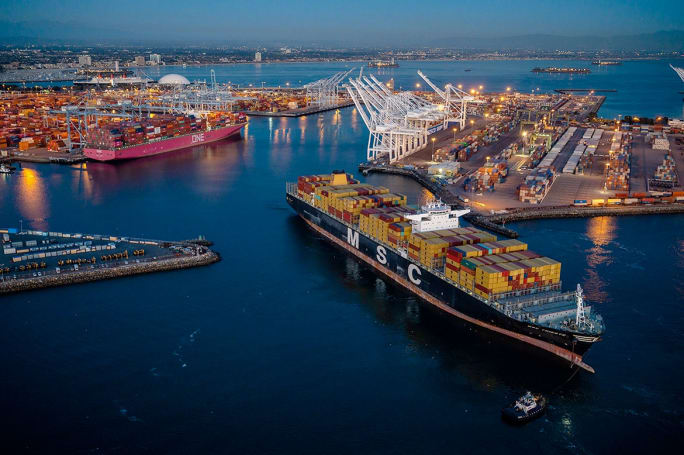
The Port of Long Beach achieved its busiest month in March and its second-best quarter on record. Although March is traditionally one of the slowest months on the shipping calendar, dockworkers and terminal operators moved 840,387 twenty-foot equivalent units last month, beating the previous “best month” record of 815,885 TEUs, set in December 2020.
Photo: Port of Long Beach
“Demand is outpacing supply and assets are not where they need to be.” said C.H. Robinson in its April 21 North American Freight Insights report. “Tension will likely continue into the second half of the year.” It reports:
Container placement challenges continue in high-demand markets such as port cities and U.S.-Mexico border areas.
Containers are being used as storage rather than transport.
Dwell time for unloading seems to be increasing.
The Union Pacific railroad announced peak season surcharges – well ahead of the normal August/September peak season.
Chassis shortages are reported across the rail networks, primarily caused by the very high volumes of ocean container imports.
Drivers for the dray community are included in the broader trucking labor challenges, leaving some dray carries with unseated tractors.
The 3PL said it continues to add carriers to its drayage network. It recommendations to shippers include smoothing out shipment volumes and using drop trailer programs. The company also said it is working with railroads to increase access to containers and train slots, converting truck shipments to intermodal that help reposition empty containers.
"Drayage capacity to support intermodal remains tight in most markets across the US, driven by volume and ramp congestion," said XPO Logistics in its Intermodal Market Update in late April. "Recent surges in the Southeast [are] causing delays due to congestion and chassis shortages. Additionally, container capacity is tight due to extended cycle times caused by rail slowdowns and extended customer dwell times. We expect this demand to continue through the foreseeable future as imports and domestic shipping remain strong."
The unprecedented surge of imports at retail container ports that began last summer is expected to continue at least through the end of this summer as retailers work to meet increased consumer demand, according to the April Global Port Tracker report from the National Retail Federation and Hackett Associates.
“We’ve never seen imports at this high a level for such an extended period of time,” NRF Vice President for Supply Chain and Customs Policy Jonathan Gold said. “Records have been broken multiple times and near-record numbers are happening almost every month. Between federal stimulus checks and money saved by staying home for the better part of a year, consumers have money in their pockets and they’re spending it with retailers as fast as retailers can stock their shelves.”
More Fleet Management

Sponsored•September 16, 2026
Color Match Smarter: Tools That Restore & Perform
For fleet managers and collision repair professionals keeping heavy-duty trucks on the road, getting the color right the first time isn't just about appearance — it's about efficiency, turnaround time, and bottom-line results. Discover how today's digital color tools are transforming the repair process from guesswork to precision.
Read More →
FMCSA Pauses Biennial-Update Enforcement Amid Motus Transition
Carriers whose updates were due on or after June 1 have more time, while FMCSA works to stabilize its new registration system and warns of phishing sites impersonating its new carrier registration system, Motus.
Read More →
Sponsored•September 14, 2026
2026 Blueprint for Countering Smarter Supply Chain Theft
Cargo theft is no longer just the cost of doing business. It's a multi-billion-dollar criminal enterprise exploiting vulnerabilities across your fleet, drivers, and supply chain.
Read More →


Sponsored•September 1, 2026
How Telematics Improves Visibility, Control, and Performance in Refrigerated Fleets
Explore how telematics help refrigerated fleets improve visibility, uptime, efficiency, compliance, and cargo protection across connected cold chain operations.
Read More →
What the U.S.-Canada Trade War Means for Trucking
Escalating U.S.-Canada tariffs could disrupt cross-border freight, reduce truck volumes, raise costs, and create new uncertainty for carriers on both sides of the border.
Read More →
What Are Trucking’s Top Concerns for 2026?
The American Transportation Research Institute wants to know what's worrying trucking fleet managers, drivers, and other stakeholders in its annual Industry Issues survey.
Read More →
American Trucking Associations Looks for a New Leader
ATA President and CEO Chris Spear abruptly left his job at the association on August 21, at a pivotal time for the trucking industry.
Read More →
Public Wi-Fi Cybersecurity Risks: How Truck Drivers and Fleets Can Protect Their Data
Public Wi-Fi can expose truck drivers and fleets to credential theft, malware, and other cyber threats. Here’s how to reduce the risk on the road.
Read More →
For Nicky Cupp, Fleet Innovation Starts With Frustration
HDT Truck Fleet Innovator Nicky Cupp turns everyday pain points at Fraley & Schilling into opportunities for better technology and smarter processes.
Read More →
Adam Buttgenbach’s Approach to Electric Trucks: Start With Where They Fit
HDT Truck Fleet Innovator Adam Buttgenbach helped PepsiCo build one of North America’s largest EV fleets by focusing on where electric trucks make operational sense.
Read More →