




Cummins Emissions Recall Includes Over 500,000 Engines
Over half a million engines have been voluntarily recalled by Cummins as the result of defective emissions equipment. The recall was the result of a CARB investigation and affects owners of vehicles with 2010-2015 model year Cummins engines.

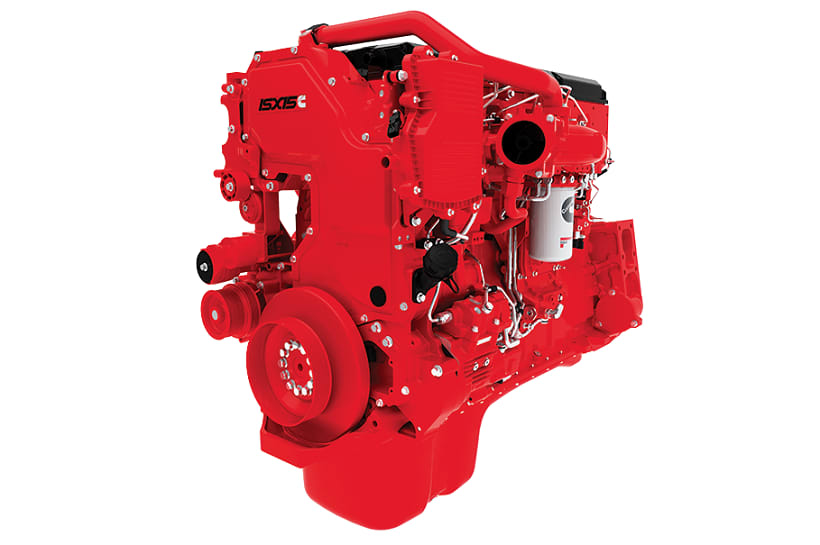
Cummins has voluntarily recalled 500,000 engines affected by an emissions equipment issue. The recall includes 500,000 engines from model years 2010-2015.
Photo courtesy Cummins
A voluntary recall affecting more than 500,000 Cummins engines has been initiated after an investigation by the California Air Resources Board discovered excess emissions resulting from defective emissions aftertreatment systems.
Cummins has worked collaboratively with CARB on the voluntary recall, which the agency stated was the largest such effort for heavy-duty trucks to date. Owners of 2010-2015 model-year vehicles are required to replace the faulty emissions equipment. The trucks will be recalled in two phases. Starting in Aug. 2018, owners of the 500,000 affected vehicles will receive letters with instructions on how to get their catalysts replaced or receive reimbursement for the cost of replacement. The second phase begins in March 2019. It is required for vehicle owners to replace the catalyst in order to renew a California DMV registration on most engine families.
It was discovered that the selective catalytic reduction systems were defective after excess emissions were detected through CARB’s Heavy Duty In-Use Compliance program. The Cummins recall is the first major recall to result from the program, in which vehicles are equipped with Portable Emissions measurement Systems to measure truck emissions while operating under typical demands and conditions.
During testing, some of the Cummins engines revealed higher than expected emissions of nitrogen oxides. This led more comprehensive testing by CARB that confirmed the cause as a defective SCR.
The same problem was found in about 60 “engine families” under the Cummins name found in a wide range of vehicles, from large commercial trucks, to larger pickup trucks, and some buses. Cummins also conducted its own testing to confirm the failures and agreed to institute a voluntary recall to replace the catalysts.
“Our new heavy-duty in-use compliance program ensures that heavy-duty and other trucks already in operation meet the required emissions standards both in the lab and on the road,” said Mary D. Nichols, CARB chair. “Our portable testing equipment tells us exactly how clean a truck is when it’s actually operating in the real world: pulling a full load and driving on roads and through neighborhoods where people live.”
The cause of the problem was purely mechanical, according to CARB, and was the result of faster-than-expected degradation of the catalyst. The degraded catalyst issue is not a safety risk and does not affect current model year Cummins engine families. Following the recall, CARB and EPA will work together to ensure that the affected vehicles will meet all emissions standards.
The recall is “a great example of how government and industry work together to protect health and the environment,” said EPA Office of Air and Radiation Assistant Administrator Bill Wehrum. “This is the way it’s supposed to work. Our follow-up testing seeks to make sure that pollution controls work throughout an engine’s useful life. And, if they don’t, then companies step up to set things right.”
Related: CARB Proposes Longer Truck Aftertreatment System Warranties
More Fuel Smarts

How Volvo Updated Its D13 for EPA 2027 [Watch]
Volvo’s updated D13 promises lower emissions without sacrificing performance or fuel economy. Take a closer look at what changed inside the engine in this HDT Spotlight video.
Read More →
Diesel Price Spike Shortens Payback for Natural Gas Trucks, Report Says
Energy Vision estimates fleets could recover the higher purchase price of an RNG-fueled Class 8 tractor in 1.3 to 2.8 years under current fuel-price scenarios.
Read More →
Calstart Becomes Catalyst Mobility, Reflecting Broader Focus
Calstart is now Catalyst Mobility, reflecting the nonprofit’s growing national role in clean transportation, including zero-emission trucks, infrastructure and incentive programs.
Read More →

Record Diesel Prices Squeeze Trucking Fleets
Average U.S. diesel prices have climbed to nearly $6 a gallon, surpassing the 2022 record as tight refinery capacity and Middle East disruptions keep fuel costs elevated.
Read More →
How Fuel Delivery Shapes Engine Performance
Fuel delivery depends on more than what happens at the injector. For fleet, maintenance and technical professionals, looking at the full path from pump to injector can provide useful context for understanding engine performance.
Read More →
East Coast Port Launches $45M Electric Truck Push
The Port Authority of New York and New Jersey announced millions in incentives for zero-emission drayage trucks, yard tractors, and new charging hubs near the port.
Read More →
California Bill Could Shed Light on Electric Truck Prices
Why do battery-electric Class 8 trucks remain so expensive? A California bill headed to Gov. Gavin Newsom would give fleets and state agencies more visibility into what manufacturers charge.
Read More →
Detroit Opens Orders for EPA 2027 Engines
Detroit isn’t starting from scratch to meet EPA 2027 diesel emissions standards. Its Gen 6 DD13 and DD15 engines keep much of today’s platform while updating the fuel and aftertreatment systems.
Read More →
Zero-Emission Truck Corridor Planned for West Coast
California, Oregon, Washington, British Columbia and Baja California are coordinating plans for truck charging and hydrogen fueling from Canada to Mexico.
Read More →
A Closer Look at Kenworth’s Electric T880E Vocational Truck [Video]
Learn more about Kenworth's T880E battery-electric vocational truck at the Paccar Technical Center, including its range, applications, upfitting considerations, and PTO options, in this HDT Spotlight video.
Read More →