




House Leaders Propose Plan to Plug Highway Gap by Cutting Postal Services
Republican leaders in the House are proposing a stopgap plan that claims money from postal service reforms to keep the Highway Trust Fund solvent through next May.

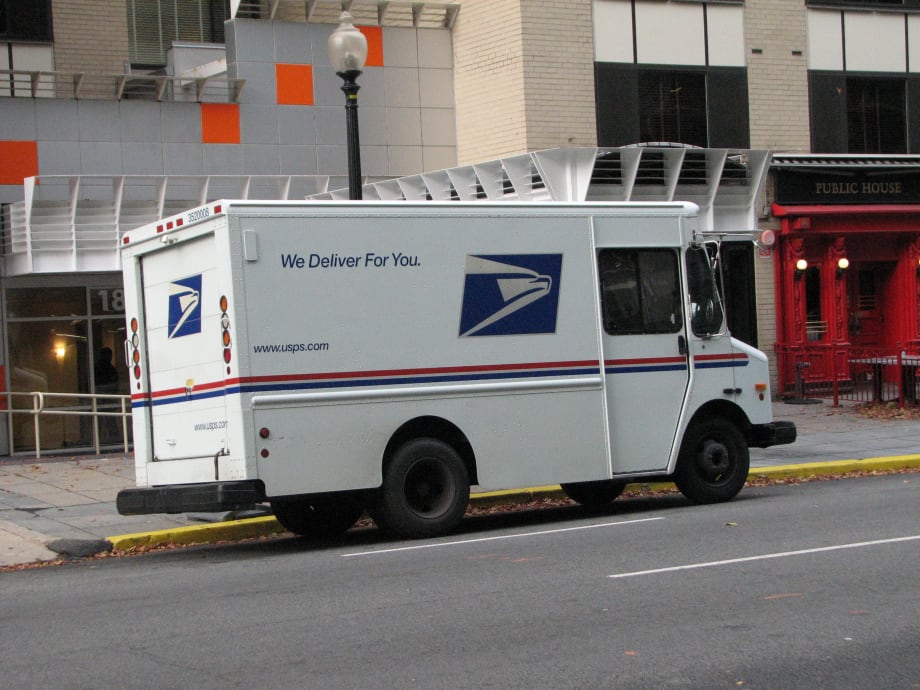
Cutting back on Saturday service, the Postal Service could save $10.7 billion over 10 years. Kevin Payravi, Wikimedia Commons
Republican leaders in the House are proposing a stopgap plan that claims money from postal service reforms to keep the Highway Trust Fund solvent through next May.

State transportation departments are alarmed by the pending shortfall. Many are suspending projects and future plans for fear that there will not be enough money.
House Speaker John Boehner, R-Ohio, Leader Eric Cantor, R-Va., and Whip Kevin McCarthy, R-Calif., acknowledged the problem in a May 30 memo to their colleagues.
“The Trust Fund will require an additional transfer of funds prior to the August District Work Period,” they said. “Failing to provide additional funds would mean a disruption of ongoing construction projects.”
The Fund needs $14 to $15 billion to pay for a one-year extension of the current highway program, called MAP-21, they said.
Their plan says that by cutting back service on Saturday, the Postal Service could save $10.7 billion over 10 years. This could reduce the size of a future federal bailout of the Postal Service, which will be necessary because the Service’s retiree benefit program is underfunded.
The service cutbacks involve ending delivery of first class mail, catalogues and low-priority mail on Saturdays. The Post Office still would deliver packages and priority and express mail, and offices would stay open.
The projected savings could be combined with the $1.3 billion in the Leaking Underground Storage Tank Trust Fund to keep the Highway Trust Fund whole, they said.
They said the postal savings are a realistic offset because President Obama’s 2015 budget also recommends ending Saturday mail deliveries.
They acknowledge that this is a one-time maneuver that does not address the long-term funding problem plaguing the federal highway program.
Because the fuel taxes that feed the Highway Trust Fund have not been adjusted since 1993, and because cars and trucks have become more fuel efficient, the Fund is on a downward path.
Boehner and his colleagues said they need more time to come up with long-term structural reforms.
“The serious work needed to develop acceptable policies to achieve structural reform has not been done yet,” the said.
“There is no consensus on what those reforms should be. In the meantime, we must address the problem of near-term trust fund insolvency to prevent a shutdown of federal highway and transit programs.”
The memo generated a negative response from transportation leaders in the Senate.
Sen. Tom Carper, D-Del., a leading proponent of raising the federal fuel tax to save the Highway Trust Fund, said the proposal is “a non-starter.”
“It kicks the can down the road yet again on two pressing issues – fixing the Postal Service and the Highway Trust Fund – and fails to solve either problem,” he said in a statement.
“If House Republicans want to prevent a taxpayer bailout of the Postal Service, they should focus on passing comprehensive postal reform legislation, not shirking the responsibility of making tough decisions regarding the future of our nation’s infrastructure.”
Sen. Barbara Boxer, D-Calif., chair of the Senate Environment and Public Works Committee, described the plan as “strange.”
“This idea is a jobs killer which does not even fund the Highway Trust Fund for a long enough period of time to provide the certainty that states, cities, and businesses need,” she said in a statement.
Noting that the EPW Committee recently unanimously passed a bill to reauthorize the highway program, she said, “Surely the House can begin to do the work needed to solve this problem – and not kick the can down the road with a totally unrelated and unworkable idea.”
More Fleet Management
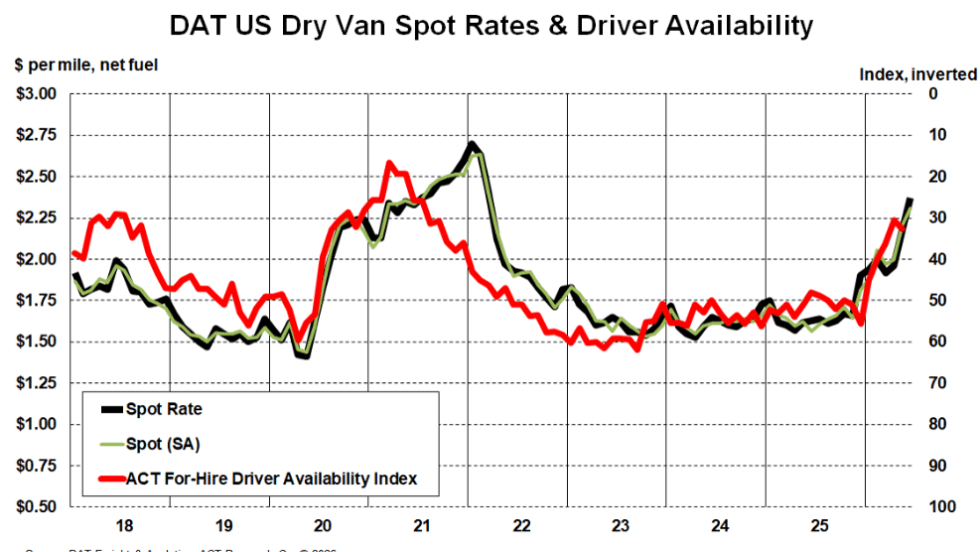
Truckload Rates Keep Rising as Tight Capacity Fuels Freight Market Recovery
Spot and contract rates continued climbing in May and June, not because freight demand is surging, but because fewer trucks and drivers are available.
Read More →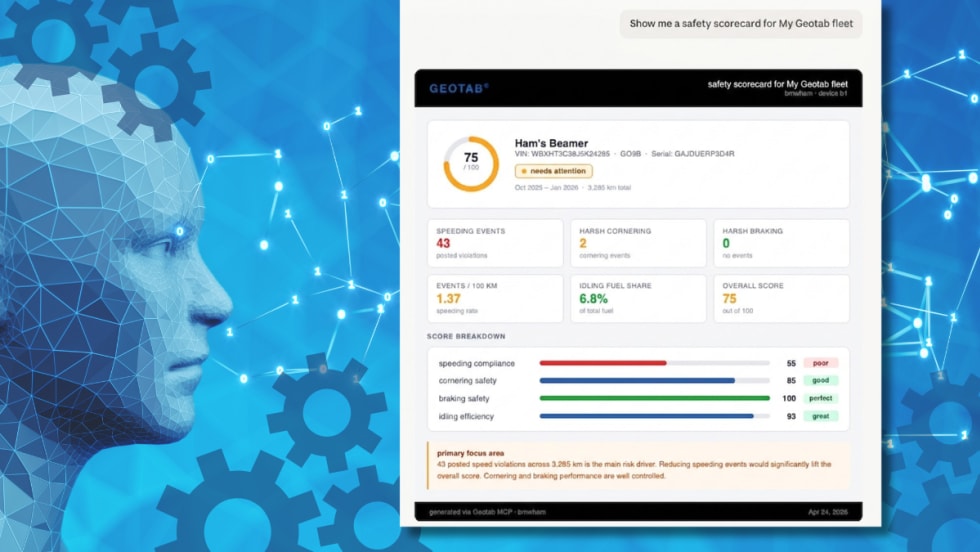
What Geotab's New AI Connector Means for Fleets
Fleets can now ask their usual AI assistants questions about maintenance, safety, fuel use, and vehicle performance, using their live Geotab data, and take action on the answers without leaving their preferred AI tool.
Read More →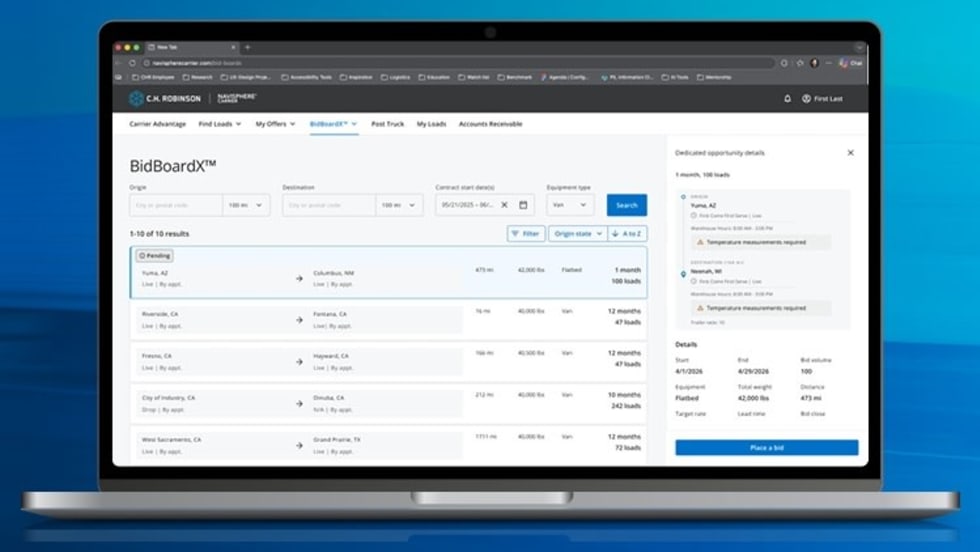
New C.H. Robinson Tool Opens Door to More Predictable Freight
BidBoardX lets carriers search, bid on, and secure committed freight opportunities through a single digital marketplace.
Read More →

New York City's Microhub Project is Delivering Results
Trucking, last-mile delivery companies, and environmental advocates like what they are seeing so far with New York's microhub program.
Read More →
Why Truck Detention Keeps Costing Fleets Time and Money
A 2024 ATRI study found detention affects nearly 40% of truckload stops and costs the industry more than $15 billion annually. Despite the toll on drivers, fleets, and supply chains, the problem remains stubbornly persistent.
Read More →
Time is Running Out to Apply for Exclusive HDT Event
Heavy Duty Trucking Exchange brings fleet managers and suppliers together for the deeper conversations that lead to ideas, partnerships, and solutions. Time is running out to apply for the September event.
Read More →
Amazon Launches Less-Than-Truckload Freight Offering for All Businesses
This launch is the latest addition to Amazon Supply Chain Services, a portfolio of supply chain capabilities from Amazon, including freight, distribution, fulfillment, and parcel shipping.
Read More →
Import Cargo Volume to See Year-Over-Year Gain Again in June, Then Remain Below 2025 Levels Into Fall
After July, the report predicts a weakening in import volume as consumer uncertainty remains high and the impact of increasing inflation takes its toll.
Read More →
AUCTION OF EQUITY INTEREST IN HEAVY HAUL TRUCKING COMPANY!!
Mark your calendar: June 30, 2026 (10:00 a.m. PDT). A 37.5% ownership interest in MagnaTrans, LLC, a California limited liability company doing business as Magna Transportation Group, will be sold in an in-person and online auction to the highest bidder or bidders under Article 9 of the Uniform Commercial Code. The Rancho Cucamonga-based heavy haul and over-dimensional trucking company operates across California, Oregon, and Arizona.
Read More →
Volvo Trucks Adds Unattended Over-the-Air Software Update Capabilities
The latest evolution of Volvo’s over-the-air update technology allows software updates to run while trucks are parked, helping fleets keep vehicles current without disrupting operations.
Read More →