




Carper Sees Hope for Federal Fuel Tax Hike
As Sen. Tom Carper, D-Del., sees it, the idea of a fuel tax increase to restore the Highway Trust Fund is not out of the question. Carper’s message to his colleagues in the Senate is to look at a wide range of ideas to save the Fund, but among them consider restoring the purchasing power of the fuel tax.

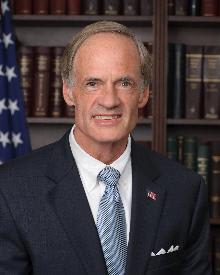
U.S. Sen. Tom Carper, D-Del.
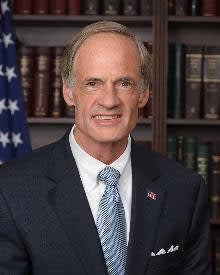
U.S. Sen. Tom Carper, D-Del.
As Sen. Tom Carper, D-Del., sees it, the idea of a fuel tax increase to restore the Highway Trust Fund is not out of the question.
Carper’s message to his colleagues in the Senate is to look at a wide range of ideas to save the Fund, but among them consider restoring the purchasing power of the fuel tax.
The 18.4-cent tax on gasoline generates just 10 cents of purchasing power compared to what it generated in 1993, when it was last adjusted, Carper said.
“They didn’t throw me out of the meeting,” Carper said.
Carper, speaking Tuesday at an infrastructure session at American Trucking Associations’ offices on Capitol Hill, characterized the Highway Trust Fund debate as a moral issue.
“When we have problems we shouldn’t just pretend like we don’t,” he said. “Figure out right thing and do it. There is a right thing to do here. It’s not the easy thing or the expedient thing but it is the right thing to do.”
He said that six months ago this approach went nowhere on Capitol Hill, but now when he talks to his Republican colleagues he’s starting to get a little better reaction.
“I’m not going to give up,” he said as he asked the audience of trucking and other transportation interests to continue pressing for legislation to pay for, not just finance, the Fund.
A fuel tax hike will not solve the whole problem, he said. Other possibilities include tolling, a vehicle mile tax, infrastructure banks and the one-time infusions from corporate tax reform that both President Obama and House Ways and Means Committee Chairman Dave Camp, R-Mich., have suggested.
“There is no silver bullet but there may be a number of silver BBs,” he said.
ATA has long held that a fuel tax hike is the best way to restore the Fund but now is looking at possible supplements to that approach.
A committee of ATA members has been considering other funding options and will meet again next week.
“The goal is to broaden our horizons in case raising and indexing the fuel tax doesn’t work, so we’ll have some other things that we can support,” said Pat Thomas, vice president at UPS, a member of the committee.
Committee members on hand did not discuss the funding mechanisms they have assessed, but Phil Byrd, president and CEO of Bulldog Hiway Express and chairman of ATA, said that none of them are as good as raising and indexing the fuel tax.
The highway proposals now on the table – the Obama administration’s bill and the measure posted this week by the Senate Environment and Public Works Committee – got mixed reviews.
ATA President and CEO Bill Graves said Obama deserves credit for talking about the need to reinvest in infrastructure but noted trucking’s dissatisfaction with the administration’s proposal to allow tolling on Interstates. And he said he has doubts about the administration's idea of using corporate tax reform to generate a one-time infusion of money into the Highway Trust Fund.
He said that while ATA still is reviewing the Senate bill he likes what he sees at first glance.
Graves does not think Congress will finish work on the bill before the current program expires at the end of September, or before the November mid-term elections.
He’s predicting a 6-year bill wrapped up next Spring, although he does not know how the money will be raised.
More Fleet Management

Color Match Smarter: Tools That Restore & Perform
For fleet managers and collision repair professionals keeping heavy-duty trucks on the road, getting the color right the first time isn't just about appearance — it's about efficiency, turnaround time, and bottom-line results. Discover how today's digital color tools are transforming the repair process from guesswork to precision.
Read More →
FMCSA Pauses Biennial-Update Enforcement Amid Motus Transition
Carriers whose updates were due on or after June 1 have more time, while FMCSA works to stabilize its new registration system and warns of phishing sites impersonating its new carrier registration system, Motus.
Read More →
2026 Blueprint for Countering Smarter Supply Chain Theft
Cargo theft is no longer just the cost of doing business. It's a multi-billion-dollar criminal enterprise exploiting vulnerabilities across your fleet, drivers, and supply chain.
Read More →


How Telematics Improves Visibility, Control, and Performance in Refrigerated Fleets
Explore how telematics help refrigerated fleets improve visibility, uptime, efficiency, compliance, and cargo protection across connected cold chain operations.
Read More →
What the U.S.-Canada Trade War Means for Trucking
Escalating U.S.-Canada tariffs could disrupt cross-border freight, reduce truck volumes, raise costs, and create new uncertainty for carriers on both sides of the border.
Read More →
What Are Trucking’s Top Concerns for 2026?
The American Transportation Research Institute wants to know what's worrying trucking fleet managers, drivers, and other stakeholders in its annual Industry Issues survey.
Read More →
American Trucking Associations Looks for a New Leader
ATA President and CEO Chris Spear abruptly left his job at the association on August 21, at a pivotal time for the trucking industry.
Read More →
Public Wi-Fi Cybersecurity Risks: How Truck Drivers and Fleets Can Protect Their Data
Public Wi-Fi can expose truck drivers and fleets to credential theft, malware, and other cyber threats. Here’s how to reduce the risk on the road.
Read More →
For Nicky Cupp, Fleet Innovation Starts With Frustration
HDT Truck Fleet Innovator Nicky Cupp turns everyday pain points at Fraley & Schilling into opportunities for better technology and smarter processes.
Read More →
Adam Buttgenbach’s Approach to Electric Trucks: Start With Where They Fit
HDT Truck Fleet Innovator Adam Buttgenbach helped PepsiCo build one of North America’s largest EV fleets by focusing on where electric trucks make operational sense.
Read More →