




Quick Spin: Nikola Tre Hydrogen Fuel-Cell Truck
HDT's Jack Roberts takes the Nikola Tre hydrogen fuel-cell truck for a short test drive during CES 2024. High tech aside, the Tre FCEV is fleet-focused and driver-friendly.

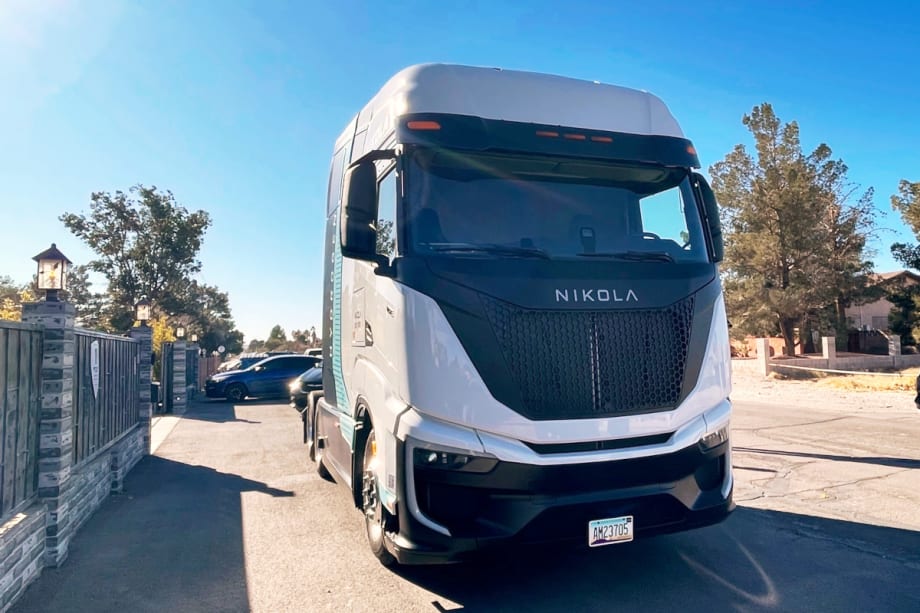
Nikola uses an Iveco cabover chassis for the Tre FCEV.
Photo: Jack Roberts
Bosch brought a surprise to its press briefing at the House of Journalists technology seminar at CES 2024: A brand-new, Class 8 Nikola Tre fuel-cell-electric tractor. Bosch manufactures the fuel-cell assemblies used at the back of the Tre. So, the collaboration allowed journalists to see cutting-edge Bosch technology up close.
Christian Appel, Nikola's global chief engineer, was on hand to talk to journalists about the truck and ride shotgun for a quick test drive around Las Vegas.
Advanced zero-emissions technology aside, the Nikola Tre is a head-turner, even in Las Vegas where CES took place. That’s because Nikola uses an Iveco cabover chassis, and the tall, lean, stark white Euro-style tractors really stand out on the road.
Appel told me that although Class 8 cabovers have virtually disappeared from North American highways over the past 20 years, the configuration makes a lot of sense for Tre. The tall cab assembly is ideal for the fuel-cell assembly mounted on the rear of the cabin. Plus, the overall body style is well-suited to the urban-, regional-haul, and drayage applications Nikola expects the truck to initially work in.
However, Appel said he expects that a Nikola conventional cab tractor for long-haul applications will become a reality at some point in the future.
Battery-Electric Trucks vs. Fuel-Cell-Electric Trucks
It was a brisk, windy morning in Vegas. So, the first feature that impressed me climbing up into the tall cab was how quickly the Tre’s heating system kicked in and started warming the truck’s icy cold interior. This is particularly striking because the truck is running — but the usual muted rumble of a diesel engine was completely absent.
The differences between a battery-electric truck and a fuel cell-powered vehicle are fairly substantial. A battery-electric truck takes power from an external charging source, stores it in onboard batteries, and then uses that energy to power electric drive motors. A fuel cell truck carries hydrogen onboard — much like a conventional truck carries diesel fuel.
The fuel cells at the back of the cab break down that hydrogen fuel to create electricity that powers the truck. Pure water is the only byproduct created by this process, making fuel-cell technology one of the most promising technology routes for transforming long-haul trucking away from diesel fuel to a net-zero industry.
But while the means of generating the electricity used to power the two trucks are markedly different, the performance characteristics of battery-electric trucks and hydrogen fuel-cell trucks are virtually identical. The Nikola Tre is slightly louder than the OEM’s battery-electric trucks, thanks to some muted fan-like noise coming from the fuel cells behind the cab. But that’s it.
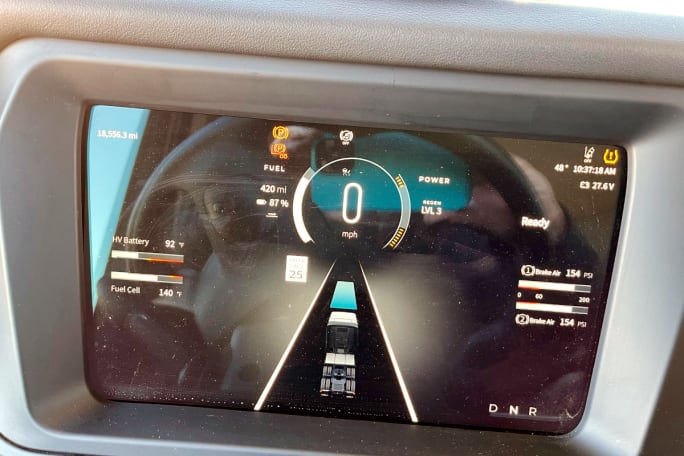
A large display provides critical operating and performance information to the driver.
Photo: Jack Roberts
A Futuristic, Driver-Focused Cab
The Tre’s turning radius is impressive, thanks to the deep wheel cuts and lack of a long hood jutting out in front of the cab. The truck’s acceleration is nothing short of impressive. Step on the accelerator and you’re rewarded with instant, smooth, consistent power that gets the truck up to speed quickly and quietly.
The truck’s regenerative braking system takes the place of a conventional exhaust engine brake. It's surprisingly smooth but aggressive in slowing it down when you take your foot off the accelerator. The Tre is also equipped with standard advanced driver safety systems, including lane-departure warnings and blind-spot detection — helpful in Vegas traffic.
Perhaps the most interesting feature of the truck is the advanced dash display and large center console display that smartly and clearly present critical operating and performance information. Particularly welcome is the large, easy-to-read interactive navigation screen in the center console that helps give critical navigation information to the driver at a glance.
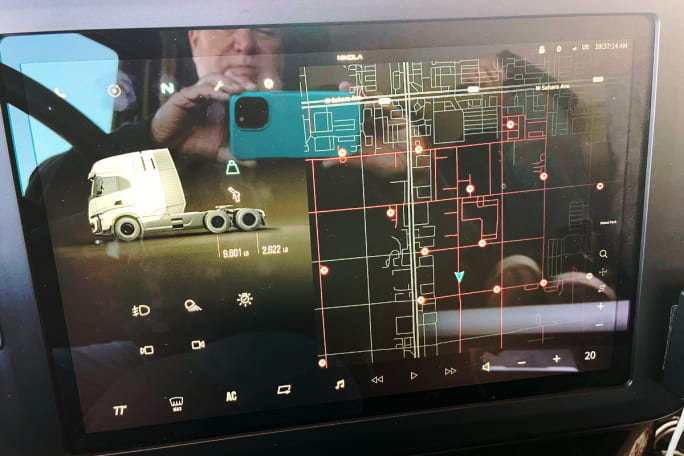
The Tre features an easy-to-read interactive navigation screen in the center console.
Photo: Jack Roberts
A feature I really liked was the horizontal bar located at the bottom of the steering wheel — essentially a straight hand grip that runs from approximately the 5 o’clock spot off the steering wheel to the 7 o’clock area. It’s a small detail, but one that I found surprisingly useful when making tight 90-degree turns during our drive.
A much longer Nikola test drive under real-world trucking conditions is in the works. But my early impressions of the Tre are all positive. The truck performs well in urban traffic conditions. It is extremely quiet, smooth, safe, and capable. It’s a truck that points the way toward a new future for trucking with a firm focus on safety and productivity.
More Fuel Smarts

How Volvo Updated Its D13 for EPA 2027 [Watch]
Volvo’s updated D13 promises lower emissions without sacrificing performance or fuel economy. Take a closer look at what changed inside the engine in this HDT Spotlight video.
Read More →
Diesel Price Spike Shortens Payback for Natural Gas Trucks, Report Says
Energy Vision estimates fleets could recover the higher purchase price of an RNG-fueled Class 8 tractor in 1.3 to 2.8 years under current fuel-price scenarios.
Read More →
Calstart Becomes Catalyst Mobility, Reflecting Broader Focus
Calstart is now Catalyst Mobility, reflecting the nonprofit’s growing national role in clean transportation, including zero-emission trucks, infrastructure and incentive programs.
Read More →

Record Diesel Prices Squeeze Trucking Fleets
Average U.S. diesel prices have climbed to nearly $6 a gallon, surpassing the 2022 record as tight refinery capacity and Middle East disruptions keep fuel costs elevated.
Read More →
How Fuel Delivery Shapes Engine Performance
Fuel delivery depends on more than what happens at the injector. For fleet, maintenance and technical professionals, looking at the full path from pump to injector can provide useful context for understanding engine performance.
Read More →
East Coast Port Launches $45M Electric Truck Push
The Port Authority of New York and New Jersey announced millions in incentives for zero-emission drayage trucks, yard tractors, and new charging hubs near the port.
Read More →
California Bill Could Shed Light on Electric Truck Prices
Why do battery-electric Class 8 trucks remain so expensive? A California bill headed to Gov. Gavin Newsom would give fleets and state agencies more visibility into what manufacturers charge.
Read More →
Detroit Opens Orders for EPA 2027 Engines
Detroit isn’t starting from scratch to meet EPA 2027 diesel emissions standards. Its Gen 6 DD13 and DD15 engines keep much of today’s platform while updating the fuel and aftertreatment systems.
Read More →
Zero-Emission Truck Corridor Planned for West Coast
California, Oregon, Washington, British Columbia and Baja California are coordinating plans for truck charging and hydrogen fueling from Canada to Mexico.
Read More →
A Closer Look at Kenworth’s Electric T880E Vocational Truck [Video]
Learn more about Kenworth's T880E battery-electric vocational truck at the Paccar Technical Center, including its range, applications, upfitting considerations, and PTO options, in this HDT Spotlight video.
Read More →