




GAO: Customs and Border Protection Needs a Plan For Container Scanning
According to a recent report by the Government Accountability Office, the U.S. Customs and Border Protection has not been making progress under the 9/11 Commission Act, which requires 100 percent of U.S.-bound cargo containers to be scanned by 2012
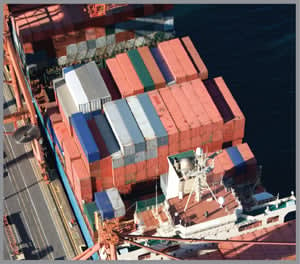
The Customs and Border Protection has not achieved sustained scanning rates above five percent at comparatively larger ports.
According to a recent report by the Government Accountability Office, the U.S. Customs and Border Protection has not been making progress under the 9/11 Commission Act, which requires 100 percent of U.S.-bound cargo containers to be scanned by 2012.
As a result, the GAO recommended the CBP conduct a feasibility analysis, cost estimates, and cost-benefit analysis and present the results to Congress.
According to the Journal of Commerce, Senator John D. Rockefeller IV, D-W.Va., asked that the GAO conduct the study.
"CBP has made limited progress in scanning containers at the initial ports participating in the SFI (Secure Freight Initiative) program, leaving the feasibility of 100 percent scanning largely unproven," the report said. "Since the inception of the SFI program, CBP has not been able to achieve 100 percent scanning at any participating port. While CBP has been able to scan a majority of the U.S.-bound cargo containers at the comparatively low volume ports, it has not achieved sustained scanning rates above five percent at the comparatively larger ports.
According to the report, while CBP has developed a strategy to expand SFI to select ports where it will mitigate the risk of weapons of mass destruction entering the U.S., it has not come up with a plan to scan 100 percent of U.S.-bound container cargo by 2012. In addition, the agency has not conducted a feasibility study of expanding 100 percent scanning, which is required by the SAFE Port Act.
"Such an analysis could help both CBP and Congress determine the most effective way forward to enhance container security," the report said. "CBP does not have a plan to scan cargo containers at all ports because, according to agency officials, challenges encountered thus far in implementing SFI indicate that doing so worldwide will be difficult to achieve."
To access the full report, click here.
More Fleet Management

Why Private Fleets Are Taking More Freight
Private fleets are putting their own trucks on demanding customers and high-cost lanes as companies seek greater control over service, costs, and capacity.
Read More →
Color Match Smarter: Tools That Restore & Perform
For fleet managers and collision repair professionals keeping heavy-duty trucks on the road, getting the color right the first time isn't just about appearance — it's about efficiency, turnaround time, and bottom-line results. Discover how today's digital color tools are transforming the repair process from guesswork to precision.
Read More →
FMCSA Pauses Biennial-Update Enforcement Amid Motus Transition
Carriers whose updates were due on or after June 1 have more time, while FMCSA works to stabilize its new registration system and warns of phishing sites impersonating its new carrier registration system, Motus.
Read More →


2026 Blueprint for Countering Smarter Supply Chain Theft
Cargo theft is no longer just the cost of doing business. It's a multi-billion-dollar criminal enterprise exploiting vulnerabilities across your fleet, drivers, and supply chain.
Read More →
How Telematics Improves Visibility, Control, and Performance in Refrigerated Fleets
Explore how telematics help refrigerated fleets improve visibility, uptime, efficiency, compliance, and cargo protection across connected cold chain operations.
Read More →
What the U.S.-Canada Trade War Means for Trucking
Escalating U.S.-Canada tariffs could disrupt cross-border freight, reduce truck volumes, raise costs, and create new uncertainty for carriers on both sides of the border.
Read More →
What Are Trucking’s Top Concerns for 2026?
The American Transportation Research Institute wants to know what's worrying trucking fleet managers, drivers, and other stakeholders in its annual Industry Issues survey.
Read More →
American Trucking Associations Looks for a New Leader
ATA President and CEO Chris Spear abruptly left his job at the association on August 21, at a pivotal time for the trucking industry.
Read More →
Public Wi-Fi Cybersecurity Risks: How Truck Drivers and Fleets Can Protect Their Data
Public Wi-Fi can expose truck drivers and fleets to credential theft, malware, and other cyber threats. Here’s how to reduce the risk on the road.
Read More →
For Nicky Cupp, Fleet Innovation Starts With Frustration
HDT Truck Fleet Innovator Nicky Cupp turns everyday pain points at Fraley & Schilling into opportunities for better technology and smarter processes.
Read More →