




FTR: A Slow Recovery Is Not Concern For a Double Dip
While the economic recovery has been showing signs of slowing, this is not cause for concern that we'll see a double dip recession, FTR Associates pointed out during a webinar Friday

Since demand for air freight is going up, this is a good sign for trucking, as retailers were off about their inventory predictions, FTR says. (Photo by FedEx)
While the economic recovery has been showing signs of slowing, this is not cause for concern that we'll see a double dip recession, FTR Associates pointed out during a webinar Friday.
During "The State of Freight" webinar, Noel Perry, FTR managing director and senior consultant, said that while a slow recovery is unusual, economies do not recover in a completely consistent way. We may be in an era where recoveries will be slow, as this is what occurred in the recent 1990 and 2001 recessions.
"It may be painful, but it is normal," Perry said. He emphasized that this does not mean we're headed for a double dip.
Nonetheless, the firm is concerned that the economy and freight could grow slower than their base forecast. According to Perry, GDP growth will stay in the range of 3 to 3.5 percent over the next two years, a point or two lower than their last estimate. This is a very conservative forecast, he said.
The Overall Economy
"At a time like this, economic analysis counts," Perry said.
Right now, economic analysis is indicating a slow recovery. Housing inventories are high, he said, and we need to get the surplus units off the market. Employment is also showing signs of slower growth, a phenomenon similar to the last three recoveries. On a positive note, incomes of those who do have jobs are going up, a sign people are working harder, and that money will funnel back into the economy, Perry said.
Manufacturing output has been expanding for a long time, but this section hasn't added jobs.
Another sign of a slow recovery is the U.S.'s sovereign debt, which is at 53 percent as a share of GDP. Consumer debt is still a problem as well, with change concentrated in the sub-prime segments. People are still having difficulties getting loans, Perry said.
What indicators should we look out for that things are getting better?
1. Consumption. Retails sales numbers are very important to the recovery and accounts for 70 percent of growth.
2. Manufacturing. These figures have slowed some, but they're still strong.
3. China. The country has been an engine of growth, Perry said. However, it's growth has fallen from 10 to 7 percent. And if the country's growth heads south of 5 percent, it will mean recession for them and will have serious implications for the U.S.
Truck
Demand for air freight is going up, and this is a good sign for trucking, Perry said. When people use more air freight, it means their inventory predictions were wrong and they're running out of stock.
However, the trucking industry still has a couple hundred thousand trucks not in use, and FTR has had to raise its forecast for total surplus vehicles. For the fourth quarter of 2010, the firm estimates there to be around 200,000 trucks parked.
In addition, FTR's forecast for trucking growth will stay close to about 5 percent through the rest of this year and next, Perry said.
Over the course of the recession, the industry had to cut its overhead by about 25 percent, Perry said. As demand for freight fell, companies had to lay off drivers they didn't need. Now, however, the industry doesn't have the same capacity to hire people; it went from having the capacity to hire 150,000 to now only 100,000.
In addition, legislation, such as the hours of service change, CSA 2010, and the proof of citizenship requirements, will reduce the driver hiring pool, further diminishing hiring capacity. Perry believes it will take several years to build up the capacity to hire.
Intermodal and Rail
While the intermodal segment has been on the rise, rail carloads are static, according to Larry Gross, senior consultant for FTR.
Overall carloads have dropped 2 percent over the last four weeks, compared to the prior four weeks. The industry has seen 32,000 fewer carloads over this same period, primarily due to a decrease in coal, Gross said.
However, international intermodal freight has seen a steady increase; it's up 5 percent from March through June of this year, Gross said. Seasonally adjusted revenue moves in international grew 9.8 percent from May to June, and it's also up 30 percent year over year. This is mostly reflective of goods coming in from Asia. Meanwhile, domestic intermodal has remained flat.
But Gross believes the growth in international will taper off. Industry projections indicate third quarter growth of 10 percent, falling to 7 percent growth in the fourth quarter.
Gross also indicated that intermodal's share of the freight market is moving upward; its share is now at 13.7 percent. "This story will continue into 2010."
Still, the trucking industry shouldn't be worried, as intermodal only accounts for 4.1 percent of dry van traffic and only 1.8 percent of trailer traffic. Even if intermodal shows an increase in share, "its ability to affect overall truck demand is very very limited."
More Fleet Management

How Telematics Improves Visibility, Control, and Performance in Refrigerated Fleets
Explore how telematics help refrigerated fleets improve visibility, uptime, efficiency, compliance, and cargo protection across connected cold chain operations.
Read More →
What the U.S.-Canada Trade War Means for Trucking
Escalating U.S.-Canada tariffs could disrupt cross-border freight, reduce truck volumes, raise costs, and create new uncertainty for carriers on both sides of the border.
Read More →
What Are Trucking’s Top Concerns for 2026?
The American Transportation Research Institute wants to know what's worrying trucking fleet managers, drivers, and other stakeholders in its annual Industry Issues survey.
Read More →

American Trucking Associations Looks for a New Leader
ATA President and CEO Chris Spear abruptly left his job at the association on August 21, at a pivotal time for the trucking industry.
Read More →
Public Wi-Fi Cybersecurity Risks: How Truck Drivers and Fleets Can Protect Their Data
Public Wi-Fi can expose truck drivers and fleets to credential theft, malware, and other cyber threats. Here’s how to reduce the risk on the road.
Read More →
For Nicky Cupp, Fleet Innovation Starts With Frustration
HDT Truck Fleet Innovator Nicky Cupp turns everyday pain points at Fraley & Schilling into opportunities for better technology and smarter processes.
Read More →
Adam Buttgenbach’s Approach to Electric Trucks: Start With Where They Fit
HDT Truck Fleet Innovator Adam Buttgenbach helped PepsiCo build one of North America’s largest EV fleets by focusing on where electric trucks make operational sense.
Read More →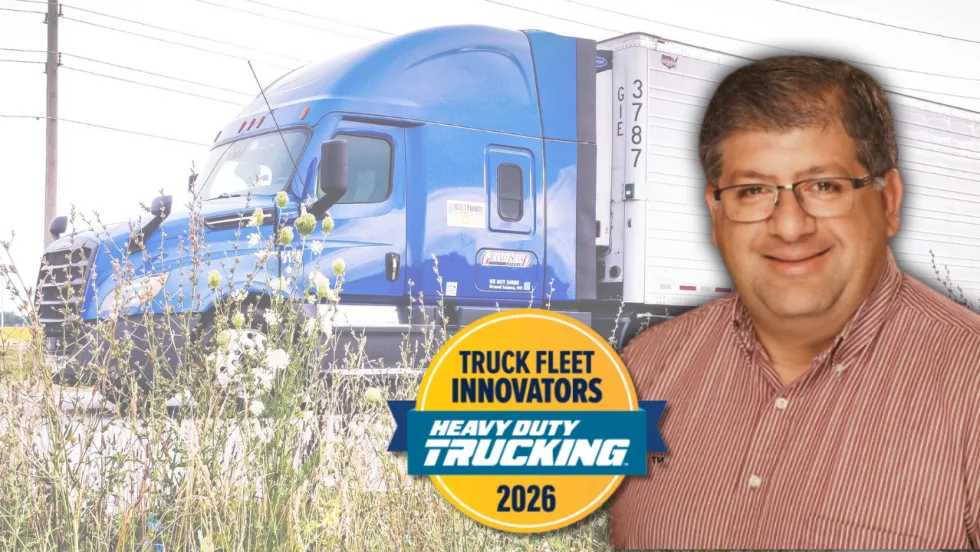
Deen Albert: Let Automation Do the Math, People Make the Decisions
HDT Truck Fleet Innovator Deen Albert makes sure people are still at the heart of operations at Grand Island Express, even while adopting artificial intelligence tools. AI-assisted dispatch helped boost revenue 25% with the same number of trucks.
Read More →
Trimble’s New AI Agent Takes Aim at Fleet Back-Office Busywork
Arc Agent works across Trimble TMS products to automate repetitive tasks such as freight orders, maintenance, invoices, fuel costs and more.
Read More →
How HDT’s 2026 Truck Fleet Innovators Are Rethinking Fleet Operations
Meet five trucking leaders who are challenging assumptions, solving operational problems, and putting innovative ideas to work.
Read More →