





Dig Deeper: EPA 2027 and Beyond: How Will New Low-NOx Rules Affect Fleets?
EPA Proposes Stricter Greenhouse Gas Standards for Heavy-Duty Trucks
The Environmental Protection Agency unveiled proposed Phase 3 greenhouse gas standards for heavy-duty vehicles, which among other things include a push for more zero-emission trucks.
April 12, 2023
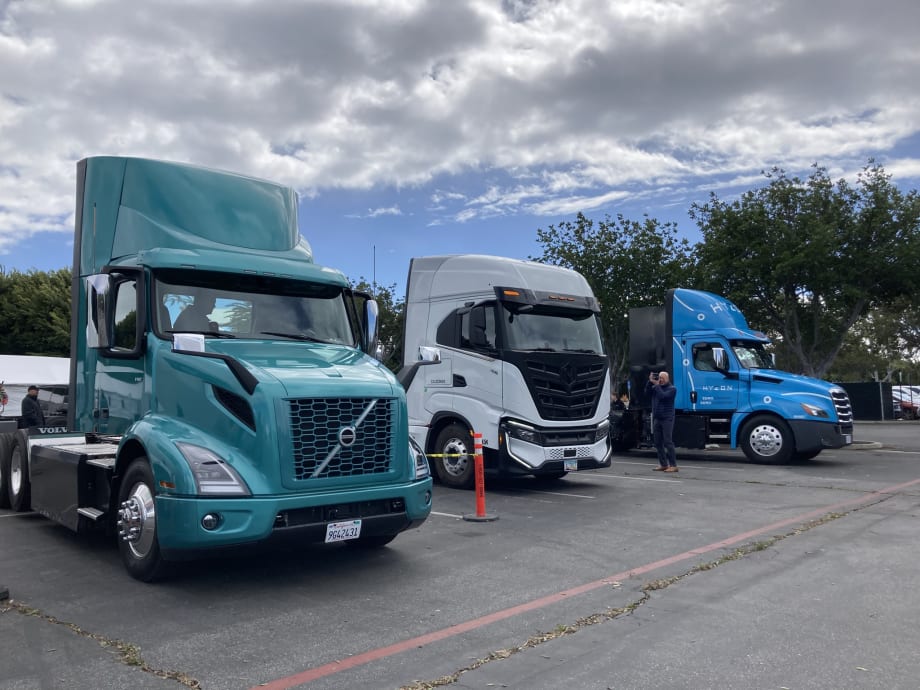
The EPA pointed to advances in zero-emission truck technology and to California's stricter ZEV standards, both of which have been prompting events like this one from the Harbor Trucking Association to give fleets hands-on look at battery-electric and hydrogen fuel cell trucks.
Photo: Chris Brown
7 min to read
The Environmental Protection Agency on April 12 unveiled its proposed Phase 3 greenhouse gas standards for heavy-duty vehicles, which among other things includes a push for more zero-emission trucks.
The administration made the announcement at the same time it unveiled proposed emissions standards for light- and medium-duty vehicles.
EPA's Heavy-Duty Truck Proposed GHG Standards
“Greenhouse Gas Standards for Heavy-Duty Vehicles - Phase 3” would apply to heavy-duty vocational vehicles (such as delivery trucks, refuse haulers or dump trucks, and public utility trucks, as well as transit, shuttle, and school buses) and tractors (such as day cabs and sleeper cabs on tractor-trailer trucks).
EPA said these standards would complement the criteria pollutant standards for MY 2027 and beyond that EPA finalized last December that severely limit NOx emissions and represent the third phase of EPA’s Clean Trucks Plan.
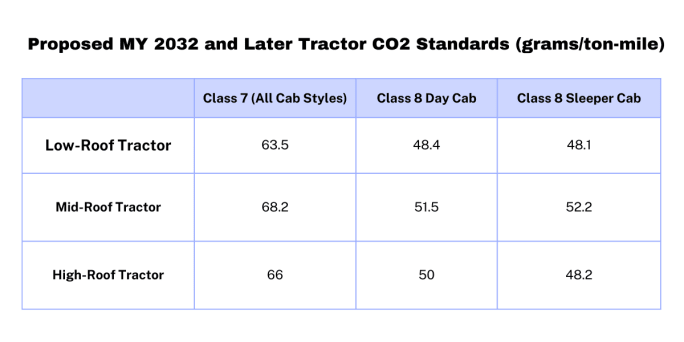
EPA is proposing stronger CO2 standards for MY 2027 HD vehicles that go beyond the current standards that apply under the HD Phase 2 Greenhouse Gas program. The agency is also proposing an additional set of CO2 standards for heavy-duty vehicles that would begin to apply in MY 2028, with progressively lower standards each model year through 2032.
The EPA said the proposed “Phase 3” greenhouse gas regulations use “performance-based standards that enable manufacturers to achieve compliance efficiently based on the composition of their fleets.”
The proposed rules would update some elements of the agency’s credit-banking program (what it calls the Averaging Banking and Trading program), including eliminating the last model year of the HD GHG Phase 2 advanced technology incentive program for certain types of electric highway heavy-duty vehicles.
EPA is proposing to add warranty requirements for batteries and other components of zero-emission vehicles and to require customer-facing battery state-of-health monitors for plug-in hybrid and battery-electric vehicles.
The rulemaking also proposes additional revisions and clarification to certain highway heavy-duty vehicle provisions and certain test procedures for heavy-duty engines.
Faster Adoption of Zero-Emission Vehicles
The agency explained that the development of zero-emissions technologies for heavy-duty trucks have been advancing faster than it anticipated when it wrote the GHG Phase 2 rules in 2016.
EPA’s proposal pointed out that:
ZEV models are already in use today for some applications and are expected to expand to many more applications.
Costs of ZEV technologies have gone down and are projected to continue to fall.
Manufacturers have announced plans to rapidly increase their investments in ZEV technologies over the next decade.
It also pointed to states that are pushing for more zero-emission trucks. California and other states have adopted the Advanced Clean Trucks program that includes a manufacturer requirement for zero-emission truck sales. In addition, 17 states and the District of Columbia have signed a Memorandum of Understanding establishing goals to support widespread electrification of the HD vehicle market.
The administration also noted that the 2021 Infrastructure Investment and Jobs Act (commonly referred to as the “Bipartisan Infrastructure Law” or BIL) and the Inflation Reduction Act of 2022 (“Inflation Reduction Act” or IRA) together include many incentives for the development, production, and sale of ZEVs, electric charging infrastructure, and hydrogen, which are expected to spur significant innovation in the heavy-duty sector.
Impact on the Environment
The proposal is projected to avoid 1.8 billion tons of CO2 through 2055, equivalent to eliminating all greenhouse gas emissions from the entire current U.S. transportation sector for an entire year and deliver additional health benefits by reducing other pollutants from these vehicles.
“Despite the significant emissions reductions achieved by previous rulemakings, GHG emissions from HD vehicles continue to impact public health, welfare, and the environment," said the agency in its proposal. "The transportation sector is the largest U.S. source of GHG emissions, representing 27% of total GHG emissions. Within the transportation sector, heavy-duty vehicles are the second largest contributor to GHG emissions and are responsible for 25% of GHG emissions in the sector.”
However, the NRDC (National Resources Defense Council) said the proposed rules for commercial trucks “fall short of what’s needed….For the millions of Americans forced to breathe dirty air because of tailpipe pollution, these proposed truck standards are a disappointment.” It believes that all new trucks should be required to be zero emissions by 2035.
Light- and Medium-Duty Proposed Standards
On the same day, the EPA proposed standards for light- and medium-duty vehicles. These proposals leverage advances in clean vehicle technology to further reduce climate pollution and smog- and soot-forming emissions, according to the EPA.
For additional insight, the light- and medium-duty proposal was reported in more detail by Work Truck, but here are the highlights:
“Multi-Pollutant Emissions Standards for Model Years 2027 and Later Light-Duty and Medium Duty Vehicles” builds on EPA’s existing emissions standards for passenger cars and light trucks for model years 2023 through 2026.
EPA said its proposal considers a broad suite of available emission control technologies, and the standards are designed to allow manufacturers to meet the performance-based standards however works best for their products. EPA expects the standards to drive widespread use of filters to reduce gasoline particulate matter emissions and spur greater deployment of CO2-reducing technologies for gasoline-powered vehicles. The proposed standards are also projected to accelerate the transition to electric vehicles.
Industry Reaction
American Trucking Associations President and CEO Chris Spear issued a statement, saying, "We share the goal of reducing greenhouse gas emissions and improving fuel efficiency and believe any regulation must be practical, achievable, and based on sound science....the Phase 3 standards must take into account the complex challenges and operating conditions facing motor carriers as we manage the transition to a zero-emission future while simultaneously moving more than 72% of the economy's freight.
"As we review the proposed rule, ATA will remain engaged in the regulatory process to ensure the agency arrives at a regulation that has realistic equipment adoption timelines, is technologically feasible, and will not cause additional inflationary pressures if finalized."
He also said that ATA is "extremely disappointed that EPA has chosen to reopen the Phase 2 regulation, which has been set for years. To make the plans and investments necessary for a successful transtion, our industry needs regulatory certainty....our industry has always found ways to partner with EPA on regulations that are tough but achievable. If EPA wants us to remain a willing participant, their going bak and changing what was already agreed upon is not how to do it."
The Clean Freight Coalition, recently formed by a group of trucking and equipment manufacturer associations, issues a statement from Executive Director Jim Mullen. He pointed out that its members are committed to the transition to zero-emission heavy trucks. However, he noted, "Ensuring a feasible transition to new technologies is our primary goal. An adequate infrastructure, including the power grid and charging stations, and the sourcing of required minerals, are essential to the supply chain as part of the transition to a zero-emission future. Further, regulations must provide the lead time, stability, and certainty that allows for the industry to develop the technology, test in real-world conditions, and minimize downtime and operational disruption."
The Owner-Operator Independent Drivers Association, however, slammed the proposed rules.
“The Biden-Harris EPA is continuing their regulatory blitz on small-business truckers," said OOIDA President Todd Spencer in a statement. "The latest proposal comes on the heels of a hurried NOx emissions rulemaking finalized in December along with a California waiver mandating sales of electric trucks. Today’s announcement is a blatant attempt to force consumers into purchasing electric vehicles while a national charging infrastructure network remains absent for heavy-duty commercial trucks.
Noting that there are concerns about EV costs, mileage range, battery weight and safety, charging time, and availability, Spencer said, "It’s baffling that the EPA is pushing forward with more impractical emissions timelines without first addressing these overwhelming concerns with electric CMVs. The pursuit of this radical environmental agenda in conjunction with an anticipated speed limiter mandate will regulate the safest and most experienced truckers off the road."
How to Comment
Written comments may be submitted to the rulemaking docket via www.regulations.gov, docket ID No. EPA-HQ-OAR-2022-0985. Comments are due 50 days after publication in the Federal Register.
EPA plans to hold a two-day virtual public hearing the Phase 3 GHG proposal on May 2 and 3, 2023. To register to speak at the virtual hearing or attend the hearing (including those who do not intend to provide testimony) notify EPA by April 26, 2023, preferably by email to EPA-HD-Hearings@epa.gov.
Updated 12:00 p.m. EDT to add ATA comments. Updated 4/13/2023 8:40 EDT to add comments fro OOIDA and Clean Freight Coalition.
More Fuel Smarts

How Volvo Updated Its D13 for EPA 2027 [Watch]
Volvo’s updated D13 promises lower emissions without sacrificing performance or fuel economy. Take a closer look at what changed inside the engine in this HDT Spotlight video.
Read More →
Diesel Price Spike Shortens Payback for Natural Gas Trucks, Report Says
Energy Vision estimates fleets could recover the higher purchase price of an RNG-fueled Class 8 tractor in 1.3 to 2.8 years under current fuel-price scenarios.
Read More →
Calstart Becomes Catalyst Mobility, Reflecting Broader Focus
Calstart is now Catalyst Mobility, reflecting the nonprofit’s growing national role in clean transportation, including zero-emission trucks, infrastructure and incentive programs.
Read More →

Record Diesel Prices Squeeze Trucking Fleets
Average U.S. diesel prices have climbed to nearly $6 a gallon, surpassing the 2022 record as tight refinery capacity and Middle East disruptions keep fuel costs elevated.
Read More →
Sponsored•September 9, 2026
How Fuel Delivery Shapes Engine Performance
Fuel delivery depends on more than what happens at the injector. For fleet, maintenance and technical professionals, looking at the full path from pump to injector can provide useful context for understanding engine performance.
Read More →
East Coast Port Launches $45M Electric Truck Push
The Port Authority of New York and New Jersey announced millions in incentives for zero-emission drayage trucks, yard tractors, and new charging hubs near the port.
Read More →
California Bill Could Shed Light on Electric Truck Prices
Why do battery-electric Class 8 trucks remain so expensive? A California bill headed to Gov. Gavin Newsom would give fleets and state agencies more visibility into what manufacturers charge.
Read More →
Detroit Opens Orders for EPA 2027 Engines
Detroit isn’t starting from scratch to meet EPA 2027 diesel emissions standards. Its Gen 6 DD13 and DD15 engines keep much of today’s platform while updating the fuel and aftertreatment systems.
Read More →
Zero-Emission Truck Corridor Planned for West Coast
California, Oregon, Washington, British Columbia and Baja California are coordinating plans for truck charging and hydrogen fueling from Canada to Mexico.
Read More →
A Closer Look at Kenworth’s Electric T880E Vocational Truck [Video]
Learn more about Kenworth's T880E battery-electric vocational truck at the Paccar Technical Center, including its range, applications, upfitting considerations, and PTO options, in this HDT Spotlight video.
Read More →