




Environmental Groups Sue Long Beach Over Port Trucking Deal
Environmental groups are suing the Port of Long Beach and the American Trucking Associations, asking that an agreement the two reached to settle an ATA suit against the port should be thrown out
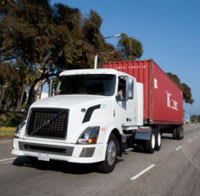
Environmental groups say a deal between Long Beach and American Trucking Associations is not legally valid.
Environmental groups are suing the Port of Long Beach and the American Trucking Associations, asking that an agreement the two reached to settle an ATA suit against the port should be thrown out.
In October, ATA and the Port of Long Beach announced a settlement that would end the ATA's legal challenge of the port's Clean Trucks Program.
The settlement is based upon a motor carrier registration process, referred to as a Registration and Agreement, which will replace the Port's Concession Agreement, which ATA had challenged in its lawsuit.
The Natural Resources Defense Council and the Sierra Club say Long Beach violated city and state law when it reached that settlement without first seeking public comment and an environmental review.
Calling it a "backroom deal" that leaves the Long Beach Clean Truck Program in the hands of polluting industry, NRDC and the Sierra Club say the agreement, entered into on October 19, 2009, violates Long Beach Municipal Code and state law, which require public involvement and an environmental review. The NRDC lawsuit calls for a legally required state environmental study of the agreement that includes public comment before it can move forward.
"You can't cut the public out of the conversation when you're talking about the air they breathe and the health consequences they face," said David Pettit, director of NRDC's Southern California Clean Air Program. "This deal puts the wolf in charge of the henhouse -- with a likely result of dirtier air for local communities. Industry cannot be allowed to dictate clean air efforts and rollback the Port's clean air advancements."
ATA officials Monday said while they could not comment on the NRDC's lawsuit itself, which they had not seen, the legal issues the NRDC raises in their press release have already been considered and rejected as baseless by the City of Long Beach.
"The press release also contains many inaccuracies that denigrate the Port's highly successful Clean Truck Program," said Clayton Boyce, ATA's Press Secretary and Vice President for Public Affairs.
The settlement agreement between the ATA and Long Beach did not make any change that would reduce, let alone reverse, the Port's progress in cleaning the air, Boyce said. "What is cleaning the air is the progressive banning of older trucks. The settlement agreement with the ATA gives the Port of Long Beach everything it needs, and everything it wanted, to continue banning older trucks. The port has the control." If the truck does not meet the requirements, the Port of Long Beach will not let it in the gate, Boyce said.
(For more on the Port of Long Beach Clean Trucks Program, see the POLB web site.)
More Fleet Management

Why Private Fleets Are Taking More Freight
Private fleets are putting their own trucks on demanding customers and high-cost lanes as companies seek greater control over service, costs, and capacity.
Read More →
Color Match Smarter: Tools That Restore & Perform
For fleet managers and collision repair professionals keeping heavy-duty trucks on the road, getting the color right the first time isn't just about appearance — it's about efficiency, turnaround time, and bottom-line results. Discover how today's digital color tools are transforming the repair process from guesswork to precision.
Read More →
FMCSA Pauses Biennial-Update Enforcement Amid Motus Transition
Carriers whose updates were due on or after June 1 have more time, while FMCSA works to stabilize its new registration system and warns of phishing sites impersonating its new carrier registration system, Motus.
Read More →


2026 Blueprint for Countering Smarter Supply Chain Theft
Cargo theft is no longer just the cost of doing business. It's a multi-billion-dollar criminal enterprise exploiting vulnerabilities across your fleet, drivers, and supply chain.
Read More →
How Telematics Improves Visibility, Control, and Performance in Refrigerated Fleets
Explore how telematics help refrigerated fleets improve visibility, uptime, efficiency, compliance, and cargo protection across connected cold chain operations.
Read More →
What the U.S.-Canada Trade War Means for Trucking
Escalating U.S.-Canada tariffs could disrupt cross-border freight, reduce truck volumes, raise costs, and create new uncertainty for carriers on both sides of the border.
Read More →
What Are Trucking’s Top Concerns for 2026?
The American Transportation Research Institute wants to know what's worrying trucking fleet managers, drivers, and other stakeholders in its annual Industry Issues survey.
Read More →
American Trucking Associations Looks for a New Leader
ATA President and CEO Chris Spear abruptly left his job at the association on August 21, at a pivotal time for the trucking industry.
Read More →
Public Wi-Fi Cybersecurity Risks: How Truck Drivers and Fleets Can Protect Their Data
Public Wi-Fi can expose truck drivers and fleets to credential theft, malware, and other cyber threats. Here’s how to reduce the risk on the road.
Read More →
For Nicky Cupp, Fleet Innovation Starts With Frustration
HDT Truck Fleet Innovator Nicky Cupp turns everyday pain points at Fraley & Schilling into opportunities for better technology and smarter processes.
Read More →