




Engine Technology Forum Calls for Revised Renewable Fuel Standards
Allen Schaeffer, Executive Director of the Engine Technology Forum, talks to HDT about why his organization is urging the EPA to revise its current renewable fuel standards.

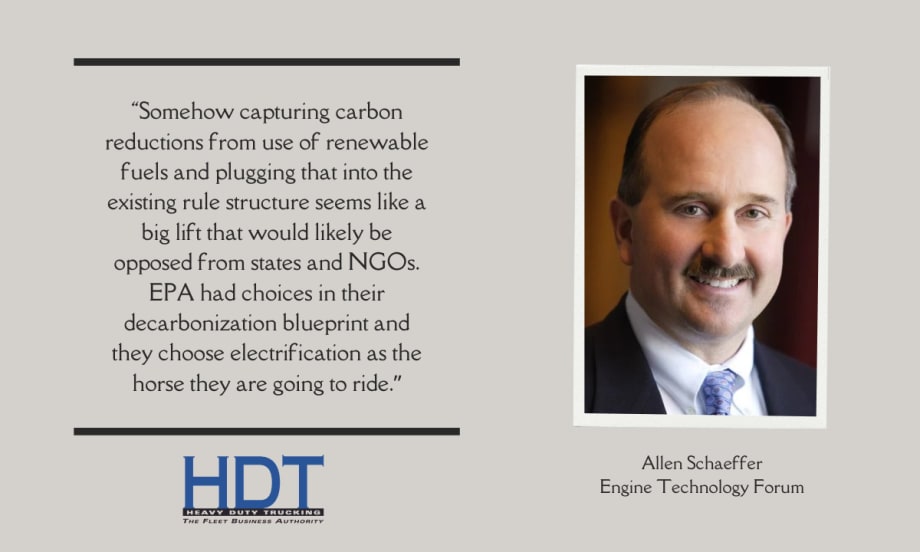
Allen Schaeffer, Executive Director of the Engine Technology Forum says it's time for EPA and CARB to give real regulatory support to renewable fuels.
Photo: Engine Technology Forum
The Environmental Protection Agency's renewable fuel standards are "out of touch with current conditions" and a missed opportunity to make progress on climate goals now, says Allen Schaeffer of the Engine Technology Forum.
The Engine Technology Forum issued a statement from Schaeffer, who is executive director, about the EPA's renewable fuel volume determinations, known as the Set Rule. Schaeffer and the Forum are calling for increased government support for alternative fuels as a means of accelerating a safe, productutive and economically viable path for reducing CO2 and NOx emissions.
Schaeffer's statement reads:
American employees are losing jobs in the biofuel industry because the EPA’s renewable fuels policy isn’t supporting growth. Last summer’s announcement of disappointing future volumes for biomass-based diesel in the Renewable Fuel Standard were well-below expectations and production levels. As I said at the time, the volume set is out of touch with current conditions.
The fallout from this policy is now becoming clearer. Fuel producers have closed down production lines causing the elimination of jobs, impacting hard-working throughout the country.
In a May 24, 2024, letter to EPA Administrator Michael Regan, the Forum renewed its appeal from June 2023 and those recent calls by feedstock providers and advanced biofuel producers, to propose and finalize robust, growth-oriented 2026 Renewable Fuel Standard volumes by November. The need is great, not only because of the negative economic impact but also because of the environmental one, too.
In addition, the Forum has launched a national education campaign to raise awareness about the importance of growth-oriented renewable fuel volumes.
The use of those fuels immediately reduces greenhouse gas emissions, and every diesel engine, vehicle, and machine can use them.
Every day that goes by when consumers and fleets aren’t given the choice to use those low-carbon fuels in their vehicles because of lack of supply is a missed opportunity, stalling progress on meeting climate goals.
A Flawed Basis for Legislation
In an exclusive interview with HDT, Schaeffer expanded on his message and argued that the underlying foundations of current renewable fuel standards are flawed.
Politics and money are hampering the country’s ability to settle on renewable fuel standards that actually work for the trucking industry, he said. And those factors are hindering real progress on reducing CO2 and NOx emissions from commercial vehicles in a realistic timeline.

Truck fleets need more renewable fuel options to reduce emissions -- and more goverment support for those fuels, according to the Engine Technology Forum.
Photo: Engin Akyurt
Schaeffer said the U.S. needs a national policy that is focused on carbon, rather than emissions.
“If we had carbon-oriented policies, then we could objectively evaluate all the means to reduce carbon,” he said. “But we don’t.
"So, some technologies and approaches are favored over others. And those options are favored with incentives and government funding at the expense of others.”
Realistically, Schaeffer said it is an open question as to what extent the transition from petroleum to green technologies will happen and when.
“So, everyone with a stake in those issues is weighing in on renewable fuels and our reliance on petroleum,” he said. “This includes people representing the oil industry and those pushing for non-petroleum-based technologies and policies that boost them. The result is lots of friction, political push and pull.”
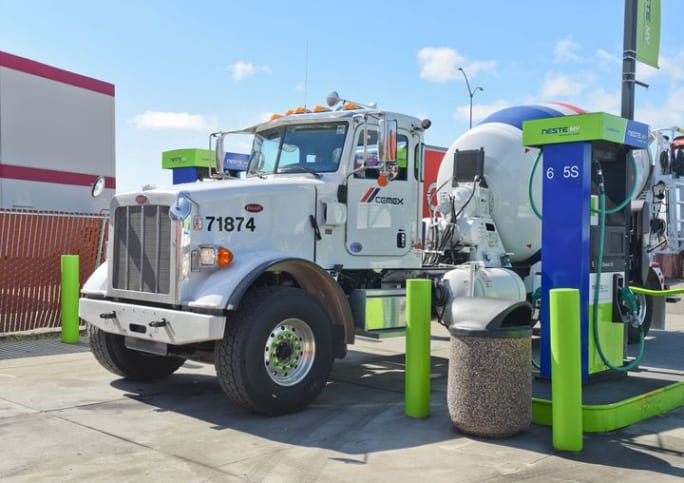
Renewable diesel fuel is just one of many clean fuel options government should be vigorously supporting, according to the Engine Technology Forum.
Photo: Neste
EPA’s approach focuses on tailpipe emissions only and not life cycle emissions, Schaeffer explained.
“If it did, renewable fuels would be in a much better policy position, in my view, as a bona fide player,” he added. “Now internal engine technologies have a continued path to reduced emissions using conventional fuels. But there is no extra credit for low carbon renewables from the federal government to promote them.”
Bias Against Internal Combustion Engines in Trucks
A big part of the problem, Schaeffer believes, is an inherent bias against internal combustion engines among many policymakers. Even though diesel engines today are 60 times cleaner than they were 20 years ago, many lawmakers see them as irredeemably flawed and outdated polluters.
“I believe very strongly on that personally,” Schaeffer said. “And we see it in our work daily. You don’t have to look far on social media or in public hearings to see evidence of it first-hand that there are strong ideological divides among us, which I think is unfortunate.”
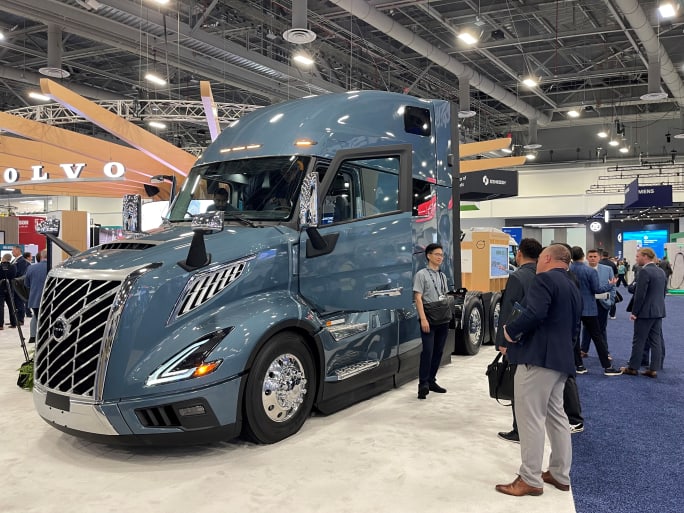
Schaeffer cited the efficiency gains of the new Volvo VNL tractor as one of many environmentally positive, ICE-powered trends in trucking today.
Photo: Jack Roberts
And policymakers are no different, Schaeffer added.
"They just express their bias in different ways. Otherwise, we would not see multiple states following California’s aggressive zero-emissions program and pledged to ban gasoline or diesel vehicles by 2035. Instead, they should be saying, 'Here is the amount of carbon we want to remove — you decide what works best for you.'”
Schaeffer noted that in 1980s, California deemed that methanol was going to replace diesel. The argument was that is was better in every way: Cleaner burning, readily available, affordable.
“Where are we today with that?” he asked. “It’s just another example of government- induced skepticism deciding what is best for the trucking industry.”
Signs of Hope on the Horizon?
At ACT Expo in May, there was new and strong pushback from fleets on the price, operating costs and efficiency of battery-electric trucks and the timelines in place to adopt them.
But Schaffer said any hope that those concerns will lead to a readjustment of EPA policy is just wishful thinking.
He said he believes that it’s far too early to determine if there will be any meaningful adjustments to the current emissions regulations. But if any do occur, they will likely focus on deadline extensions and reducing percentages of implementation.
“Somehow capturing carbon reductions from use of renewable fuels and plugging that into the existing rule structure seems like a big lift that would likely be opposed from states and NGOs,” he said. “EPA had choices in their decarbonization blueprint and they choose electrification as the horse they are going to ride.”
And Schaeffer said the message from fleets that came out of ACT Expo last month didn’t surprise him.
“We had the first wave of enthusiasm and novelty around new vehicles and fuels all set to replace diesel, reports from various EV advocate groups like RMI,” he said. “And the policy-makers say that fleets should start factoring these BEVs into their operations now! But what about infrastructure? No one asked that question until it was far too late in the game.”
It's important to understand that the current zero-emissions movement is a national program with a lot of industry buy-in, government money and policy behind it, Schaeffer said. So it will likely succeed at some level.
Time will tell,” he said. “I’ve worked in the trucking industry in some form or another since 1987, and this is a very independent industry with a strong family and work ethic that prides itself on getting the job done and doing the right thing.
"And that is hard to do for a very marginal industry that is high profile in everyone’s lives on a daily basis. Which is why I’m not a fan of mandates of any kind.”
Amazing New Tech Abounds for Decarbonizing Trucking
So, Schaeffer says, when government says “you must do this by a certain date,” there is bound to be anxiety among fleets concerning if or how that can really work.
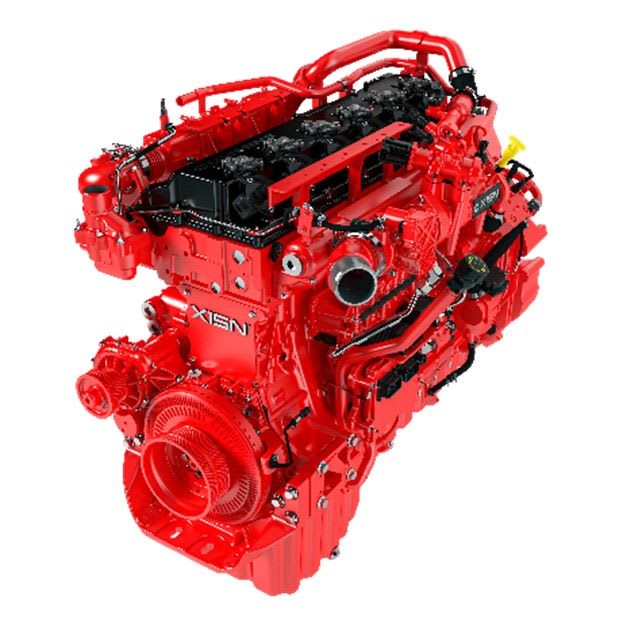
The Cummins X15N natural gas engine is one of the strongest decarbonization options available for fleets today, according to Allen Schaeffer, executive director of the Engine Technology Forum.
Photo: Cummins
It is hard to imagine such dramatic change for most fleets, he added. And, he noted, it’s important to remember that 80% of the trucking industry today is comprised of fleets with 20 or fewer vehicles.
Those are the businesses that are being expected to pay the costs and operate these new vehicles,” he said. “They are barely getting by with freight volumes and everything else today. And now someone says the trucks they are using today aren’t going to be allowed starting on such-and-such a date. That is just is not going to be received well.”
And yet, Schaeffer admitted that there’s a lot to like and be encouraged about when it comes to new emissions technologies for trucking.
“The new heavy-duty ICE trucks are amazing in every way,” he said. “The new Volvo VNL is more fuel efficient and has more power than its predecessor,” he noted. “The Cummins X15 and HELM platforms promise lower emissions and greater efficiency. And I think the new Cummins natural gas engine using renewable natural gas is the strongest decarbonization combo out there for trucking today — even compared to all the battery-electric truck options out there.”
At the end of the day, Schaeffer said he believes that it’s simply time for regulators to understand that biofuels and renewable fuels can and must be part of the equation going forward.
“I do believe strongly that trucking of the future will have a big increase in the type of fuel pumps you see when you pull into a truck stop,” he said. And not just the fuel pumps we see today — diesel, renewable diesel, renewable natural gas, hydrogen, electric, e-fuels. And that is a good thing if we can make it all work and save our environment and planet at the same time while delivering the goods.”
More Fuel Smarts

How Volvo Updated Its D13 for EPA 2027 [Watch]
Volvo’s updated D13 promises lower emissions without sacrificing performance or fuel economy. Take a closer look at what changed inside the engine in this HDT Spotlight video.
Read More →
Diesel Price Spike Shortens Payback for Natural Gas Trucks, Report Says
Energy Vision estimates fleets could recover the higher purchase price of an RNG-fueled Class 8 tractor in 1.3 to 2.8 years under current fuel-price scenarios.
Read More →
Calstart Becomes Catalyst Mobility, Reflecting Broader Focus
Calstart is now Catalyst Mobility, reflecting the nonprofit’s growing national role in clean transportation, including zero-emission trucks, infrastructure and incentive programs.
Read More →

Record Diesel Prices Squeeze Trucking Fleets
Average U.S. diesel prices have climbed to nearly $6 a gallon, surpassing the 2022 record as tight refinery capacity and Middle East disruptions keep fuel costs elevated.
Read More →
How Fuel Delivery Shapes Engine Performance
Fuel delivery depends on more than what happens at the injector. For fleet, maintenance and technical professionals, looking at the full path from pump to injector can provide useful context for understanding engine performance.
Read More →
East Coast Port Launches $45M Electric Truck Push
The Port Authority of New York and New Jersey announced millions in incentives for zero-emission drayage trucks, yard tractors, and new charging hubs near the port.
Read More →
California Bill Could Shed Light on Electric Truck Prices
Why do battery-electric Class 8 trucks remain so expensive? A California bill headed to Gov. Gavin Newsom would give fleets and state agencies more visibility into what manufacturers charge.
Read More →
Detroit Opens Orders for EPA 2027 Engines
Detroit isn’t starting from scratch to meet EPA 2027 diesel emissions standards. Its Gen 6 DD13 and DD15 engines keep much of today’s platform while updating the fuel and aftertreatment systems.
Read More →
Zero-Emission Truck Corridor Planned for West Coast
California, Oregon, Washington, British Columbia and Baja California are coordinating plans for truck charging and hydrogen fueling from Canada to Mexico.
Read More →
A Closer Look at Kenworth’s Electric T880E Vocational Truck [Video]
Learn more about Kenworth's T880E battery-electric vocational truck at the Paccar Technical Center, including its range, applications, upfitting considerations, and PTO options, in this HDT Spotlight video.
Read More →