




Economic Watch: Retail Sales Fall for Third Straight Month
Retail sales in the U.S. fell for the third straight month in February as harsh weather in much of the country kept consumers and their wallets at home.

Photo: Revisorweb via Wikimedia Commons

Photo: Revisorweb via Wikimedia Commons
Retail sales in the U.S. fell for the third straight month in February as harsh weather in much of the country kept consumers and their wallets at home.
A new Commerce Department report shows a decline of 0.6% from January, due in large part to a 2.5% drop in sales of new autos along with declines at department stores and electronics and appliances retailers of 1.4% and 1.2%, respectively. In contrast, gasoline sales increased 1.5%, due to higher prices, while online sales added 2.2%.
Excluding autos, overall sales in February fell just 0.1% after falling 1.1% in January.
The overall drop follows declines of 0.8% in January from the month before and 0.9% in December from November. On a three-month annualized basis, retail sales are down 4.8%, compared to a 4.3% growth rate six months ago. When February retail sales are compared to the level from a year earlier it was still 1.7% higher.
The overall February figure was well short of what many analysts were expecting with one consensus poll of economists forecasting a 0.3% increase.
“Widespread weakness throughout the categories suggests consumers pulled back markedly in the second month of the year, a reflection of sluggish wage growth and growing concerns surrounding financing today's spending with tomorrow's wages,” said Sterne Agee Chief Economist Lindsey Piegza. “Lower gas prices were a welcome windfall, boosting spending in October and November, but by December consumers have been squirreling away cost savings. Low gas prices alone are not enough to sustain spending patterns, support is needed from organic job and income growth.”
She noted while February weather was unseasonably cold, however, retail sales are seasonally adjusted and weather does not appear to have markedly impacted other economic reports in the same timeframe including regional manufacturing reports as well as the national employment report.
“It is difficult to blame February's spending malaise on weather alone, although it could have played a muted role in the Northeast and Midwest in particular,” Piegza said.
More Fleet Management

How Telematics Improves Visibility, Control, and Performance in Refrigerated Fleets
Explore how telematics help refrigerated fleets improve visibility, uptime, efficiency, compliance, and cargo protection across connected cold chain operations.
Read More →
What the U.S.-Canada Trade War Means for Trucking
Escalating U.S.-Canada tariffs could disrupt cross-border freight, reduce truck volumes, raise costs, and create new uncertainty for carriers on both sides of the border.
Read More →
What Are Trucking’s Top Concerns for 2026?
The American Transportation Research Institute wants to know what's worrying trucking fleet managers, drivers, and other stakeholders in its annual Industry Issues survey.
Read More →

American Trucking Associations Looks for a New Leader
ATA President and CEO Chris Spear abruptly left his job at the association on August 21, at a pivotal time for the trucking industry.
Read More →
Public Wi-Fi Cybersecurity Risks: How Truck Drivers and Fleets Can Protect Their Data
Public Wi-Fi can expose truck drivers and fleets to credential theft, malware, and other cyber threats. Here’s how to reduce the risk on the road.
Read More →
For Nicky Cupp, Fleet Innovation Starts With Frustration
HDT Truck Fleet Innovator Nicky Cupp turns everyday pain points at Fraley & Schilling into opportunities for better technology and smarter processes.
Read More →
Adam Buttgenbach’s Approach to Electric Trucks: Start With Where They Fit
HDT Truck Fleet Innovator Adam Buttgenbach helped PepsiCo build one of North America’s largest EV fleets by focusing on where electric trucks make operational sense.
Read More →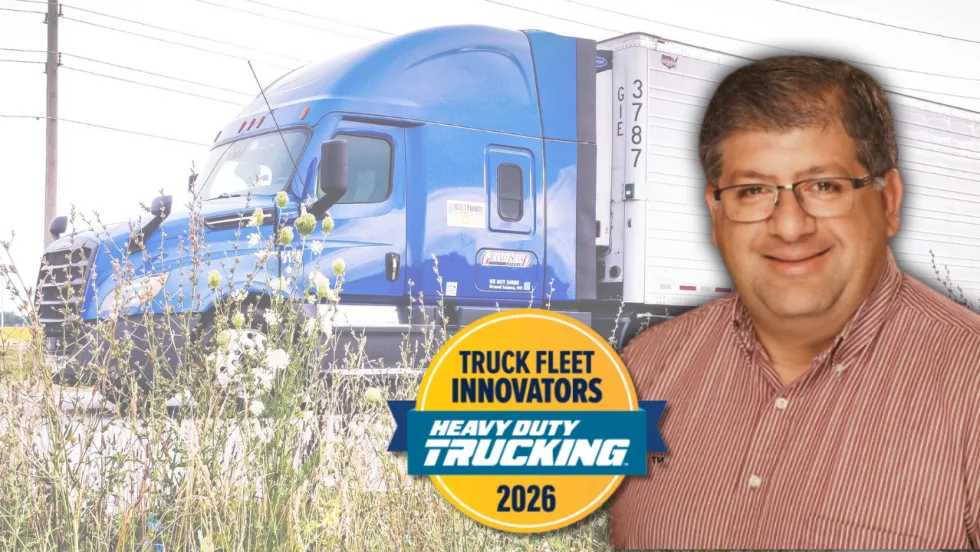
Deen Albert: Let Automation Do the Math, People Make the Decisions
HDT Truck Fleet Innovator Deen Albert makes sure people are still at the heart of operations at Grand Island Express, even while adopting artificial intelligence tools. AI-assisted dispatch helped boost revenue 25% with the same number of trucks.
Read More →
Trimble’s New AI Agent Takes Aim at Fleet Back-Office Busywork
Arc Agent works across Trimble TMS products to automate repetitive tasks such as freight orders, maintenance, invoices, fuel costs and more.
Read More →
How HDT’s 2026 Truck Fleet Innovators Are Rethinking Fleet Operations
Meet five trucking leaders who are challenging assumptions, solving operational problems, and putting innovative ideas to work.
Read More →