




Earnings Watch: Volvo Earnings Improve
The parent company to Volvo, Mack and other truck brands is back in the black, according to earnings reports released Friday, but it plans to cut U.S. production as it nears the end of a four-year cost cutting plan.

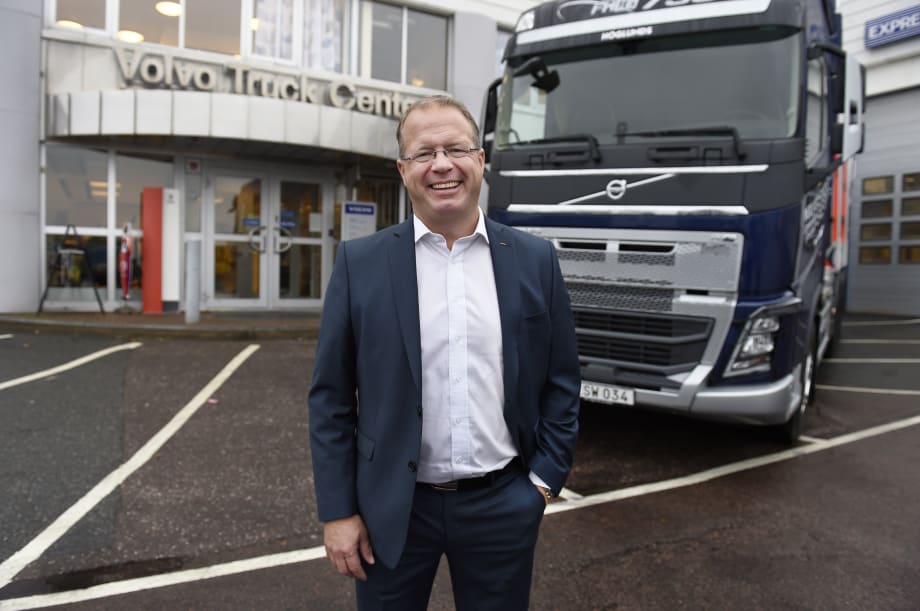
Martin Lundstedt, president and CEO Photo: Tommy Holl
Martin Lundstedt, president and CEO Photo: Tommy Holl
The parent company to Volvo, Mack and other brands is back in the black, according to earnings reports released Friday, but it plans to cut U.S. production as it nears the end of a four-year cost cutting plan.
Volvo AB (VOLVB) reported a net profit of 2.6 billion Swedish kronor or $300 million in the fourth quarter of the year, according to the Wall Street Journal, a big improvement from a loss of 2.98 billion kronor in the same period a year earlier. Revenue increased 2.7% to 79.6 billion kronor.
For 2015, net income improved to 15.1 billion kronor from 2.2 billion kronor in 2014. Revenue increased to 312.5 kronor from 283 kronor.
“2015 was a year of largely unchanged volumes, with the exception of construction equipment, where demand declined considerably,” said Martin Lundstedt, president and CEO. “Our profitability improved, with the operating margin excluding restructuring charges going from 3% in 2014 to 8.2% in 2015. This was thanks to cost reductions, but was also helped by positive currency development and capital gains from selling shares.”
Net truck orders in the final quarter of 2015 totaled 49,088, down from 61,222 a year earlier. The also were down for all of 2015, dropping to 198,057 from 219,791 for 2014.
Meanwhile, Volvo Trucks recently reported that the brand's U.S. retail market share for all of 2015 was a record 12.4% in 2015, 0.4 percentage points higher than in 2014, with a retail volume of 30,930 vehicles compared with 26,555 in 2014, according to WardsAuto Group. It also saw its highest market share ever in Canada and in the overall NAFTA regionl. Volvo engines were spec’d in a record 93% of the trucks sold in 2015, and Volvo I-Shift penetration was a record 83%.
“The trend in the truck markets is largely in line with our expectations. Demand improved in Europe but declined from high levels in North America,” Lundstedt said. “Brazil weakened somewhat further, while markets in Asia showed a mixed picture."
Order intake for trucks during the fourth quarter decreased by 20% year over year, but Volvo noted that was mainly driven by the slowdown in the North American market and by the comparison with exceptionally high order intake in the fourth quarter of 2014.
"In Europe demand continued to strengthen while Brazil had a weakening trend," he added, and said during the first quarter the company will adjust production to the new lower level of demand in North America and Brazil.
In North America orders fell by a total of 58% for the company, with Volvo orders down 55% and Mack orders declining 61%. Volvo attributed the decline to a slowing market, with dealers focusing on reducing their inventories and the comparison with an extraordinarily high quarter last year.
Production cutbacks will be implemented in North America in the first quarter to adapt to what it said is “a slowing market and expected destocking among dealers.”
Volvo also cut its forecast for the North America heavy-duty truck market 2016 to 260,000 vehicles from its previous forecast of 280,000, on the belief freight activity weakened towards the end of the year and the need for fleet expansion and renewal will be lower in 2016.
According to Dow Jones Business News, the company, which is nearing the end of a four-year restructuring program targeting 10 billion Swedish kronor, or $1.19 billion, in annual cost savings by the end of 2016, said measures are delivering expected results and that the number of employees in the group has been reduced by approximately 5,000 people for the full year.
You can read more about this in the company’s quarterly and full year report on the Volvo website.
More Fleet Management

Color Match Smarter: Tools That Restore & Perform
For fleet managers and collision repair professionals keeping heavy-duty trucks on the road, getting the color right the first time isn't just about appearance — it's about efficiency, turnaround time, and bottom-line results. Discover how today's digital color tools are transforming the repair process from guesswork to precision.
Read More →
FMCSA Pauses Biennial-Update Enforcement Amid Motus Transition
Carriers whose updates were due on or after June 1 have more time, while FMCSA works to stabilize its new registration system and warns of phishing sites impersonating its new carrier registration system, Motus.
Read More →
2026 Blueprint for Countering Smarter Supply Chain Theft
Cargo theft is no longer just the cost of doing business. It's a multi-billion-dollar criminal enterprise exploiting vulnerabilities across your fleet, drivers, and supply chain.
Read More →


How Telematics Improves Visibility, Control, and Performance in Refrigerated Fleets
Explore how telematics help refrigerated fleets improve visibility, uptime, efficiency, compliance, and cargo protection across connected cold chain operations.
Read More →
What the U.S.-Canada Trade War Means for Trucking
Escalating U.S.-Canada tariffs could disrupt cross-border freight, reduce truck volumes, raise costs, and create new uncertainty for carriers on both sides of the border.
Read More →
What Are Trucking’s Top Concerns for 2026?
The American Transportation Research Institute wants to know what's worrying trucking fleet managers, drivers, and other stakeholders in its annual Industry Issues survey.
Read More →
American Trucking Associations Looks for a New Leader
ATA President and CEO Chris Spear abruptly left his job at the association on August 21, at a pivotal time for the trucking industry.
Read More →
Public Wi-Fi Cybersecurity Risks: How Truck Drivers and Fleets Can Protect Their Data
Public Wi-Fi can expose truck drivers and fleets to credential theft, malware, and other cyber threats. Here’s how to reduce the risk on the road.
Read More →
For Nicky Cupp, Fleet Innovation Starts With Frustration
HDT Truck Fleet Innovator Nicky Cupp turns everyday pain points at Fraley & Schilling into opportunities for better technology and smarter processes.
Read More →
Adam Buttgenbach’s Approach to Electric Trucks: Start With Where They Fit
HDT Truck Fleet Innovator Adam Buttgenbach helped PepsiCo build one of North America’s largest EV fleets by focusing on where electric trucks make operational sense.
Read More →