




E-log Vendors Busy Implementing HOS Changes
The recently enacted change to drivers hours-of-service rules, scrapping parts of the restart provision adopted in July 2013, has prompted telematics and e-log providers to hustle out updates to their hours-of-service applications.

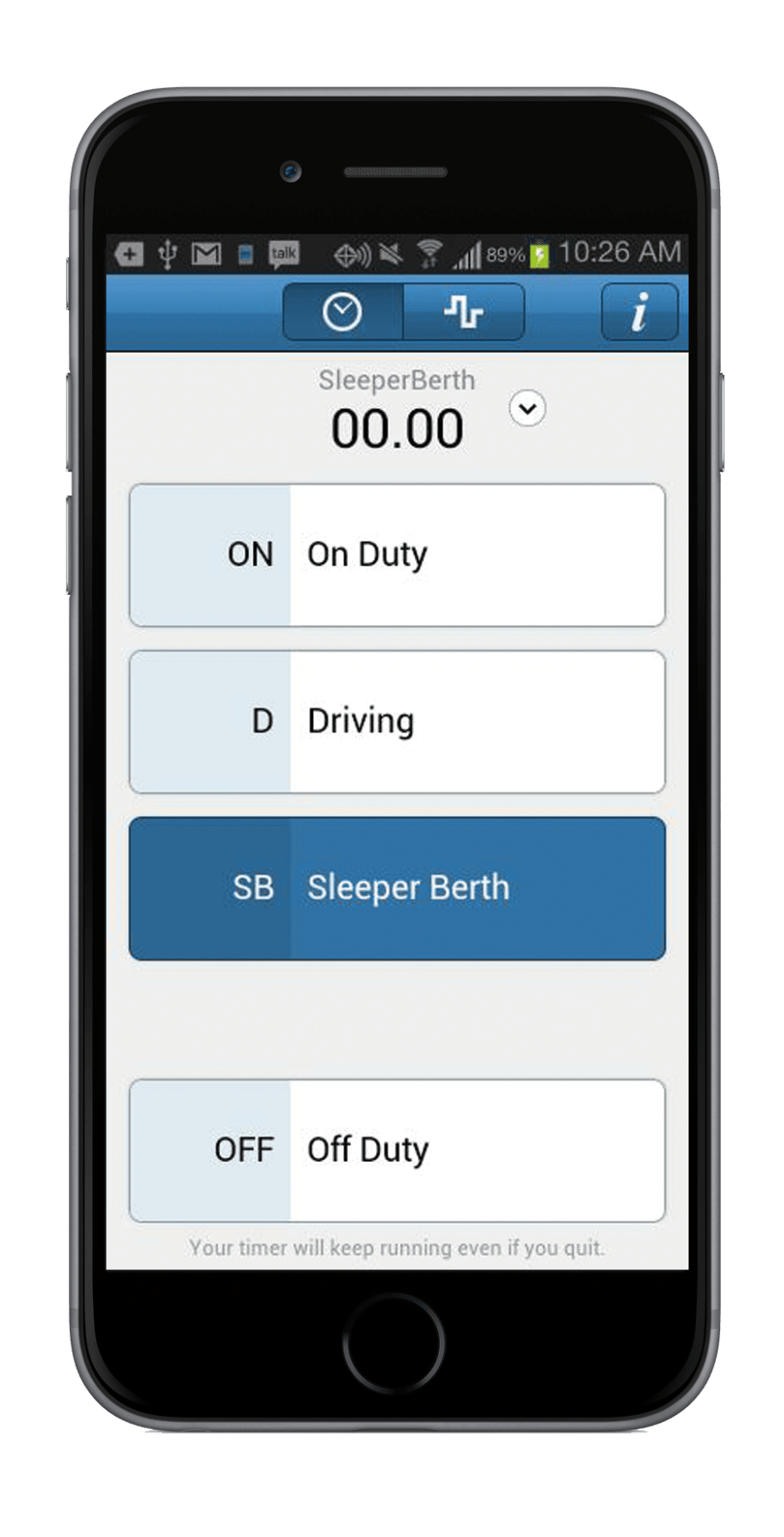
Vendors are busy updating their hours-of-service applications in response to recently HOS rule changes. (Photo courtesy of Telogis)
Vendors are busy updating their hours-of-service applications in response to recently HOS rule changes.(Photo courtesy of Telogis)
The spending bill recently signed into law contains language that scraps changes made to the 34-hour restart provision of the hours of service regulations in July 2013 while the Federal Motor Carrier Association studies the matter further. That action has prompted telematics and e-log providers to hustle out updates to their hours-of-service applications.
Timing, as they say, is everything, and the timing of the bill’s implementation has put vendors in hurry-up mode, says Eric Witty, vice president of product marketing for Cadec.
Noting that while governmental processes are well publicized, the timing of this change was an issue. “The bill is signed and it is in effect and there is no grace period for vendors to make product changes," Witty says.
For most providers and their customers, the updates will be relatively painless and available within a matter of weeks. In many cases the updates to users will occur automatically.
Automatic E-Log Updates
“It’s just a software change that we will deploy to our customers over the air,” says Amy Krouse, director of public relations, Rand McNally, noting the change was relatively minor. The company anticipates having an update deployed to customers within 30 days.
At PeopleNet, customers won’t really notice the updates. “Our updates will be a back office systems update,” explains Elise Chianelli, senior product manager of safety and compliance. Once a driver completes a logout and log in, going forward his log will reflect the new rules. In this instance, their customers “won’t have to do anything,” Chianelli says, noting that the PeopleNet system is updated, not the customers'. “Anytime we can make a back system update, that’s how we do it.” The company expects to have its system updated by the first week of January.
That will be the process for most e-logs that are cloud-based or software-as-a-service applications.
“The good thing, being a SaaS provider, we can respond very quickly to this type of thing,” says Kelly Frey, vice president of product marketing, Telogis. “We’ve already got the team working on the change and will release a new version as soon as possible. Luckily it’s not a major change.”
Frey notes that “all of our customers are using the HOS applications on open systems like an Android or iOS device. Those are really very easy to update.” If users have their devices set to receive automatic updates, the application is updated when the device is powered off and back on again. Otherwise, they will receive a notice that an update is available with a "click here to update" link. Another option will be for users to download the updated application from the app store.
Tom Cuthbertson, vice president of regulatory compliance at Omnitracs, says his company will get updates out for some products in “short order.” The updates will be distributed directly to users’ mobile devices and drivers will use the updated rules either immediately or at next login.
Zonar, Seattle, announced Dec. 22 it was beginning over-the-air updates on Dec. 22 to its ZLogs hours-of-service application. In its announcement, the company said the update would have “minimal impact” on customer operations.
How E-log Providers Prepare for Changes
Even though the industry has lobbied for suspending those particular restart provisions, the recent changes were somewhat unexpected. “Although we follow this closely, and are members of a number of industry groups, this kind of came out of the blue,” Frey says.
But with the HOS rules and electronic logging mandates in a state of flux over the last several years, technology providers assume changes when designing their systems. “We’ve been following the issue over the last several months,” Chianelli says. “In our original design of July 2013 we designed our system so that it could account for changes. It’s taking time up front to anticipate these changes.”
Cadec’s Witty says the best way to approach a moving target such as HOS rules is to develop the software so that “a simple configuration change of the software can revert back to previous rules," if there is a change.
One provider of a smartphone logging app, KeepTruckin Electronic Logs, sent out an announcement that it was updating its app on Wednesday. The company said the ability to make that change quickly was one advantage of its mobile-device-based software.
Chianelli notes that for fleets that were early adopters of automated logs and might deploy proprietary systems, the changes might be more difficult. “Not only do suppliers have to make changes, carriers have to make changes,” she says. “A lot of carriers have home-grown applications who will have to make system changes.”
For those still using paper logs, the change could entail a little retraining. On the other hand, most drivers who were driving prior to July 2013 will be familiar with the how the previous rule worked.
Pro-Tread, an online training provider, sent a notice to users that it had updated its HOS training to reflect the change.
More Drivers

Truck Drivers Need More Than Another Alert
Fleets have more visibility into truck health, safety events, and driver activity than ever. The next challenge is turning all that information into useful guidance for the person who has to decide what to do next.
Read More →
FMCSA Removes 110 Truck Driver Training Schools from Certified ELDT List
Federal regulators also are targeting more than 160 additional training providers and launching a nationwide audit of third-party CDL skills testers as part of a broader crackdown on trucking fraud.
Read More →
Hours of Service Pilot Programs: FMCSA Readies for 2027 Rollout
Two pilot programs could eventually reshape hours-of-service rules, giving truck drivers options to pause their 14-hour clock or use longer split sleeper rest periods.
Read More →
Medical Cards, English Proficiency Reshape Roadcheck Violations
Medical-card violations jumped to the top of the driver out-of-service list during CVSA’s 2026 International Roadcheck, while English-language proficiency violations appeared among the leading violations for the first time.
Read More →
Driver Trust Can Make or Break the Success of Fleet Safety Technology
New Teletrac Navman research suggests that onboarding, transparency about driver data, and positive feedback can play a significant role in how commercial drivers respond to safety and coaching technology.
Read More →
EEOC Sues KLLM Over Alleged Sex Discrimination in Driver Training
KLLM is facing a federal sex-discrimination lawsuit over policies the EEOC alleges put female truck driver trainees at a disadvantage.
Read More →
FMCSA Moves to Codify English Language Requirements for Commercial Drivers
By changing regulations on English-language proficiency requirements for commercial drivers, rather than relying on a guidance memo, the FMCSA said future administrations won't be able to walk back the Trump administration's stricter enforcement with just a memo.
Read More →
Drivers Put Western Star Trucks to the Test at Star Nation Experience
Watch to get an inside look at the Western Star trucks, technology, and community behind the Star Nation Experience 2026!
Read More →
Trump Administration Looks to Put More Veterans Behind the Wheel
The Freedom Haulers program pulls together existing and expanded programs at several federal agencies to recruit veterans to drive commercial heavy-duty trucks and cut the red tape for them to get a CDL, training, and employment.
Read More →
Putting Mack’s Command Steer to the Test
A test drive of Mack’s Command Steer active steering system evaluates how it can make truck driving easier and less tiring.
Read More →