




Diesel Prices Rise, Midwest Region Skyrockets
The long ride of falling diesel prices has ended with the fuel posting its first weekly increase since late June, according to new U.S. Energy Department figures.

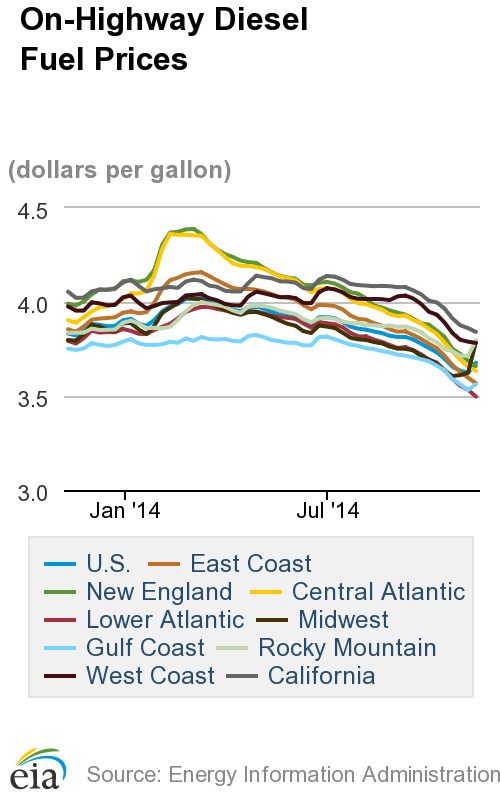
Credit: U.S. DOE

The long ride of falling diesel prices has ended with the fuel posting its first weekly increase since late June, according to new U.S. Energy Department figures.
The national average for on-highway diesel is up 5.4 cents this week, hitting $3.677 per gallon, but is still 15.5 cents lower than it was during the same time last year. So far this year the highest average overall U.S. price for diesel is $4.021, hit in March.
The reason for the overall gain is a price hike of 16.4 cents over the past week in the Midwest and a 8.3 cents jump in the Rocky Mountain region. Diesel increased far less in the Gulf Coast region, adding just 3 cents, along with a 0.8 cent gain in the West Coast region, minus California. All other parts of the U.S. saw weekly price declines.
Despite these regional weekly increases diesel prices in all the different parts of the country are still lower than a year earlier.
Diesel ranges from a low of $3.497 in the Lower Atlantic states, down 3.6 cents from a week ago, to a high of $3.796 in the Rocky Mountain region.
This happened as the average price for regular-grade gasoline posted its sixth straight weekly price decline, shedding 5.2 cents from last week, for an average of $2.941 per gallon. Compared to the same time a year ago the price is 25.3 cents less.
Gasoline prices fell in all regions of the country and range from a low of $2.723 in the Gulf Coast region to a high of $3.168 in the West Coast region.
Meantime, the price of oil keeps moving lower, meaning the fuel price increases could be short lived, with Brent North Sea Crude hitting a four-year low settlement price of $82.34 in Europe on Monday while U.S. West Texas Intermediate crude fell to $77.40 in New York.
The declines came as oil tried to rally earlier in the day on news of renewed fighting between Ukraine and Russia and positive economic news from China. However, prices fell following news that the OPEC oil cartel would leave crude production unchanged rather than reducing it to try and stop recent price declines.
More Fuel Smarts

Cummins Adjusts 2027 Engine Rollout After EPA Proposal
The engine maker will gradually introduce its new Model Year 2027 diesel engines while continuing to offer current models during the transition, citing the EPA's proposed emissions rule changes.
Read More →
EPA Proposal Could Ease 2027 Truck Costs and Buying Uncertainty
The proposal doesn't change the tougher NOx standard, but it would revise key implementation requirements that manufacturers say have driven up costs and complicated fleet purchasing decisions.
Read More →
Cummins, Paccar Ease DEF Derates After EPA Guidance
Updated diesel engine software gives truck operators more time to address emissions-system issues while staying compliant with EPA emissions standards.
Read More →
Maintenance in the Messy Middle Part 3: Biodiesel
Biodiesel can reduce emissions, improve fuel-system lubricity and use existing diesel infrastructure. But NACFE’s Messy Middle maintenance report says fleets must actively manage storage, cold-weather operation, filters and oil drain intervals to avoid problems.
Read More →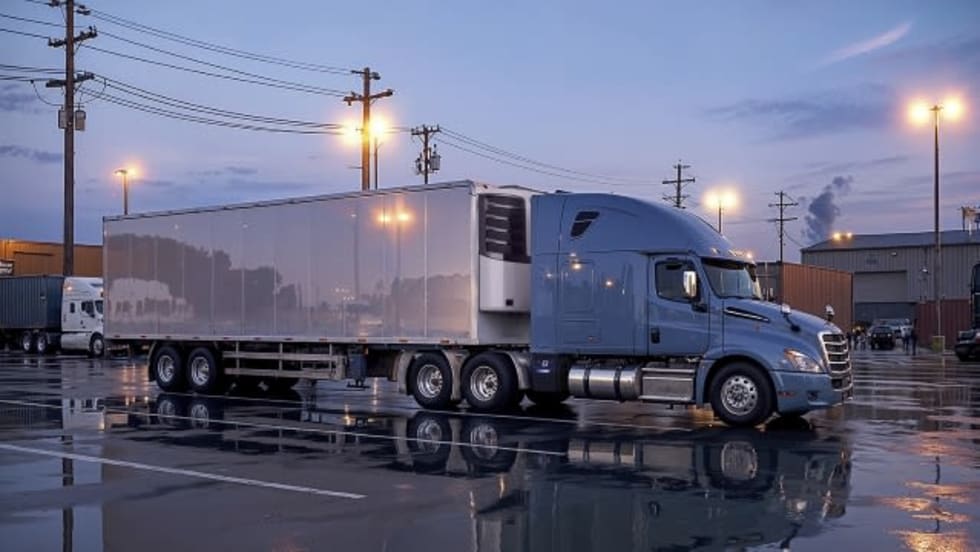
Enhance Fleet Performance with High-Efficiency Auxiliary Power Units
Drive sustainable cost savings while increasing driver comfort during short- and long-haul logistics operations.
Read More →
Maintenance in the ‘Messy Middle’ Part 2: Renewable Diesel Fuel
NACFE's latest Messy Middle Powertrain Service & Maintenance report says renewable diesel gives fleets an opportunity to reduce carbon emissions without changing trucks, fueling infrastructure or maintenance practices. But technicians still need to understand several important operational differences.
Read More →
The Diesel Engine Enters NACFE’s ‘Messy Middle’
NACFE’s new Messy Middle Powertrain Service & Maintenance report says keeping modern diesel engines running now depends as much on software, diagnostics and data as traditional mechanical service.
Read More →
DTNA Software Update Gives Truckers More Time Before DEF Derates Take Effect
The changes reflect EPA guidance aimed at reducing downtime caused by emissions-system faults while maintaining compliance requirements.
Read More →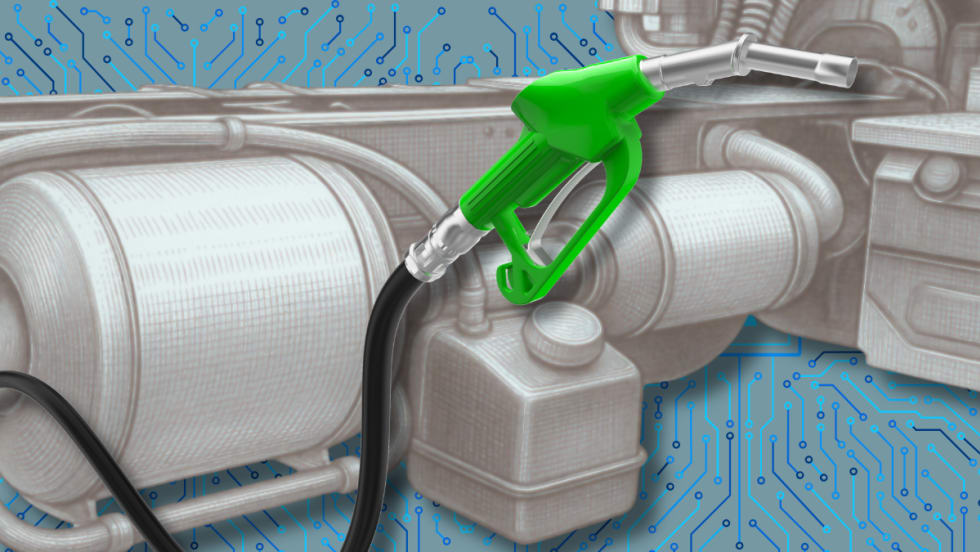
New Agentic Predictive Maintenance Report Demonstrates How Degraded Aftertreatment Systems Waste Fuel
Questar analyzed a large mixed-class fleet and discovered it was wasting as much as $30 in fuel per vehicle, per day, because of mechanically degraded aftertreatment systems.
Read More →
New York City's Microhub Project is Delivering Results
Trucking, last-mile delivery companies, and environmental advocates like what they are seeing so far with New York's microhub program.
Read More →