




DAT: February Truckload Rates Jump
Truckload freight pricing rose and national average load-to-truck ratios for dry van and refrigerated freight hit record highs in February.

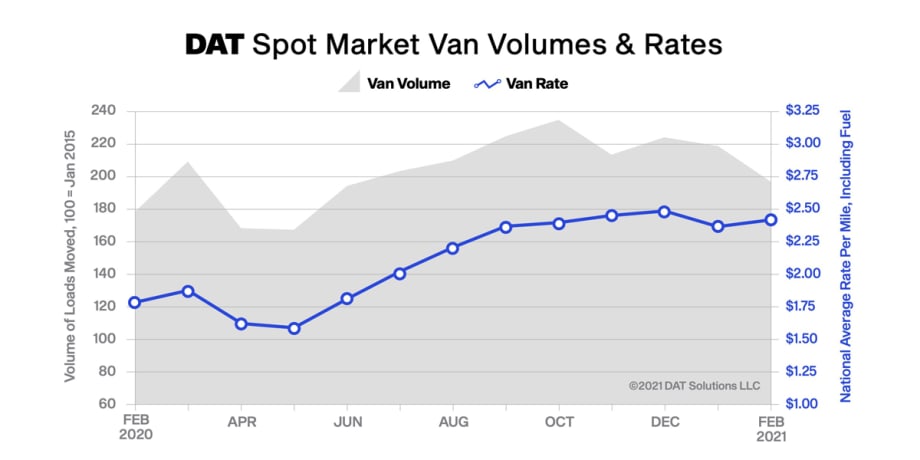
Dry van spot rates averaged $2.41 per mile in February, up from $2.36 in January and 63 cents higher than in February 2020.
Graph: DAT
Truckload freight pricing rose and national average load-to-truck ratios for dry van and refrigerated freight hit record highs in February as severe weather across much of the United States distressed supply chains and disrupted transit times.
The DAT Truckload Volume Index, a measure of dry van, refrigerated and flatbed loads moved by truckload carriers, declined 9.8% from January to February, reflecting a reduction in freight movement for the month.
However, demand for truckload capacity tightened as contracted carriers struggled to fulfill service commitments, DAT officials said in a press release. During the week of Feb. 21, DAT achieved record network volumes with more than 10 million loads posted, an increase of 42% from the previous high recorded in June 2018 and a 174% improvement over the same period in February 2020.
Nationally, the van load-to-truck ratio averaged 7.5 in February compared to 4.3 the previous month, and the reefer ratio was 15.9, up from 8.2 in January. The flatbed ratio jumped from 47.9 in January to 62.2 last month.
The impact on truckload pricing was significant. Dry van spot rates averaged $2.41 per mile in February, up from $2.36 in January and 63 cents higher than in February 2020. Increases were even greater in the temperature-controlled sector, where reefers were in demand to keep traditional dry freight from freezing. Reefer spot rates averaged $2.70 a mile, up 9 cents month over month and 62 cents year over year.
“The scope of the weather system and impact on people and infrastructure at once constricted freight volumes and made it more expensive to move goods long distances over the road,” said Ken Adamo, Chief of Analytics at DAT. “After a decline in January and early February, pricing unexpectedly shot back up to post-holiday levels and strained fragile supply chains.”
In addition to record-level spot market volumes, intermodal network disruptions pushed more freight into the spot markets as shippers sought to meet delivery deadlines with customers.
At $2.58 per mile, the national average spot flatbed rate hit its highest point since August 2018 as the movement of building products and raw materials for manufacturing increased. The flatbed load-to-truck ratio was 62.2 compared 47.9 in January and 20.4 in February 2020.
Load-to-truck ratios reflect the number of available loads on the DAT network of load boards relative to the number of available trucks and indicate levels of supply and demand in the truckload marketplace.
DAT anticipates spot rates and truckload freight volumes in March to fall from record highs, but remain elevated as they track a more normal pattern of activity.
Demand for refrigerated trailers will continue to build as shippers move domestic and imported produce, and flatbed carriers will continue to benefit from the high demand for farm and construction machinery.
More Equipment

How Volvo Updated Its D13 for EPA 2027 [Watch]
Volvo’s updated D13 promises lower emissions without sacrificing performance or fuel economy. Take a closer look at what changed inside the engine in this HDT Spotlight video.
Read More →
Michelin Tire Improves Efficiency and Durability for Regional Fleets
The Michelin X Multi Energy D2 is a regional haul drive tire engineered to help fleets improve fuel efficiency, durability and traction in demanding stop-and-go operations.
Read More →
ZF Expands Commercial Vehicle Push in North America
ZF is expanding its North American commercial-vehicle presence with new transmission applications, electrification, trailer technology and autonomous-driving systems.
Read More →
Tesla Wants a Self-Driving Semi. Are Cameras Enough?
Could Tesla’s camera-only autonomous driving technology work on an 80,000-pound Semi? In this commentary, HDT's Deborah Lockridge takes a look at Tesla, Cybercab, and how autonomous trucks see the road.
Read More →
Kodiak: Driverless Long-Haul Truck Launch on Track for 2026
Kodiak AI says its driverless long-haul safety case is 93% complete and it remains on track to begin commercial operations by year-end 2026.
Read More →
What DOT’s Automated Vehicle Strategy Means for Trucking
The U.S. Department of Transportation issued a new automated-vehicle strategy that outlines plans for driverless-truck regulations, cross-state freight corridors, and federal safety standards.
Read More →
East Coast Port Launches $45M Electric Truck Push
The Port Authority of New York and New Jersey announced millions in incentives for zero-emission drayage trucks, yard tractors, and new charging hubs near the port.
Read More →
PlusAI Going Public to Fund Autonomous Truck Launch
A SPAC deal could provide PlusAI with up to $300 million as it works toward a 2027 commercial launch of factory-built autonomous trucks.
Read More →
NHTSA Moves to Rewrite Truck Fuel-Economy Rules
The National Highway Traffic Safety Administration says it lacks authority to regulate medium- and heavy-duty truck engines separately from complete vehicles, but the existing standards have not yet been eliminated.
Read More →
Detroit Opens Orders for EPA 2027 Engines
Detroit isn’t starting from scratch to meet EPA 2027 diesel emissions standards. Its Gen 6 DD13 and DD15 engines keep much of today’s platform while updating the fuel and aftertreatment systems.
Read More →