




Cass Freight Index Report: Shipping Picks Up Post Holiday Season
In a reversal of a very long trend, the month-to-month change in freight movements in February was greater than that of expenditures, reports the February 2012 Cass Freight Index Report
In a reversal of a very long trend, the month-to-month change in freight movements in February was greater than that of expenditures, reports the February 2012 Cass Freight Index Report.
Costs to move goods seem to have flattened out for now. Compared to January, freight shipment volume was 2.5% higher in February, while freight spending was 1.2% higher. Annually, freight volumes were up 3.5% from January 2011.
The manufacturing sector continues to be the backbone of the economy. The Commerce Department report on Manufacturers' Shipments, Inventories and Orders showed that shipments of manufactured durable goods were up 0.4% in January for the third consecutive month. Petroleum and coal products accounted for much of the 1.3% in nondurable goods shipments, which were up 3.5%. Railroad weekly carloadings and intermodal traffic have trended downward in recent weeks after an uneven start to the year.
Truck tonnage has been edging up, but not on a consistent basis. Retail sales have been moderate, but retail stock is at high-enough levels that significant new orders are not likely. In fact, January new orders for manufactured durable goods declined 3.7%, and new orders for nondurable goods rose 1.3%. The inventories-to-shipments ratio was 1.33, unchanged from the previous month
Monthly freight spending from January rose only 1.2% against the 2.5 increase in volumes. Year-over-year freight expenditures were 9.8% higher than in 2011, a difference that strongly contrasts January's gap of 22.1%. This gap in year-to-year freight spending has been slowly eroding since early last year, but has stayed ahead of the gap in year-to-year shipments.
Flatter rates indicate a sluggish economy and adequate capacity. Fuel costs have risen, but total spending does not seem to reflect this increase. The conclusion would be that carriers have eased up on base rates to compensate for higher fuel charges, according to Cass.
Cass analysts say there are no clear signs that we can expect a fast turnaround for the freight industry; but rather several signs that this year may be more reflective of the uneven growth the U.S. has experienced for the past three years.
The economy is continuing on its slow path to recovery. There have been many positive signs in recent months. Hiring is up, unemployment has edged down, consumer confidence is continuing its five-month upward march, and retail sales (excluding autos) rose another 0.7%. However, consumers are still spending the biggest share of their paychecks on necessities, as prices for food and gas remain high.
Further, consumers have been turning to credit, fueling a 10% growth in consumer debt from November to January and reaching the highest level in 10 years. Despite figures that seem to indicate that the economy is off to a stronger start than last year, GDP growth is still expected to be below 3%.
More Fleet Management

Nomination Deadline Extended for HDT Emerging Leaders
Just a few more days to nominate accomplished trucking fleet professionals under 40 who are making an impact and helping lead the industry forward for the HDT Emerging Leaders award. Deadline extended to October 20!
Read More →
What Will ATA’s New Leader Bring to Trucking's Table?
Incoming President and CEO Mark Colson’s record in Alabama offers clues about his priorities and approach following Chris Spear’s abrupt departure as the head of the American Trucking Associations.
Read More →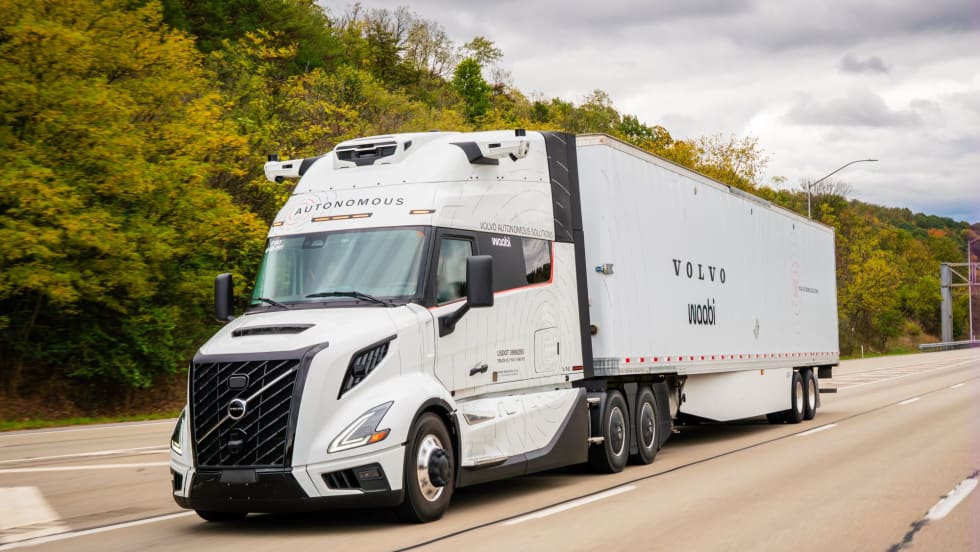
Volvo, Waabi Start Commercial Autonomous Operations in Texas
Volvo VNL Autonomous trucks, powered by the Waabi Driver, are hauling freight directly to third-party facilities for a customer in Texas.
Read More →
Samsara Launches Custom AI Agent Builder
Agent Studio lets fleets create AI tools for hours-of-service monitoring, reporting and driver support, including agents that communicate by phone.
Read More →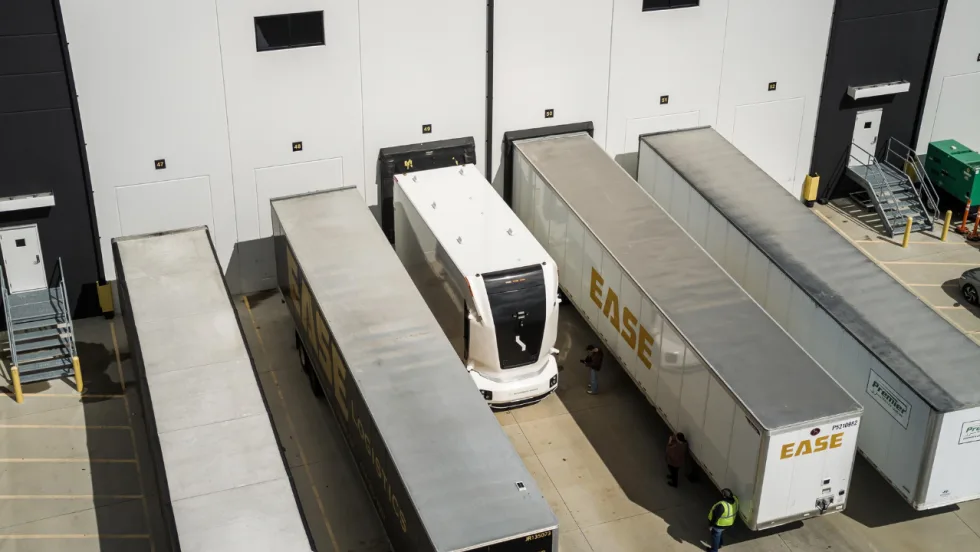
Einride Driverless Electric Trucks Begin Daily Freight Operations in Ohio
Two cabless electric trucks are hauling freight between EASE Logistics facilities in Marysville, Ohio, as part of a multi-state truck automation project.
Read More →
Geotab Links Fleet Card to Vehicle Data
The new card combines fuel discounts with telematics-based purchase controls. Geotab’s analysis also points to potential savings from choosing lower-priced fuel stops.
Read More →
How MFA Helps Protect Trucking Fleets
Multi-factor authentication adds protection when passwords are stolen. Here’s how it works and where fleets should start.
Read More →
How Better Freight Data Helps Trucking Teams Get Ahead of Disruption
Trucking and logistics teams have plenty of data. The problem is getting the right information in front of the right people soon enough to act. Better-connected data can help teams spot trouble earlier and make smarter decisions before small problems become big ones.
Read More →
Trimble: Taking Artificial Intelligence in Trucking Beyond Faster Tasks
At Insight 2026, Trimble executives argued that fleets may need to redesign workflows to get more from AI as it introduced new products and enhancements. AI’s value will depend on how fleets combine automation with their people's knowledge.
Read More →
Build a bulletproof fleet: Uniting ELDs and dash cams for total compliance
An ELD can prove compliance, but it cannot always prove what happened on the road. Discover how uniting accurate ELD data with AI-powered dash cam video can help your fleet strengthen compliance, defend against liability, protect drivers and reduce operational costs.
Read More →