





How Today's Cybercriminals Con Their Way Into Trucking Operations
New Phishing Scheme Targets Motor Carriers, FMCSA Warns
Beware of a new phishing scheme targeting motor carriers. Scammers are sending emails posing as FMCSA or DOT officials to steal data.
February 3, 2026
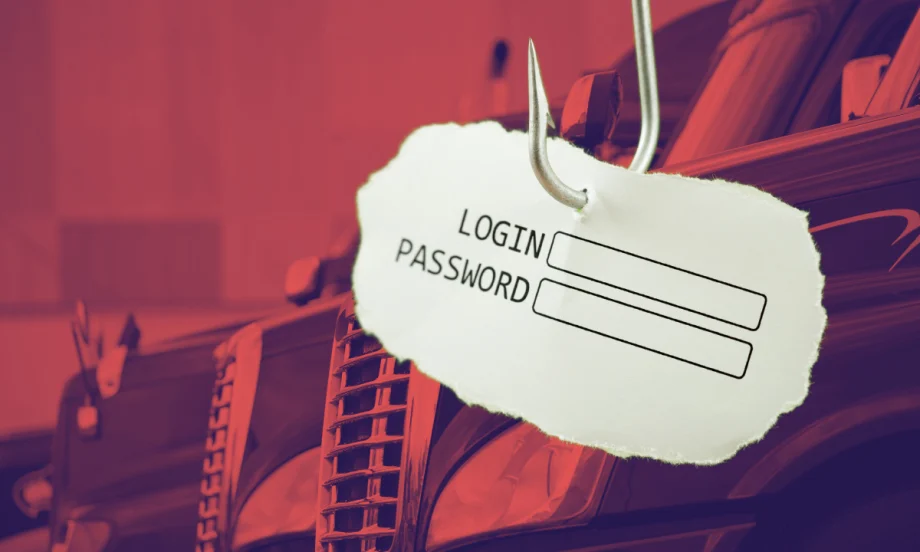
Look closely at any emails purporting to come from the DOT or FMCSA. The agency is warning of a new phishing cybersecurity threat.
Credit:
HDT Graphic
2 min to read
The Federal Motor Carrier Safety Administration is warning motor carriers of a new, aggressive phishing campaign featuring emails falsely claiming to be from U.S. Department of Transportation or FMCSA officials.
These emails often contain professional-looking documents and legitimate-looking links, but they are fake and designed to steal sensitive information or demand illegal payments.
These emails DO NOT come from USDOT or FMCSA.
What to Know About This Phishing Scheme
- Official FMCSA correspondence almost always uses an email address ending in .gov. In special circumstances, such as customer satisfaction surveys after contacting the FMCSA Contact Center, emails may come from a non-.gov address. These surveys request feedback only and will not ask for personal, payment, or account information. Always verify unexpected emails if unsure.
- Links in phishing emails typically lead to suspicious, non-.gov domains (for example, fmcsa.web.saferwebdattaconnect.pro).
- FMCSA will never request Social Security numbers, bank account details, or credit card information via unsolicited emails or phone calls. Routine updates and renewals are always user-initiated through official FMCSA websites or portals. If sensitive information is required, you should initiate contact through official FMCSA phone numbers or web portals.
- If you have any doubts, avoid clicking links and verify all communications directly through official FMCSA channels, including contacting the FMCSA Call Center at https://ask.fmcsa.dot.gov/app/ticket or call 1-800-832-5660.
How can you verify you’re on an official FMCSA site?
FMCSA websites end with .gov (for instance, www.fmcsa.dot.gov). Always double-check the domain before providing any information. Hover over links to confirm the actual URL before clicking.
What to Do if You Receive a Suspicious Email
- Do not click on links or open attachments.
- Do not reply to the sender.
- File a complaint with the FBI through their IC3 site at https://www.ic3.gov/
- Report suspicious emails to the FMCSA Contact Center at https://ask.fmcsa.dot.gov/app/ticket or call 1-800-832-5660.
- Visit the Federal Trade Commission site at https://consumer.ftc.gov/ for more on phishing and email verification.
More Fleet Management

Why Private Fleets Are Taking More Freight
Private fleets are putting their own trucks on demanding customers and high-cost lanes as companies seek greater control over service, costs, and capacity.
Read More →
Sponsored•September 16, 2026
Color Match Smarter: Tools That Restore & Perform
For fleet managers and collision repair professionals keeping heavy-duty trucks on the road, getting the color right the first time isn't just about appearance — it's about efficiency, turnaround time, and bottom-line results. Discover how today's digital color tools are transforming the repair process from guesswork to precision.
Read More →
FMCSA Pauses Biennial-Update Enforcement Amid Motus Transition
Carriers whose updates were due on or after June 1 have more time, while FMCSA works to stabilize its new registration system and warns of phishing sites impersonating its new carrier registration system, Motus.
Read More →


Sponsored•September 14, 2026
2026 Blueprint for Countering Smarter Supply Chain Theft
Cargo theft is no longer just the cost of doing business. It's a multi-billion-dollar criminal enterprise exploiting vulnerabilities across your fleet, drivers, and supply chain.
Read More →
Sponsored•September 1, 2026
How Telematics Improves Visibility, Control, and Performance in Refrigerated Fleets
Explore how telematics help refrigerated fleets improve visibility, uptime, efficiency, compliance, and cargo protection across connected cold chain operations.
Read More →
What the U.S.-Canada Trade War Means for Trucking
Escalating U.S.-Canada tariffs could disrupt cross-border freight, reduce truck volumes, raise costs, and create new uncertainty for carriers on both sides of the border.
Read More →
What Are Trucking’s Top Concerns for 2026?
The American Transportation Research Institute wants to know what's worrying trucking fleet managers, drivers, and other stakeholders in its annual Industry Issues survey.
Read More →
American Trucking Associations Looks for a New Leader
ATA President and CEO Chris Spear abruptly left his job at the association on August 21, at a pivotal time for the trucking industry.
Read More →
Public Wi-Fi Cybersecurity Risks: How Truck Drivers and Fleets Can Protect Their Data
Public Wi-Fi can expose truck drivers and fleets to credential theft, malware, and other cyber threats. Here’s how to reduce the risk on the road.
Read More →
For Nicky Cupp, Fleet Innovation Starts With Frustration
HDT Truck Fleet Innovator Nicky Cupp turns everyday pain points at Fraley & Schilling into opportunities for better technology and smarter processes.
Read More →