




Being Prepared is Key for Upswing Says Leasing Group
The Equipment Leasing Association's (ELA) president, Michael Fleming, told industry leaders in Chicago last week that there is pent-up demand for new equipment that will require companies to seek out more flexible financing to meet the demand
The Equipment Leasing Association's (ELA) president, Michael Fleming, told industry leaders in Chicago last week that there is pent-up demand for new equipment that will require companies to seek out more flexible financing to meet the demand.
Since the U.S. economic climate has forced many companies to forgo refreshing their equipment, such as trucks and trailers, construction gear, computers, food processing and handling equipment, the consensus among equipment leasing industry members is that aging assets and pent-up demand are reaching a critical point.
"We already see a need for equipment, and the pent-up demand continues to grow," said Fleming. "As companies begin planning for the upturn predicted for later this year, we expect them to discover that the decision it isn't whether or not they can afford to acquire equipment needed to run their businesses, but rather how they are going to finance it."
To underscore the pent-up demand theory, the ELA reported in its March 2003 online quick poll that, out of 118 respondents, 61% say that once the uncertainties of the Iraqi war are over, their customers will begin ordering equipment. Just under 39% answered "no" to whether customers would begin ordering equipment. Respondents of the poll are considered primarily equipment lessors.
At the Funding Exhibition, attendees agreed that while expense management remains a theme among companies scrambling to continue to show profitability, equipment needs cannot go unmet much longer.
"The need for equipment forces businesses to find creative ways to finance equipment they need to stay alive," said Fleming.
Darrell Harmon, president of Alliance Capital Resources Inc., echoed Fleming's comments. "Businesses cannot wait much longer to refresh their IT systems, their transportation fleets, and other critical equipment. With the themes of expense management and pressure to produce profits, companies will look to flexible financing methods, such as leasing, to allow them to move quickly and efficiently to acquire new equipment."
Currently, eight out of 10 U.S. companies lease some or all of their equipment, taking advantage of leasing's 100% financing, quick credit approval and convenient structure.
Said Deborah J. Monosson, president of Boston Financial Equity Corp., "Firms across all industries will need to respond quickly to the economic rebound. Our shop is gearing up for high demand for leasing."
Of the $697 billion spent by American business on productive assets in 2001, $216 billion, or 31%, was acquired through leasing. In 2002, that figure is estimated at $204 billion. The projected 2003 volume is $208 billion.
"The time for finance planning is now," said Fleming. "Preparation will be key to taking advantage of growth opportunities once the economic upturn comes."
Financial decision makers needing more information on leasing should visit www.LeaseAssistant.org.
Organized in 1961, the ELA is a nonprofit association representing companies involved in the equipment leasing and finance industry. ELA's mission is to promote the leasing industry as a major source of funds for capital investment in the United States and abroad. Headquartered in Arlington, Va., ELA has more than 800 member companies and a staff of 27 professionals.
More Fleet Management

What Geotab's New AI Connector Means for Fleets
Fleets can now ask their usual AI assistants questions about maintenance, safety, fuel use, and vehicle performance, using their live Geotab data, and take action on the answers without leaving their preferred AI tool.
Read More →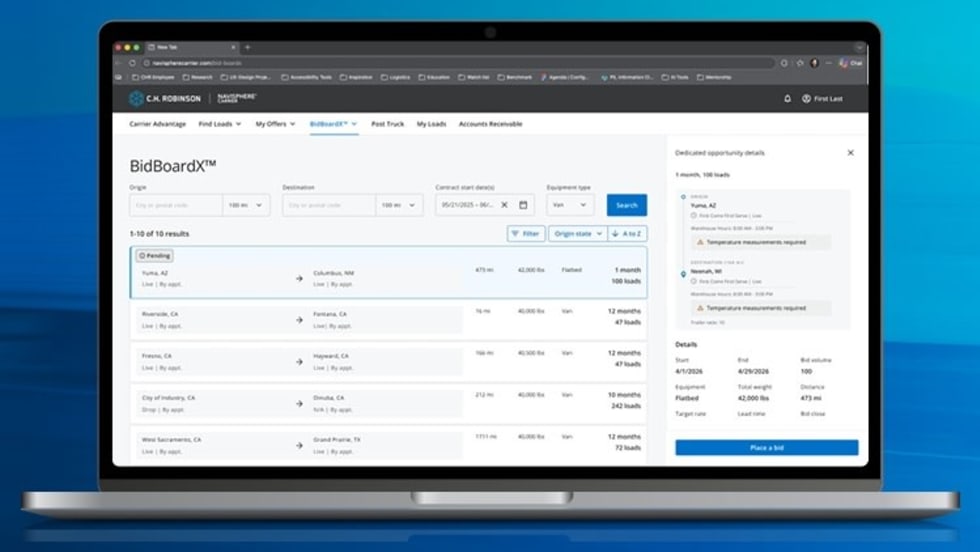
New C.H. Robinson Tool Opens Door to More Predictable Freight
BidBoardX lets carriers search, bid on, and secure committed freight opportunities through a single digital marketplace.
Read More →
New York City's Microhub Project is Delivering Results
Trucking, last-mile delivery companies, and environmental advocates like what they are seeing so far with New York's microhub program.
Read More →

Why Truck Detention Keeps Costing Fleets Time and Money
A 2024 ATRI study found detention affects nearly 40% of truckload stops and costs the industry more than $15 billion annually. Despite the toll on drivers, fleets, and supply chains, the problem remains stubbornly persistent.
Read More →
Time is Running Out to Apply for Exclusive HDT Event
Heavy Duty Trucking Exchange brings fleet managers and suppliers together for the deeper conversations that lead to ideas, partnerships, and solutions. Time is running out to apply for the September event.
Read More →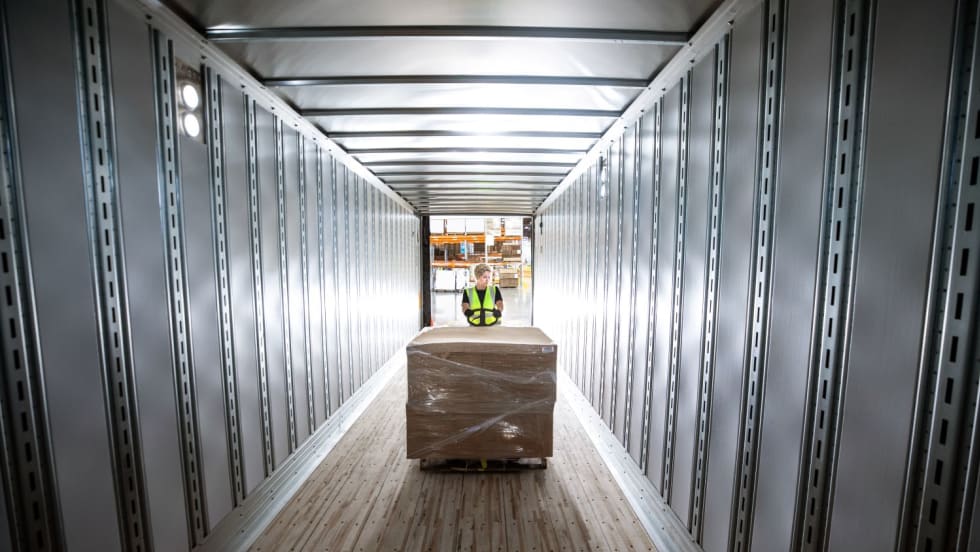
Amazon Launches Less-Than-Truckload Freight Offering for All Businesses
This launch is the latest addition to Amazon Supply Chain Services, a portfolio of supply chain capabilities from Amazon, including freight, distribution, fulfillment, and parcel shipping.
Read More →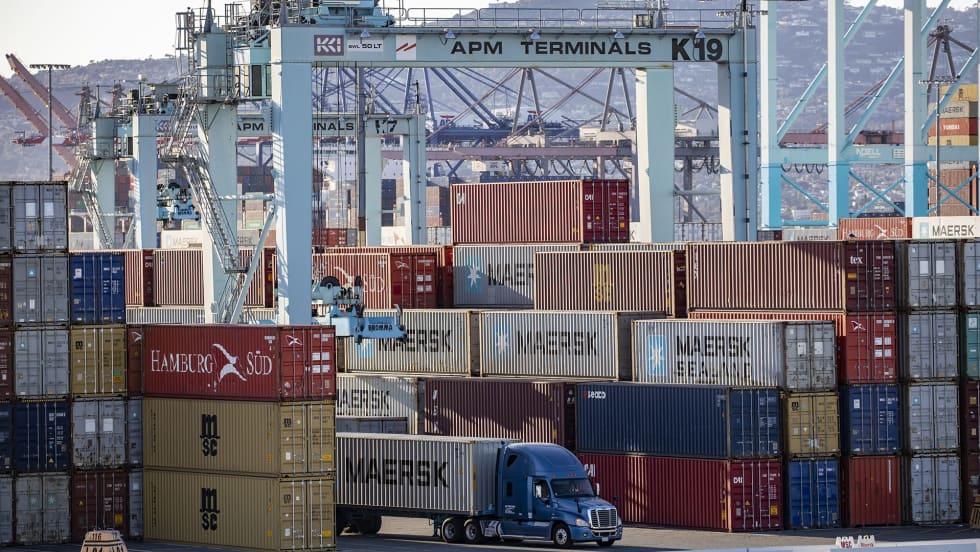
Import Cargo Volume to See Year-Over-Year Gain Again in June, Then Remain Below 2025 Levels Into Fall
After July, the report predicts a weakening in import volume as consumer uncertainty remains high and the impact of increasing inflation takes its toll.
Read More →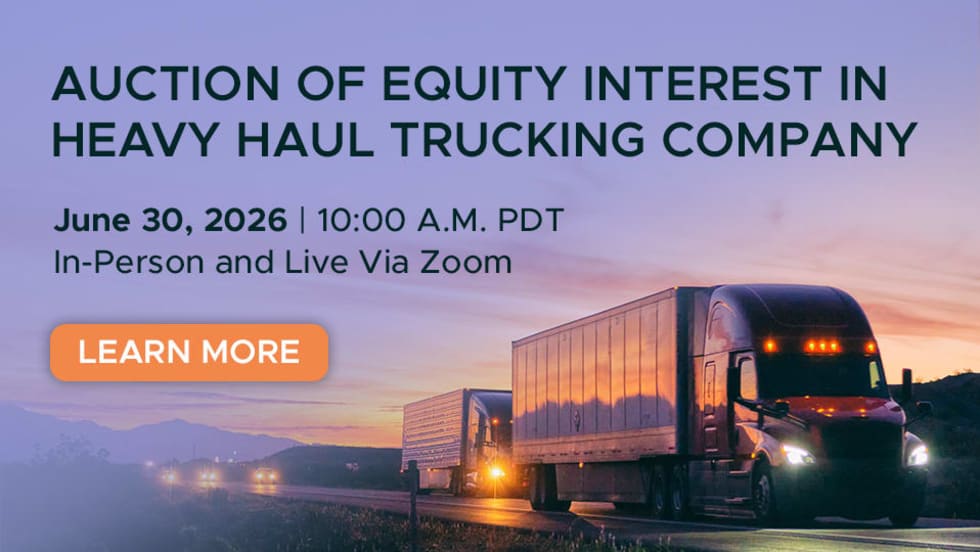
AUCTION OF EQUITY INTEREST IN HEAVY HAUL TRUCKING COMPANY!!
Mark your calendar: June 30, 2026 (10:00 a.m. PDT). A 37.5% ownership interest in MagnaTrans, LLC, a California limited liability company doing business as Magna Transportation Group, will be sold in an in-person and online auction to the highest bidder or bidders under Article 9 of the Uniform Commercial Code. The Rancho Cucamonga-based heavy haul and over-dimensional trucking company operates across California, Oregon, and Arizona.
Read More →
Volvo Trucks Adds Unattended Over-the-Air Software Update Capabilities
The latest evolution of Volvo’s over-the-air update technology allows software updates to run while trucks are parked, helping fleets keep vehicles current without disrupting operations.
Read More →
How Waste Connections is Using Data, Telematics, and AI
How do you manage and maintain more than 18,000 connected trucks? Data. Lots of it.
Read More →