




Aurora, With New Autonomous-Truck Terminal, On Track for Commercial Launch
Aurora Innovation said it’s still on schedule for the commercial launch of its autonomous-truck program at the end of 2024 and has opened a commercial-ready terminal in Houston to support its trucks.

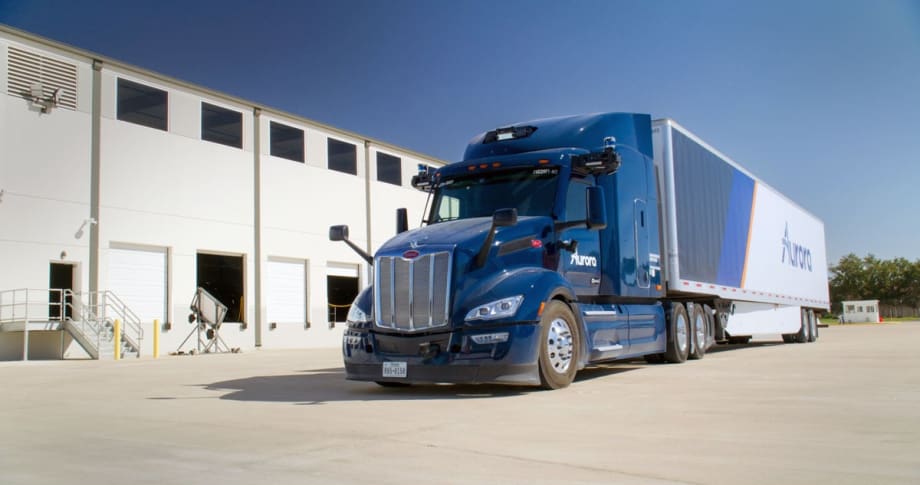
The Aurora Driver is a self-driving system designed to operate multiple vehicle types.
Photo: Aurora Innovation
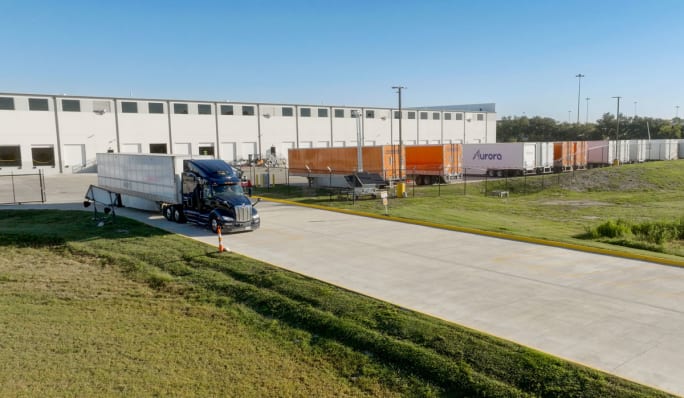
Aurora's new autonomous-truck terminal in Houston is located in a logistics hub near pilot customers such as FedEx.
Photo: Aurora Innovation
Aurora Innovation said it’s still on schedule for the commercial launch of its autonomous-truck program at the end of 2024.
The opening of a new terminal in Houston means the company now has a lane for driverless trucks that’s supported by commercial-ready terminals on both ends. It opened its Dallas terminal earlier this year.
Nearly half of all truck freight in Texas moves along the I-45 between Dallas and Houston, the company said.
“Opening a driverless trucking lane flanked by commercially ready terminals is an industry-first that unlocks our ability to launch our driverless trucking product,” said Sterling Anderson, co-founder and chief product officer. “With this corridor’s launch, we’ve defined, refined, and validated the framework for the expansion of our network with the largest partner ecosystem in the autonomous trucking industry.”
Commercial-Ready Terminals for Autonomous Trucks
Aurora’s terminals are used to house, maintain, prepare, inspect, and deploy autonomous trucks between destinations. The company has developed a terminal blueprint with a layout and list of features to make terminals ready for driverless operations.
This blueprint is designed to maximize the time autonomous trucks are on the road hauling freight.
For example, on-site weigh stations support enhanced pre-trip inspections, ensuring Aurora’s trucks are compliant with regulations while allowing them to bypass inspection sites on the road.
The Houston terminal is located in a logistics hub near pilot customers such as FedEx, making it easy for fleets to integrate autonomous trucks into their middle-mile operations.

Aurora has developed a terminal blueprint with a layout and list of features to make terminals ready for driverless operations.
Photo: Aurora Innovation
Preparing for Commercial Driverless Operations
Aurora’s terminals operate day and night, supporting their trucks as they haul more than 75 loads a week for pilot customers.
The company is also preparing its Command Center to support around-the-clock commercial operations. This includes a team of remote specialists to monitor and provide guidance to the active fleet of Aurora-powered trucks, and dispatchers who allocate trucks, trailers, and vehicle operators to missions. Aurora’s Command Center already supports commercial pilot hauls and is prepared to support driverless missions.
“Bringing our commercial-ready terminals and services online a year ahead of our planned commercial driverless launch between Dallas and Houston enables us to focus next year on integrating our Driver-ready trucks into our customers' operations,” added Anderson.
The Aurora Driver is a self-driving system designed to operate multiple vehicle types, from freight-hauling trucks to ride-hailing passenger vehicles, and underpins Aurora Horizon and Aurora Connect, its driver-as-a-service products for trucking and ride-hailing. Aurora is working with companies such as Continental, FedEx, Paccar, Ryder, Schneider, Toyota, Uber, Uber Freight, Volvo Trucks and Werner.
Funding Autonomous Truck Commercial Development
“Despite a cyclically challenged commercial freight market, we continue to make steady progress growing our commercial loads and operational capabilities in preparation for commercial launch," wrote CFO David Maday in Aurora's third-quarter shareholder letter.
Maday said Aurora achieved its end of third quarter target to autonomously haul 75 loads per week for customers. It is now logging over 20,000 commercial miles per week. Cumulative to-date through Oct. 29, Aurora has autonomously delivered (under the supervision of vehicle operators) over 3,200 loads, driving more than 895,000 commercial miles, with nearly 100% on-time performance for pilot customers.
The company did not record any revenue in the third quarter.
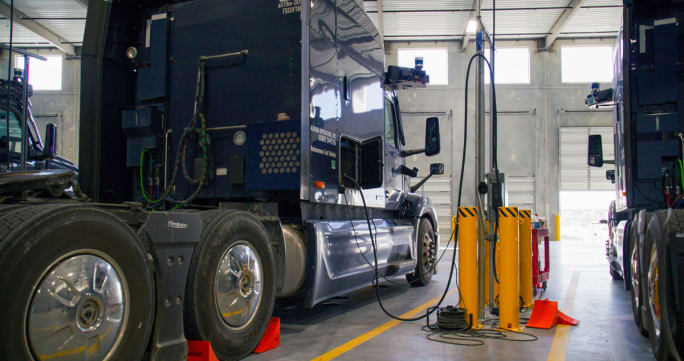
Aurora’s terminals are used to house, maintain, prepare, inspect, and deploy autonomous trucks between destinations.
Photo: Aurora Innovation
Aurora used approximately $147 million in operating cash, and capital expenditures totaled $5 million. This was below Aurora’s target of $175 million to $185 million per quarter on average, Maday reported.
At a time when investment dollars for startups have slowed, Aurora reported that during the third quarter, it raised $853 million in gross proceeds combined from a private placement and public offering of Class A common stock, for net proceeds totaling $828 million.
“We ended the third quarter with a very strong balance sheet, including $1.5 billion in cash and short-term investments,” Maday wrote. “We continue to expect this liquidity to support our planned commercial launch and fund our operations into the second half of 2025.”
More Equipment

Tesla Wants a Self-Driving Semi. Are Cameras Enough?
Could Tesla’s camera-only autonomous driving technology work on an 80,000-pound Semi? In this commentary, HDT's Deborah Lockridge takes a look at Tesla, Cybercab, and how autonomous trucks see the road.
Read More →
Kodiak: Driverless Long-Haul Truck Launch on Track for 2026
Kodiak AI says its driverless long-haul safety case is 93% complete and it remains on track to begin commercial operations by year-end 2026.
Read More →
What DOT’s Automated Vehicle Strategy Means for Trucking
The U.S. Department of Transportation issued a new automated-vehicle strategy that outlines plans for driverless-truck regulations, cross-state freight corridors, and federal safety standards.
Read More →
East Coast Port Launches $45M Electric Truck Push
The Port Authority of New York and New Jersey announced millions in incentives for zero-emission drayage trucks, yard tractors, and new charging hubs near the port.
Read More →
PlusAI Going Public to Fund Autonomous Truck Launch
A SPAC deal could provide PlusAI with up to $300 million as it works toward a 2027 commercial launch of factory-built autonomous trucks.
Read More →
NHTSA Moves to Rewrite Truck Fuel-Economy Rules
The National Highway Traffic Safety Administration says it lacks authority to regulate medium- and heavy-duty truck engines separately from complete vehicles, but the existing standards have not yet been eliminated.
Read More →
Detroit Opens Orders for EPA 2027 Engines
Detroit isn’t starting from scratch to meet EPA 2027 diesel emissions standards. Its Gen 6 DD13 and DD15 engines keep much of today’s platform while updating the fuel and aftertreatment systems.
Read More →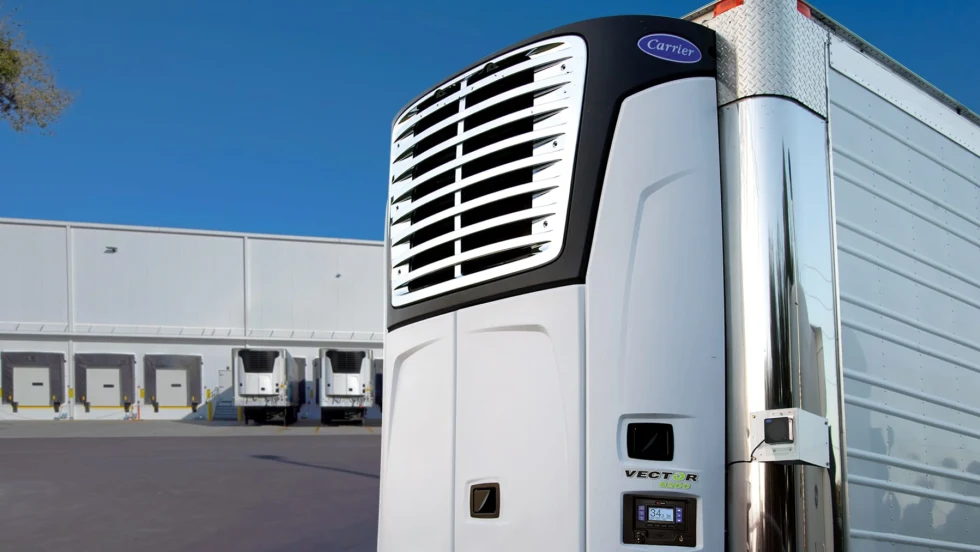
Carrier Transicold Adds All-Electric TRU for Stationary Cold Storage
Carrier Transicold’s new Vector 8200 all-electric transport refrigeration unit gives fleets a diesel-free option for temporary refrigerated and frozen trailer storage.
Read More →
A Closer Look at Kenworth’s Electric T880E Vocational Truck [Video]
Learn more about Kenworth's T880E battery-electric vocational truck at the Paccar Technical Center, including its range, applications, upfitting considerations, and PTO options, in this HDT Spotlight video.
Read More →
Kenworth T880E Brings EV Power to Vocational Trucks
A closer look at the Kenworth T880E’s range, charging, powertrain and upfit options — and where fleets are showing the most interest.
Read More →