





Read More About: How Truck Automation May Change Roadside Inspections
CVSA Launches Enhanced Inspection Program for Autonomous Trucks
A new CVSA inspection program for fleets with autonomous trucks will allow driverless trucks to bypass weigh stations.
October 5, 2022
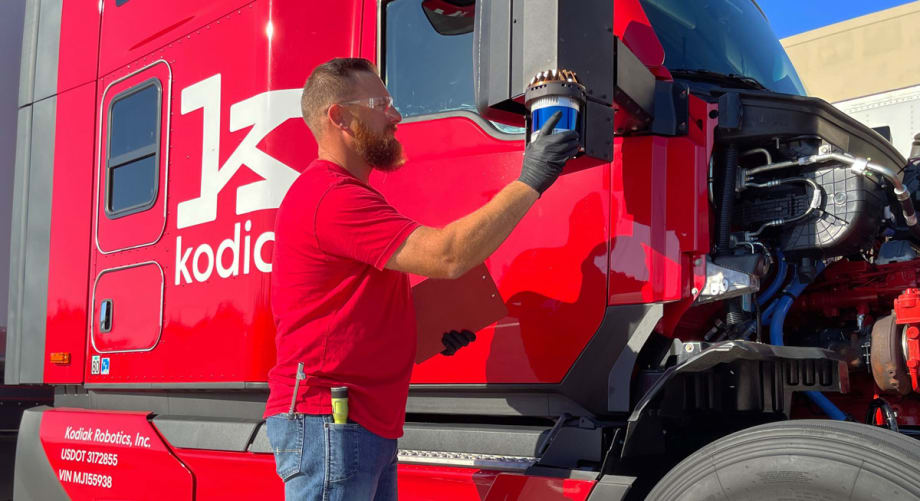
New CVSA program includes an enhanced inspection standard and procedure for motor carriers operating autonomous vehicles, plus a 40-hour CVSA training course and exam for motor carrier personnel who will be conducting the inspections.
Photo: Kodiak Robotics
4 min to read
A brand-new “enhanced” commercial motor vehicle inspection program developed by the Commercial Vehicle Safety Alliance will govern standardized inspections of commercial vehicles equipped with automated driving systems (ADS), also referred to as autonomous or driverless vehicles.
This enhanced program for motor carriers “represents years of CVSAEnforcement and Industry Modernization Committee and Automated Vehicle Working Group meetings, discussions and development, as well as procedural testing, finetuning and re-testing of the new enhanced inspection program for ADS-equipped commercial motor vehicles,” CVSA said in a news release.
Industry-Wide Collaborative Effort
Per CVSA, the program is the culmination of commercial motor vehicle inspectors and state highway patrols, inspection and enforcement experts, motor carrier representatives, the autonomous trucking development community, and federal and state government officials “working collaboratively to develop commercial motor vehicle inspection standards specific to the unique needs, requirements and challenges of ADS-equipped commercial motor vehicles.”
With current driver-operated trucks, the driver conducts a pre-trip inspection and a post-trip inspection. The driver may be required to drive through a weigh/inspection station and/or be stopped at roadside and may be subject to a CVSA North American Standard Inspection. However, CVSA observed, roadside inspection/weigh station environments are “challenging for ADS-equipped vehicles, and those commercial motor vehicles are not compatible with today’s roadside enforcement inspections, which rely on assistance from the driver.”
To get past that roadblock, the new enhanced CMV program establishes “a no-defect, point-of-origin inspection program for ADS-equipped commercial motor vehicles.” The program includes an enhanced inspection standard and procedure for motor carriers operating ADS vehicles, and a 40-hour CVSA training course and exam for motor carrier personnel who will be conducting the inspections.
Campaign to Roll Out New Procedure Under Way
“The first group of carrier personnel were trained in June, and the industry is working with our state law enforcement partners to launch enhanced CMV inspection programs in the states,” Daniel Goff, Kodiak Robotics’ head of external affairs and chair of the ATA Technology & Maintenance Council’s Autonomous Truck Inspections and Enforcement task force, told HDT.
“We expect the first test programs to be put to work by the end of the year,” he said. “The full enhanced program is, however, designed around driverless vehicles, so while the industry has safety drivers in the cab, it will still be subject to traditional inspections programs [as well].”
Nuts and Bolts of the Inspection Program
When a fleet has the new program in place, rather than the driver conducting a pre-trip inspection for automated vehicles, CVSA-trained motor carrier personnel will conduct the enhanced CMV inspection procedure on selected ADS-equipped vehicles from their fleets at the point of origin before dispatch, as well as in-transit inspections at a dictated interval throughout the trip.
Once on the road, the truck would be required to communicate to law enforcement while in motion that it passed the origin/destination inspection; that its automated driving systems (“as a whole”) are functioning, and it is operating within its operational design domain. Those automated vehicles will then bypass fixed inspection sites.
In addition, en-route roadside inspections of autonomous trucks by law enforcement would be limited to situations in which an imminent hazard is observed or during a post-crash investigation. Also, all ADS vehicles would have to be able to respond should a law enforcement officer attempt to pull over a vehicle. And any truck or trailer or CMV combination that fails the enhanced CMV inspection procedure at the point of dispatch would have to be repaired before it hit the road.
Not the Same as a Level VIII In-Motion Inspection
Kodiak Robotics’ Goff explained that this new enhanced program is not the same thing as Level VIII inspections of autonomous vehicles.
“Level VIII inspections are conducted electronically or wirelessly while the vehicle is in motion without direct interaction with a law enforcement officer," Goff told HDT. "The enhanced CMV program requires a new type of enhanced inspection, conducted by a CVSA-trained inspector, to be performed prior to a trip. This robust 30- to 40-minute pre-trip inspection will then allow ADS-equipped vehicles to bypass fixed inspection sites.”
CVSA President Chris Nordloh of the Texas Department of Public Safety pointed out in a statement that the enhanced inspection procedure for driverless commercial motor vehicles "will ensure the highest level of safety and provide law enforcement with the information they need to be confident about the roadworthiness of autonomous trucks operating on our roadways.”
More Safety & Compliance

FMCSA Pauses Biennial-Update Enforcement Amid Motus Transition
Carriers whose updates were due on or after June 1 have more time, while FMCSA works to stabilize its new registration system and warns of phishing sites impersonating its new carrier registration system, Motus.
Read More →
ZF Expands Commercial Vehicle Push in North America
ZF is expanding its North American commercial-vehicle presence with new transmission applications, electrification, trailer technology and autonomous-driving systems.
Read More →
Truck Drivers Need More Than Another Alert
Fleets have more visibility into truck health, safety events, and driver activity than ever. The next challenge is turning all that information into useful guidance for the person who has to decide what to do next.
Read More →
Tesla Wants a Self-Driving Semi. Are Cameras Enough?
Could Tesla’s camera-only autonomous driving technology work on an 80,000-pound Semi? In this commentary, HDT's Deborah Lockridge takes a look at Tesla, Cybercab, and how autonomous trucks see the road.
Read More →
What DOT’s Automated Vehicle Strategy Means for Trucking
The U.S. Department of Transportation issued a new automated-vehicle strategy that outlines plans for driverless-truck regulations, cross-state freight corridors, and federal safety standards.
Read More →
NYC Expands Speed, Pedestrian Safety Tech Across Fleet
New York City is expanding intelligent speed assistance and pedestrian-alert systems across its municipal fleet, moving the technologies from pilot programs into vehicle procurement and retrofit requirements.
Read More →
FMCSA Removes 110 Truck Driver Training Schools from Certified ELDT List
Federal regulators also are targeting more than 160 additional training providers and launching a nationwide audit of third-party CDL skills testers as part of a broader crackdown on trucking fraud.
Read More →
Beyond DOT Compliance: What Makes a Trucking Fleet Truly Safe?
A trucking fleet can follow every rule and still make unsafe decisions. The real test comes when safety conflicts with freight, productivity, or cost.
Read More →
Hours of Service Pilot Programs: FMCSA Readies for 2027 Rollout
Two pilot programs could eventually reshape hours-of-service rules, giving truck drivers options to pause their 14-hour clock or use longer split sleeper rest periods.
Read More →
New Guide Offers Pet Safety Tips for Truck Drivers
Hundreds of thousands of pets travel in truck cabs. A new safety guide from Volvo Trucks and the Center for Pet Safety offers practical advice for truck drivers who bring dogs and cats along for the ride.
Read More →