




Analysis Finds LA Ports Underutilized Despite Increased Truck Traffic
A recent analysis by the marine terminal operators at the Port of Los Angeles and Port of Long Beach shows that nearly half of trucks conducted at least four transactions per day in late July, while almost two-thirds of trucks made three or more transactions per day
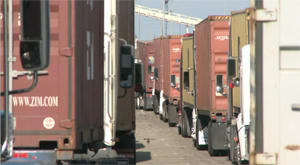
A recent analysis by the marine terminal operators at the Port of Los Angeles and Port of Long Beach shows that nearly half of trucks conducted at least four transactions per day in late July, while almost two-thirds of trucks made three or more transactions per day.
In response to the data, PierPass, a not-for-profit company created by marine terminal operators at the ports of Los Angeles and Long Beach in 2005 to address multi-terminal issues such as congestion, security and air quality, is encouraging carriers to take advantage of unused capacity.
"The analysis of transaction data shows that the ports are vastly underutilized despite increased cargo volume and truck traffic," said Bruce Wargo, president and CEO of PierPass. "PierPass and the MTOs are working together to improve the efficiency of cargo movement through the ports, ease the challenges of increased cargo volume and help the industry take advantage of unused capacity to minimize congestion."
The analysis, which includes transaction data from July 26, 2010, to Aug. 1, 2010, shows that:
* 5,326 trucks (63.4 percent) made at least 15 transactions, or about three per day.
* Of that group, 3,849 trucks (45.8 percent) conducted at least 20 terminal transactions, or about four per day.
* 48 trucks managed to make more than 50 pickups or deliveries in that week, or about 10 per day.
The analysis includes transaction data from the 13 container terminals serving the San Pedro Bay ports.
Following a plunge in cargo volumes in 2008 and 2009, volumes have strongly rebounded at the two ports, leading to an increase in truck traffic. In response to this surge, the marine terminal operators have reinstated labor, gates and shifts cut during the recession. Terminal operators have increased labor levels by 37 percent since January 2010.
Lines outside the terminals are long primarily around 6 p.m. During much of the day and night shifts, there is little or no congestion at the terminals. Truckers can avoid lines by arriving from 9 a.m. to noon, 2 p.m. to 5 p.m. and 11 p.m. to 3 a.m., PierPass says.
"In response to the recent surge in truck volumes, some in the industry have expressed concern about wait times at the terminals' gates," Wargo said. "Marine terminal operators are diligently working with industry stakeholders to identify solutions. It is imperative that the trucking industry contribute by taking advantage of under-congested and under-utilized times at the gates. By spreading out volume and utilizing our existing infrastructure, trucking companies will improve the efficiency of their businesses."
PierPass recently announced the formation of a working group of 30 stakeholders representing importers, exporters, motor carriers, ports, and marine terminal operators (MTOs) to discuss the issue. In addition, many terminals at the San Pedro Ports are implementing an appointment system to take advantage of underutilized time and maximize the systems to help ease congestion.
PierPass has also developed a video addressing gate congestion and discussing potential solutions. The video can be viewed below:
More Fleet Management

How Telematics Improves Visibility, Control, and Performance in Refrigerated Fleets
Explore how telematics help refrigerated fleets improve visibility, uptime, efficiency, compliance, and cargo protection across connected cold chain operations.
Read More →
What the U.S.-Canada Trade War Means for Trucking
Escalating U.S.-Canada tariffs could disrupt cross-border freight, reduce truck volumes, raise costs, and create new uncertainty for carriers on both sides of the border.
Read More →
What Are Trucking’s Top Concerns for 2026?
The American Transportation Research Institute wants to know what's worrying trucking fleet managers, drivers, and other stakeholders in its annual Industry Issues survey.
Read More →

American Trucking Associations Looks for a New Leader
ATA President and CEO Chris Spear abruptly left his job at the association on August 21, at a pivotal time for the trucking industry.
Read More →
Public Wi-Fi Cybersecurity Risks: How Truck Drivers and Fleets Can Protect Their Data
Public Wi-Fi can expose truck drivers and fleets to credential theft, malware, and other cyber threats. Here’s how to reduce the risk on the road.
Read More →
For Nicky Cupp, Fleet Innovation Starts With Frustration
HDT Truck Fleet Innovator Nicky Cupp turns everyday pain points at Fraley & Schilling into opportunities for better technology and smarter processes.
Read More →
Adam Buttgenbach’s Approach to Electric Trucks: Start With Where They Fit
HDT Truck Fleet Innovator Adam Buttgenbach helped PepsiCo build one of North America’s largest EV fleets by focusing on where electric trucks make operational sense.
Read More →
Deen Albert: Let Automation Do the Math, People Make the Decisions
HDT Truck Fleet Innovator Deen Albert makes sure people are still at the heart of operations at Grand Island Express, even while adopting artificial intelligence tools. AI-assisted dispatch helped boost revenue 25% with the same number of trucks.
Read More →
Trimble’s New AI Agent Takes Aim at Fleet Back-Office Busywork
Arc Agent works across Trimble TMS products to automate repetitive tasks such as freight orders, maintenance, invoices, fuel costs and more.
Read More →
How HDT’s 2026 Truck Fleet Innovators Are Rethinking Fleet Operations
Meet five trucking leaders who are challenging assumptions, solving operational problems, and putting innovative ideas to work.
Read More →