




How to Get More Out of Commercial Driver Vehicle Inspections
The Real Cost of Trailer Tires: Why It's Not Just a Maintenance Problem Anymore
Tire wear isn't random. The trucking fleet with a tire program that knows which trailers, positions, and routes are punishing tires the hardest is the one that buys fewer of them.
by Mark Wallin, Phillips Connect
May 27, 2026
The reason tire failures keep catching everyone off guard is that the industry's most common tools weren't built to see them coming, says the president and GM of Phillips Connect.
Credit:
HDT Graphic
4 min to read
Tires are one of the biggest line items for a fleet, but the bill that lands in maintenance really only tells part of the story. In fact, the cost is more realistically split among operations, dispatch, safety, risk management, the driver, and roadside teams.
Here's why: When a trailer tire fails on the highway, the ultimate cost to the fleet isn’t limited to maintenance. It’s also the missed customer delivery window, the rerouted backup, the damage to the brand, the potential hours-of-service impact, and the lost paid hours for the driver.
By the time the trailer is rolling again, maintenance has absorbed one share of what the failure cost the fleet, and everyone else has quietly absorbed the rest.
The Cost of Truck Tire Underinflation
The reason tire failures keep catching everyone off guard is that the industry's most common tools weren't built to see them coming.
Automatic tire inflation systems (ATIS) keep up with normal pressure loss, but they can fall behind a leak that's bigger than they can fight. When that happens, the tire runs underinflated for long stretches with no warning except that ATIS is cycling more often than usual.
Every underinflated mile flexes the casing and burns extra fuel, and the repeated cycle of underinflation and refilling is what finishes the tire over time.
ATIS also doesn't tell you that the same wheel position keeps coming up in the failure log, or that an irregular wear pattern points to an underlying alignment or suspension issue.
Pre-trips can catch a tire that's notably low, but drivers don't usually take a pressure reading on every walk-around. They check the tires visually, and a tire 20 or 30 PSI under spec doesn't always look any different from one at spec.
Leaving trailer tires solely on the maintenance leader's desk is the easy default. Without real insight into what the tires are actually doing, even with ATIS in place, the costs of underinflated tires still find their way into everyone else's budget.
Operations and Dispatch
A roadside breakdown pulls a trailer out of service during a window someone is counting on.
For a for-hire carrier, that someone is a paying customer with a service-level agreement. For a private fleet, it's a store, a depot, a manufacturing line, or a retail partner expecting product on time.
Either way, dispatch absorbs the scramble: a reroute, a replacement trailer, a substitute driver, or a delivery that gets logged as late.
The cost shows up as a missed window, lost capacity for the day, and a relationship, internal or external, that gets less forgiving every time it repeats.
Safety, Risk, and the Brand
A truck tire casing that fails at highway speed leaves debris in the lane. The fleet name on the side of the trailer is the one the next driver remembers, and the one a plaintiff's attorney works with when a tire-related incident escalates.
A reputation built over years can take a real hit from a single public incident, and it doesn’t recover on the trailer’s timeline. Safety leaders carry the incident review, and risk managers carry whatever legal exposure follows.
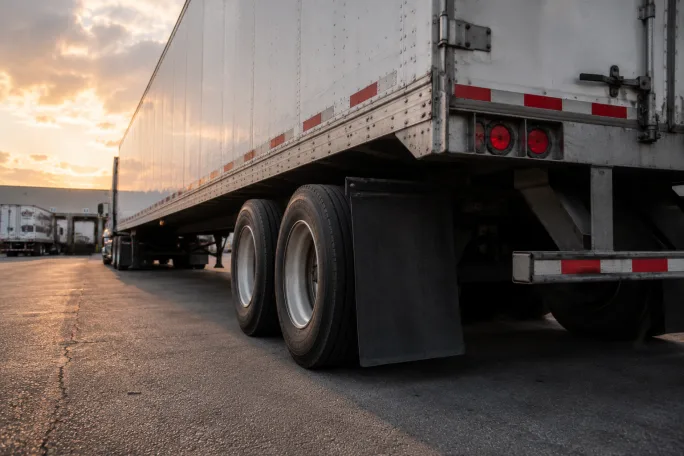
When truck tires cause a roadside breakdown, it can mean a missed pickup or delivery window.
Credit:
Phillips Connect
The Driver's Clock
A driver's pre-trip is a visual inspection that has limits. A tire losing air slowly can look the same as a tire that's fine, and an early wear pattern doesn't always show up in a walk-around.
When a tire fails on the road, the driver waits on the shoulder while the on-duty clock keeps running, and any pay tied to miles or delivery stops with it.
Driver retention is the line item every operations leader is already watching, and tire-related strandings are one of the more avoidable problems a fleet can hand a driver.
Truck Tires: Beyond Maintenance
Tire wear isn't random. Faster wear shortens the time between replacements, and a casing that gets destroyed running disproportionately low is a casing that can't be retreaded.
The tire program that knows which trailers, which positions, and which routes are punishing tires hardest is the program that buys fewer of them.
The data the trailer can produce on tire pressure, temperature, and wheel-end behavior makes the problem visible to operations, dispatch, safety, risk, the driver, and the C-suite at the same time with the same numbers, alongside the other insights trailers can produce on brakes, cargo, liftgates, doors, and more.
The maintenance leader has been carrying the tire conversation alone for too long. The tire budget will stay in maintenance, but the consequences of tire failures don't stop at the shop door.
Subscribe to Our Newsletter
More Blog Posts

Fragmented AI: Why Trucking Must Take Security More Seriously
As AI becomes embedded throughout transportation operations, the result can be a tech environment that looks more advanced on paper, but isn't necessarily more efficient, secure, or manageable in practice.
Read More →
We've Been Thinking About Truck Uptime Backward
The truck repair operations that minimize downtime aren’t necessarily the ones with the fastest technicians. They’re the ones who have the part.
Read More →
A New Argument for Electrification: Managing Fuel Volatility
As oil prices surge amid Middle East conflict and a blocked Strait of Hormuz, fleets are feeling the squeeze in real time. In this guest column, Geotab's Neil Cawse argues electrification is no longer just about sustainability or ROI — it’s about insulating operations from what he calls a "volatility tax."
Read More →
The Time is Now to Expand Longer Combination Vehicles [Opinion]
The reauthorization of the federal highway bill offers a rare chance to advance double 53-foot LCVs. Industry leaders shouldn’t miss it, says a longtime trailer industry professional in this Guest Voices blog post.
Read More →
The Hidden Costs of 'Free' Smart Trailer Tech Installations [Commentary]
Free installation of smart trailer technologies may sound good on paper, but you could end up paying down the road.
Read More →
Protecting Small Trucking Fleets from Scammers: Lessons from the Insurance Frontlines
Hijacked DOT numbers, fake invoices, and high-tech cargo theft are on the rise. A veteran trucking insurance broker shares how to spot trouble early — and why a trusted advisor may be your strongest defense.
Read More →
Tire Retreading Makes Sense for Trucking Fleets. H.R. 3401 Could Make It Even Smarter.
Retreaded tires offer trucking fleets cost savings, sustainability gains, and supply chain security. New legislation, H.R. 3401, could make retreads even more attractive and support U.S. jobs.
Read More →
Hydrogen Fuel Cell Trucks Are Ready for the Long Haul. Now Policymakers Must Act
Accelerating the growth of hydrogen-fuel-cell-truck adoption would help make zero-emission trucking is not only possible, but practical and profitable, argues the Center for Transportation and the Environment in this Guest Voices blog.
Read More →
A New Definition for Long-Haul Heavy-Duty Trucking
Understanding the various routes that make up long haul is important as we move through trucking’s Messy Middle — a time when fleets have a variety of powertrain solutions to choose from, writes NACFE's Mike Roeth.
Read More →
How Collaboration is Driving the Growth of Heavy-Duty EV Charging Infrastructure
To overcome the challenges of transitioning to electric medium- and heavy-duty vehicles, it will take local governments, public-private partnerships, utilities, investors, and other stakeholders working together, says the CEO of Greenlane in this guest article.
Read More →