




Hydrogen Fuel Cell Trucks Are Ready for the Long Haul. Now Policymakers Must Act
Accelerating the growth of hydrogen-fuel-cell-truck adoption would help make zero-emission trucking is not only possible, but practical and profitable, argues the Center for Transportation and the Environment in this Guest Voices blog.
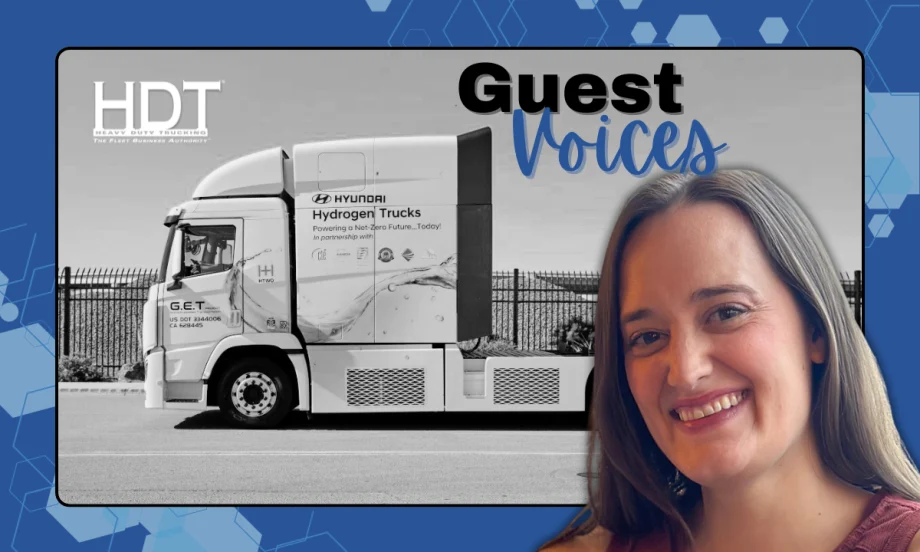
Image: HDT Graphic from CTE photos
With strong federal policy and smart fueling infrastructure investments — like those being made through the Department of Energy’s Hydrogen Hubs program — fuel cell electric trucks (FCETs) can become a cornerstone of a cleaner, more resilient freight system.
Now is the time for industry and government leaders to engage by piloting new technologies, shaping supportive policies, and building business models around clean freight, ensuring that zero-emission trucking is not only possible, but practical and profitable.
Today, 95% of U.S. hydrogen is produced using natural gas — a domestic resource that gives America a head start in building a homegrown hydrogen economy. By using freight as a key offtake market, we can strengthen domestic energy production, reduce dependence on foreign oil, and secure a leadership position in the global clean energy race — all while preserving range, payload, and uptime for the trucking industry.
Early deployment of hydrogen in freight can also help drive down production, distribution, and fueling costs through economies of scale.
As demand increases and infrastructure expands, stronger market signals will lower the barriers for cleaner hydrogen alternatives like renewable and electrolysis-based hydrogen.
Some segments of long-haul trucking are uniquely positioned to anchor the scale-up of hydrogen fuel. These trucks operate on predictable routes, centralized depots, and long daily ranges — conditions that align perfectly with early hydrogen infrastructure deployment.
FCETs also maintain the familiar refueling model that drivers and fleet operators already rely on, minimizing disruption while maximizing uptime.
By starting with freight, we gain a high-impact use case that builds immediate demand for hydrogen, accelerates infrastructure rollout, and drives down costs for other sectors to follow.
Hydrogen Fuel Cell Trucks at the Ports
Fuel-cell-electric trucks are also proving valuable in drayage operations.
Port facilities operate 24/7, and any disruption can ripple across the economy. FCETs offer quick refueling, high payload capacity, and greater energy resilience than their diesel counterparts.
FCETs can be refueled with hydrogen produced on-site, reducing a port’s dependence on the grid and enhancing reliability if there’s an extreme weather event, power outage, or wildfire that could impact the electrical grid’s availability.
The NorCAL Zero project at the Port of Oakland demonstrates the use case for FCETs in drayage operations. Funded by the California Air Resources Board (CARB) and managed by the Center for Transportation and the Environment.
This project deployed 30 Hyundai Xcient Class 8 FCETs in a demanding drayage operation, hauling freight and vehicles between the Port of Oakland and the Bay Area and Central Valley.
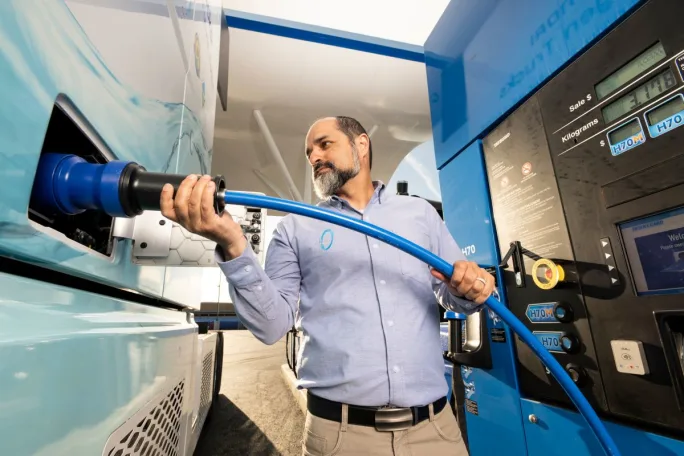
FirstElement Fuel opened the world’s first public high-capacity liquid hydrogen fueling station at the Port of Oakland in 2024, capable of fueling over 200 FCETs a day.
CTE/Norcal/FirstElement Fuel
To support the fleet, FirstElement Fuel opened the world’s first public high-capacity liquid hydrogen fueling station at the Port of Oakland in 2024, capable of fueling over 200 FCETs a day.
As the largest FCET deployment in the U.S., NorCAL Zero demonstrates the reliability of hydrogen-powered vehicles in real-world conditions, setting the stage for broader adoption of zero-emission freight solutions across the country.
What's Needed to Scale Hydrogen Fuel in Trucking?
To scale nationally, the federal government has a catalytic role to play. Strategic investment in hydrogen fueling infrastructure along major freight corridors, coupled with well-aligned vehicle incentives, can create the conditions needed for widespread deployment.
Programs like the Department of Energy’s Hydrogen Hubs initiative provide a foundation for a strong hydrogen supply chain and incentivize innovation by the domestic hydrogen industry. But more coordination is needed to connect these policies with real-world fleet needs.
As this federal framework takes shape, state policies and fleet-level incentives are critical to deployment. Programs like California’s Hybrid and Zero-Emission Truck and Bus Voucher Incentive Project (HVIP) are already helping close the cost gap by offering up to $240,000 per FCET. Regulations like the Advanced Clean Trucks Rule and Multi-State ZEV MOUs send strong market signals that zero-emission trucks are the future.
Hydrogen fuel cell trucks offer a scalable, high-performance solution for the most demanding segments of the industry. With strong policy support, fuel-cell-electric trucks are poised to decarbonize long-haul and drayage freight operations while strengthening U.S. industrial leadership and energy independence.
The pieces are in place. Now it’s time to accelerate the transition and drive American freight into a zero-emission future.

Photo: CTE
About the Author: Anna Hansen is a government affairs strategic advisor with the Center for Transportation and the Environment, where she leads federal advocacy efforts to accelerate advanced technologies in transportation. A veteran of Capitol Hill and the Biden Administration, Anna brings deep expertise in federal budget policy and interagency infrastructure processes. She most recently served at the White House Office of Management and Budget.
This article was authored and edited according to Heavy Duty Trucking’s editorial standards and style to provide useful information to our readers. Opinions expressed may not reflect those of HDT.
If you are interested in partnering with CTE on a hydrogen freight project or would like to learn more about how you can transition your fleet to zero emissions, contact Anna Staddon, Delivery Freight and Logistics Market Lead at anna@cte.tv.
More Blog Posts

Fragmented AI: Why Trucking Must Take Security More Seriously
As AI becomes embedded throughout transportation operations, the result can be a tech environment that looks more advanced on paper, but isn't necessarily more efficient, secure, or manageable in practice.
Read More →
We've Been Thinking About Truck Uptime Backward
The truck repair operations that minimize downtime aren’t necessarily the ones with the fastest technicians. They’re the ones who have the part.
Read More →
The Real Cost of Trailer Tires: Why It's Not Just a Maintenance Problem Anymore
Tire wear isn't random. The trucking fleet with a tire program that knows which trailers, positions, and routes are punishing tires the hardest is the one that buys fewer of them.
Read More →
A New Argument for Electrification: Managing Fuel Volatility
As oil prices surge amid Middle East conflict and a blocked Strait of Hormuz, fleets are feeling the squeeze in real time. In this guest column, Geotab's Neil Cawse argues electrification is no longer just about sustainability or ROI — it’s about insulating operations from what he calls a "volatility tax."
Read More →
The Time is Now to Expand Longer Combination Vehicles [Opinion]
The reauthorization of the federal highway bill offers a rare chance to advance double 53-foot LCVs. Industry leaders shouldn’t miss it, says a longtime trailer industry professional in this Guest Voices blog post.
Read More →
The Hidden Costs of 'Free' Smart Trailer Tech Installations [Commentary]
Free installation of smart trailer technologies may sound good on paper, but you could end up paying down the road.
Read More →
Protecting Small Trucking Fleets from Scammers: Lessons from the Insurance Frontlines
Hijacked DOT numbers, fake invoices, and high-tech cargo theft are on the rise. A veteran trucking insurance broker shares how to spot trouble early — and why a trusted advisor may be your strongest defense.
Read More →
Tire Retreading Makes Sense for Trucking Fleets. H.R. 3401 Could Make It Even Smarter.
Retreaded tires offer trucking fleets cost savings, sustainability gains, and supply chain security. New legislation, H.R. 3401, could make retreads even more attractive and support U.S. jobs.
Read More →
A New Definition for Long-Haul Heavy-Duty Trucking
Understanding the various routes that make up long haul is important as we move through trucking’s Messy Middle — a time when fleets have a variety of powertrain solutions to choose from, writes NACFE's Mike Roeth.
Read More →
How Collaboration is Driving the Growth of Heavy-Duty EV Charging Infrastructure
To overcome the challenges of transitioning to electric medium- and heavy-duty vehicles, it will take local governments, public-private partnerships, utilities, investors, and other stakeholders working together, says the CEO of Greenlane in this guest article.
Read More →