




Adapt or Die: Geotab’s Neil Cawse on AI’s Rapid Reinvention of Fleet Management
A New Argument for Electrification: Managing Fuel Volatility
As oil prices surge amid Middle East conflict and a blocked Strait of Hormuz, fleets are feeling the squeeze in real time. In this guest column, Geotab's Neil Cawse argues electrification is no longer just about sustainability or ROI — it’s about insulating operations from what he calls a "volatility tax."
by Neil Cawse, Geotab
April 15, 2026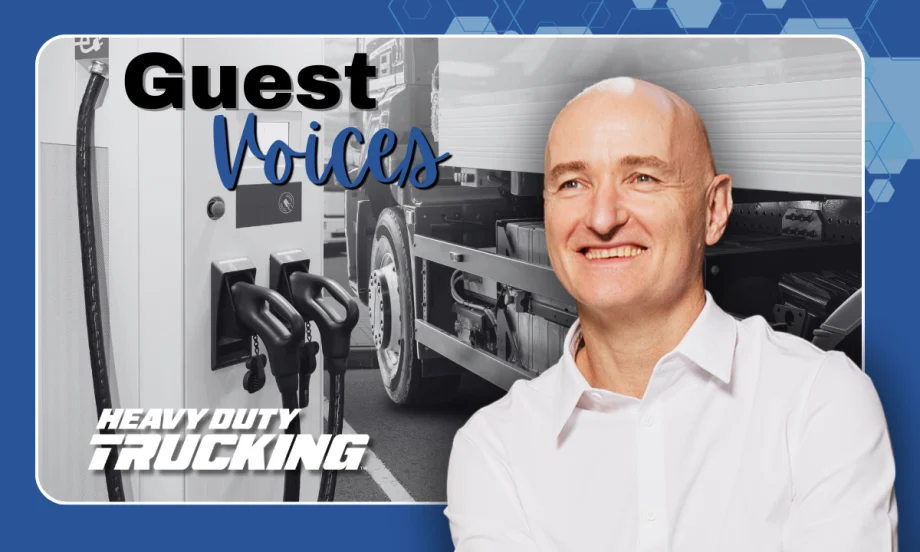
Recent fleet hesitation on electrification is a strategic error, says Neil Cawse, founder and CEO of Geotab.
Credit:
HDT Graphic/Geotab headshot
3 min to read
The 2026 conflict in the Middle East has exposed a vulnerability in our economy that we can no longer ignore. With the Strait of Hormuz effectively blocked, the price of Brent Crude is surging daily, and the fallout is sending shocks across the globe. This volatility moves directly into freight budgets, delivery surcharges, and the prices consumers pay at the checkout counter.
For years, the business case for electric vehicles rested on two pillars: emissions and total cost of ownership. Both remain critical, but a third pillar has become the most urgent for any executive: resilience. For fleets, electrification is integral to reducing operational costs impacted by global uncertainty.
The Volatility Tax
We are currently navigating a "volatility tax." Oil is a globally traded commodity with a price constantly impacted by geopolitics. When global chokepoints are threatened, the resulting price spikes act as an immediate, regressive tax on every business that moves goods. This instability creates swings in operating costs that eventually get passed on to consumers through higher grocery prices, service calls, and deliveries.
Hedging and fuel surcharges do not fix the underlying weakness of a transport system built around fuel priced by external global shocks.
Operational Reality
The shift to electrification is an operational reality. In 2025, global EV sales reached over 20 million units. On the Geotab platform alone, connected electric vehicles logged nearly 900 million miles last year.
These organizations are de-risking their supply chains. Every mile powered by the domestic grid instead of diesel or gas is a mile protected from current oil-price spikes. It transforms a volatile variable cost into a more predictable, manageable expense.
Parity Through Technology
We must be honest about the remaining hurdles. Range and infrastructure are still challenges for specific heavy-duty or long-haul operations. However, the "not ready" argument is losing ground daily.
Advances in battery performance, depot charging, and smart route planning mean that light-duty, medium-duty, and regional "return-to-base" haulage have much to electrify right now. In these sectors, the transition provides a clear competitive advantage.
While electricity is not immune to price pressure, it is generated from a diverse, domestic mix of sources. When you pair a fleet with on-site solar and managed charging, you stop being a price-taker and start becoming an energy manager. That is a level of operational control that oil will never provide.
The Strategic Payoff
The leaders moving fastest today are using data to pinpoint exactly where they can remove oil exposure from their business. They are identifying which vehicles can transition now and where charging fits into existing duty cycles without compromising uptime.
Recent hesitation on electrification is a strategic error. Slower adoption does not preserve
“flexibility.” It preserves dependence. It leaves fleets, and ultimately the economy, exposed to the next supply shock, the next blockade, and the next jump in fuel-linked costs.
We have reached a point where environmental benefits, economics, and resilience are converging.
For businesses and households alike, the geopolitical case for EVs is increasingly straightforward: fewer dollars tied to chokepoints half a world away, and more control over the cost of moving people and goods at home.
Subscribe to Our Newsletter
More Blog Posts

Fragmented AI: Why Trucking Must Take Security More Seriously
As AI becomes embedded throughout transportation operations, the result can be a tech environment that looks more advanced on paper, but isn't necessarily more efficient, secure, or manageable in practice.
Read More →
We've Been Thinking About Truck Uptime Backward
The truck repair operations that minimize downtime aren’t necessarily the ones with the fastest technicians. They’re the ones who have the part.
Read More →
The Real Cost of Trailer Tires: Why It's Not Just a Maintenance Problem Anymore
Tire wear isn't random. The trucking fleet with a tire program that knows which trailers, positions, and routes are punishing tires the hardest is the one that buys fewer of them.
Read More →
The Time is Now to Expand Longer Combination Vehicles [Opinion]
The reauthorization of the federal highway bill offers a rare chance to advance double 53-foot LCVs. Industry leaders shouldn’t miss it, says a longtime trailer industry professional in this Guest Voices blog post.
Read More →
The Hidden Costs of 'Free' Smart Trailer Tech Installations [Commentary]
Free installation of smart trailer technologies may sound good on paper, but you could end up paying down the road.
Read More →
Protecting Small Trucking Fleets from Scammers: Lessons from the Insurance Frontlines
Hijacked DOT numbers, fake invoices, and high-tech cargo theft are on the rise. A veteran trucking insurance broker shares how to spot trouble early — and why a trusted advisor may be your strongest defense.
Read More →
Tire Retreading Makes Sense for Trucking Fleets. H.R. 3401 Could Make It Even Smarter.
Retreaded tires offer trucking fleets cost savings, sustainability gains, and supply chain security. New legislation, H.R. 3401, could make retreads even more attractive and support U.S. jobs.
Read More →
Hydrogen Fuel Cell Trucks Are Ready for the Long Haul. Now Policymakers Must Act
Accelerating the growth of hydrogen-fuel-cell-truck adoption would help make zero-emission trucking is not only possible, but practical and profitable, argues the Center for Transportation and the Environment in this Guest Voices blog.
Read More →
A New Definition for Long-Haul Heavy-Duty Trucking
Understanding the various routes that make up long haul is important as we move through trucking’s Messy Middle — a time when fleets have a variety of powertrain solutions to choose from, writes NACFE's Mike Roeth.
Read More →
How Collaboration is Driving the Growth of Heavy-Duty EV Charging Infrastructure
To overcome the challenges of transitioning to electric medium- and heavy-duty vehicles, it will take local governments, public-private partnerships, utilities, investors, and other stakeholders working together, says the CEO of Greenlane in this guest article.
Read More →