




Up your Maintenance Game, Save your Tires
Truck tires usually tell you what’s wrong with them before external forces render them useless. Catch those clues early and you might save that tire — and money.
August 29, 2023

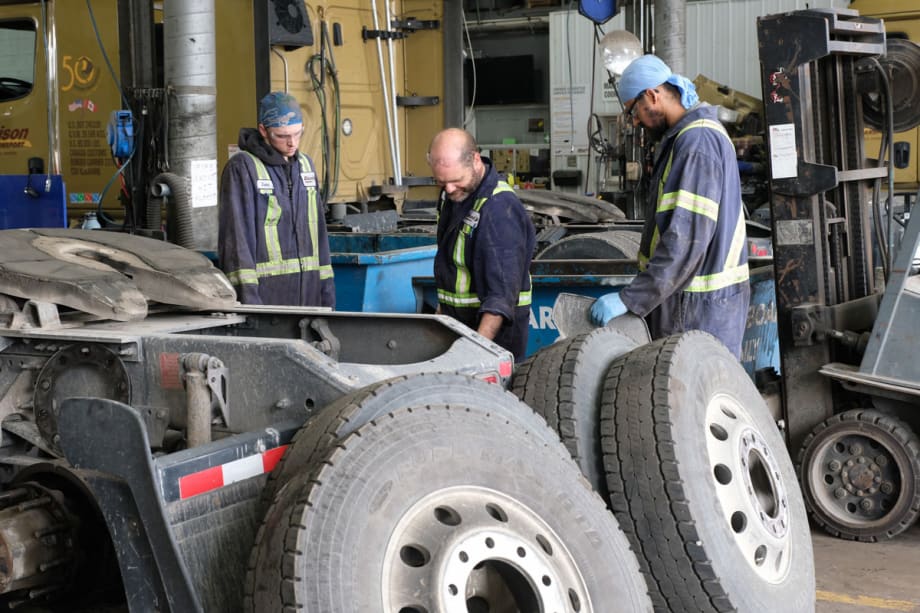
Tire maintenance doesn’t have to be labor-intensive. Pressure monitoring is the most important component in a good program, but sharp-eyed tire techs can spot little problems before they become big headaches.
Photo: Jim Park
5 min to read
Have you seen the price of truck tires lately? Can we talk about tire maintenance? Forget the pennies; these days we can safely say a dollar saved is a dollar earned.
The extra cost involved in upping your tire maintenance game is nothing compared to the savings: longer tire life, fewer roadside service calls, less downtime, and better safety scores.
Last October, the Commercial Vehicle Safety Alliance conducted nearly 60,000 inspections across three days. During that time, 23.1% of commercial vehicles met the out-of-service criteria with 18.5% due to tire violations.
Had CVSA inspectors not taken those tires and trucks out of service first, they likely would have wound up sidelined elsewhere — probably stranded at roadside waiting on a tire service truck, or worse.
Maintenance-Free is a Myth
While many truck components can be made more or less maintenance-free, tires aren’t among them. Tires, per se, don’t require a lot of maintenance, but managing and monitoring inflation pressure is critical.
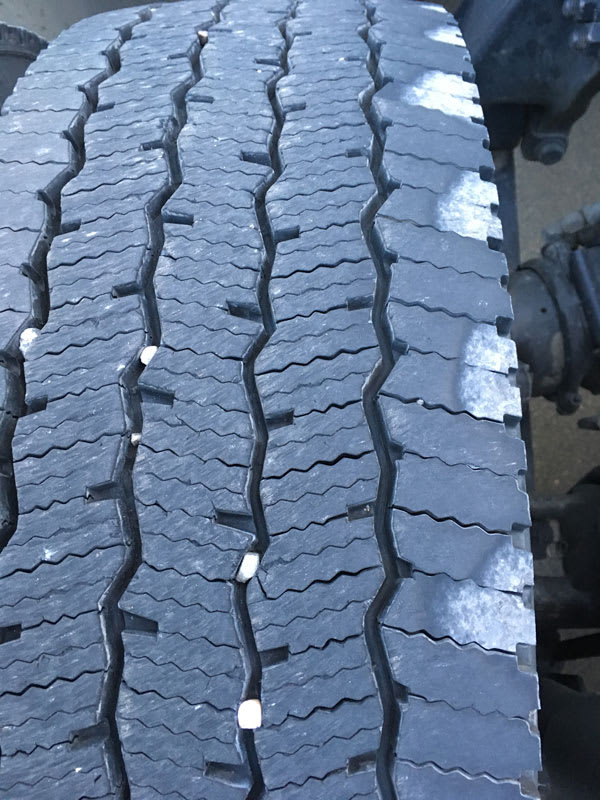
Tire treads will tell you when something’s wrong. It’s up to you to figure out what your tires are telling you and address it before that tire is consigned to the scrap pile.
Photo: Jim Park
Judith Monte, vice president, customer experience and marketing, Aperia Technologies, says data her company has collected indicates tires operating at the recommended inflation pressure can see an increase of up to 20% in tire life compared to their underinflated counterparts.
And that’s not all.
“One of our fleet customers, Dave Veronin, president of Migway Inc., cites a 95% reduction in downtime since deploying our Halo inflation system across his fleet of tractors and trailers,” she says. “Our clients regularly cite a 1-3% fuel economy improvement as well as a 10-20% tire life improvement after deploying the Halo Tire Inflator.”
While Halo deserves some of the credit, her data highlights the fact that active monitoring of tire pressure goes a long way toward improving tire life and fuel economy.
Inflation Pressure
Continental recommends referring to the tire manufacturer’s load/inflation tables to determine the proper pressure settings based on the load carried.
“Air pressure will vary depending on wheel position and load,” says Alison Bowker, marketing and communications manager, Commercial Vehicle Tires – U.S. “Fleets should pay special attention to their steer tires, as their pressure requirements are usually significantly higher than 100 psi.”
Bowker also notes that weather and seasonal temperature fluctuation can affect tire pressure. As the temperature rises, the air pressure in a tire will rise. As the temperature goes down, air pressure will fall.
“There is also natural air pressure loss of about 1-3 psi per month,” she adds.
While automatic tire inflation and tire pressure monitoring can speed pre-trip inspections, drivers should be trained on the impact of inadequate inflation pressure and the art of visually inspecting tires. While most TPMS and ATIS suppliers offer in-cab displays and even apps for monitoring tire condition, if the sidewall is sliced nearly open, or the tread has separated from the casing, that tire is not long for this world.
“Encourage drivers to inspect their tires regularly and report any anomalies promptly,” Monte says.
Scrap Tire Analysis
That pile of scrap tires at the back of your yard holds clues about your fleet’s maintenance shortcomings. Tires don’t just self-destruct. If they aren’t living up to your expectations, something might be killing them.
“Regular reviews of the scrap pile can help to determine if there are patterns as to why issues are occurring before the expected end-life of a tire,” says Joe Hughes, urban product category manager, Michelin North America. “A proper and detailed look at damaged tires can prevent further issues and keep tires from coming out of service early.”
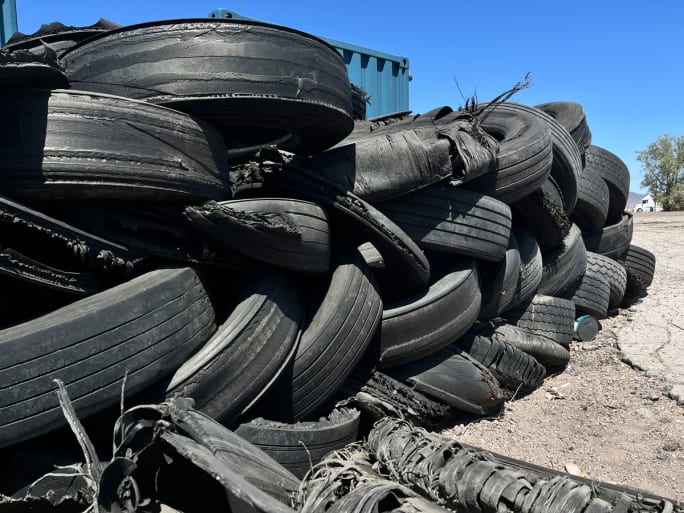
Your scrap tire pile holds clues to all your tire maintenance problems. Observe and analyze what you find there, and you may save more of your current crop of tires.
Photo: Jim Park
Wear patterns and various tire conditions can point directly to the source of the problem, Hughes says.
“If bead damage is occurring, reviewing mounting practices and procedures could explain the cause,” he says. “With excessive run-flats, fleets should review drivers pre-trip inspections and tire repair maintenance records to ensure proper procedures are being followed.”
And if fleets see odd wear patterns on tires removed from service early, they should take steps to determine the cause of that wear. Hughes suggests having the vehicle’s alignment checked if irregular wear patterns are present.
Vehicle Alignment
Vehicle alignment can play a critical role in affecting tire wear, and it can directly impact the number of miles you can put on your tires before removal.
Poor vehicle alignment can cause one side of the tire to wear faster than the other. By avoiding irregular wear, drivers can maximize the life of every tire, benefit from cost savings, and reduce their overall tire waste.
“For commercial trucks, the impact of vehicle alignment is largely dependent on the type of route taken by the vehicle,” says Robert Hamby, director of commercial product strategy, Bridgestone Americas. “For example, long-haul trucks that consistently move in one direction with low scrub would experience higher levels of irregular wear than a last-mile delivery vehicle that operates with more stops, starts, and turns. In either case, irregular wear still shortens the life of the tire, just at different speeds.”
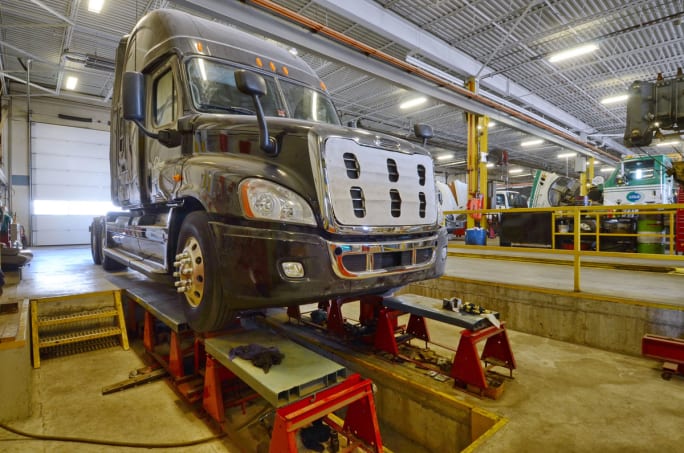
Tires often take the rap for irregular wear, but most of the time it’s some external factor acting on the tire that causes that wear. Wheel misalignment is probably one of the greatest contributors.
Photo: Jim Park
One major culprit of tire wear that often goes undiagnosed is toe-in or toe-out misalignment, or alignment issues on trailer axles. A steer tire is the best place to start when diagnosing alignment issues because it shows the irregular wear most strongly, Bowker advises.
Misalignment leaves tell-tale signs on tires. Resolve the source of the problem at the first sign of irregular wear patterns and you’ll likely save the tire. Tire rotation is recommended for each wheel position as well, Bowker says.
Tire Management Technology
Integrating a tire management platform and an appropriate suite of tools can improve the efficiency of tire maintenance. Solutions range from TPMS systems that track and report tire pressure and temperature, to drive-over reader devices used in the yard that provide automated inspections of tire pressure and tread depth.
“Fleets that build and utilize tire management platforms with trusted partners can focus more on their fleet management and business operations,” says Johnny McIntosh, senior director of commercial services, Goodyear North America. “Tire management partners can provide actionable and insightful information to get the most out of a platform.”
It’s all about gathering insight into the secret lives of tires and using that data to streamline the maintenance process. Knowing which tires need attention now, and which can afford to wait, gives fleet managers that much more control over their operation.
The cost of replacement tires and the drag on driver morale of downtime is forcing fleets to be more proactive with tire maintenance. Fleets simply can’t afford to put tire problems off until tomorrow.
Subscribe to Our Newsletter
More Maintenance

Sponsored•September 16, 2026
Color Match Smarter: Tools That Restore & Perform
For fleet managers and collision repair professionals keeping heavy-duty trucks on the road, getting the color right the first time isn't just about appearance — it's about efficiency, turnaround time, and bottom-line results. Discover how today's digital color tools are transforming the repair process from guesswork to precision.
Read More →
Wrong Repair Prompts Recall of Freightliner, Western Star 4x2 Trucks
DTNA is recalling more than 2,400 trucks that received an incompatible software fix instead of the hardware repair required to address brake valve corrosion.
Read More →
Truck Drivers Need More Than Another Alert
Fleets have more visibility into truck health, safety events, and driver activity than ever. The next challenge is turning all that information into useful guidance for the person who has to decide what to do next.
Read More →
The Maintenance Checks Trucking Fleets Should Prioritize Before Fall Freight Picks Up
Making it through August isn’t the same as being ready for the next several months of operation. Find out what systems may have suffered from summer heat and need to be checked out before fall.
Read More →
What Three Fleets Are Doing Differently When Buying Truck Parts in 2026
With freight improving but costs still climbing, fleet maintenance executives explain how they're balancing price, quality, and supplier relationships.
Read More →
Paccar Recalls 2027 Trucks Built This Summer for Possible Electrical Problem
The nearly 6,000 Kenworth and Peterbilt trucks in the recall could potentially lose engine power, among other things.
Read More →
Will API PC-12 Oil Change Trucking Fleet Maintenance?
The new API PC-12 heavy-duty engine oil category reflects the changing demands of modern diesel engines. But fleets like Foodliner are looking to getting their own data before making decisions on adopting the new oils and questions such as extending oil drain intervals.
Read More →
Brake Safety Week to Focus on Drums and Rotors
Commercial vehicle inspectors are focusing on truck brakes during CVSA's Brake Safety Week, August 23-29.
Read More →Possible Battery-Cable Fires Prompt Recall of 15,000+ International MV and HV Trucks
On the recalled vehicles, manufacturing variations can cause the battery interconnect cable to contact the auxiliary stud and hold down the bracket.
Read More →
Rush, MCT Team Up to Grow Refrigeration Service Network
The joint venture will operate MCT's network of Carrier Transicold dealerships and mobile service locations, with the companies promising greater service capacity and uptime for refrigerated fleets.
Read More →