




Fragmented AI: Why Trucking Must Take Security More Seriously
As AI becomes embedded throughout transportation operations, the result can be a tech environment that looks more advanced on paper, but isn't necessarily more efficient, secure, or manageable in practice.

As artificial intelligence becomes embedded throughout transportation operations, many are unintentionally creating a new type of fragmentation that poses serious security risks to the supply chain, say these Trimble AI experts.
HDT Graphic
- Integration of AI in transportation can result in systems that appear technologically advanced but may lack efficiency, security, and manageability.
- The trucking industry faces challenges in maintaining security as AI becomes more prevalent in its operations.
- There is a critical need for the trucking industry to prioritize security measures alongside technological advancements.
*Summarized by AI
Historically speaking, the transportation industry has been quicker to throw more people at emerging business problems than to chase new technology trends. And for good reason. Assets are expensive, margins are always thin, and mistakes can have massive real-world consequences. Fleets simply cannot afford to be early adopters of unproven solutions.
Yet, when it comes to artificial intelligence, our industry has abandoned this cautious status-quo mindset and entered a new period of rapid experimentation. Many fleets today are deploying AI-powered maintenance tools, using smarter TMS solutions and automating back-office workflows.
The opportunity is real. So is the risk.
When a contract is mis-executed or a carrier is incorrectly flagged, someone must explain what happened and why. In a multi-agent system, the audit trail can become an unwieldy maze, making it challenging to pinpoint exactly where the breakdown occurred.
A study by Gartner predicts that more than 40% of agentic AI projects will be canceled by the end of 2027 due to governance and accountability complexities.
As AI becomes embedded throughout transportation operations, many are unintentionally creating a new type of fragmentation that poses serious security risks to the supply chain. Instead of deploying a single secure AI agent that can automatically integrate data to connect all workflows and operations, organizations are accumulating dozens of disconnected AI tools that operate independently across different data sources and security standards.
The result is a tech environment that may be more advanced on paper, but not necessarily more efficient, secure, or manageable in practice.
Rapid AI Adoption = Compounding Security Risks
Today’s off-the-shelf consumer-grade AI tools are inexpensive and easy to access, but at their foundation, most are unfit for logistics.
Many of these AI tools lack real security oversight and often work around security controls in an attempt to complete requested tasks. True security demands enforcing boundaries without compromise.
In extreme cases, AI agents have installed unauthorized software on host machines, creating new API connections and other unapproved actions.
The “slap it on” AI strategy that many companies are using to try to move faster is opening Pandora’s box of risk and security threats that could be avoidable.
It’s imperative for leaders of organizations in transportation and logistics to develop a strategic AI rollout plan that takes security risks seriously without moving too slowly and getting left behind. Finding the right balance is easier said than done.
Security Must Be Baked Into One Single AI Agent
One thing is clear: if we are to continue down the path of safely embracing agentic AI, fleets need to rethink the smorgasbord of AI tools that they have been leveraging for their business operations.
For a single AI agent to be successful, security must be baked into the very foundation of its development, with a dedicated security team as its primary focus. Additionally, numerous overlapping defense layers must be put into place that prevent both intentional and negligent use in real time and add a human in the loop whenever tasks are unclear or run into security walls.
Replacing 12 separate agents (and audit trails) with one eliminates much of the governance and accountability complexity organizations experience today.
Fleets today would benefit from a single, powerful AI agent that is trusted to operate with access to live business data, internal servers, strict cost controls, and strong user-permission constraints.
Fragmented AI Reverses Past Efficiency and Security Gains
On the surface, it may appear that fleets that rapidly adopt new AI tools and throw them at their business gaps are getting ahead. But the reality is, despite the growing embrace of smart new tools powered by AI, in many cases fleets are fragmented and at risk of new security threats.
When AI is not deployed strategically across a business, the efficiencies the tools should create begin to unravel, resulting in the opposite effect.
In a survey of 68 freight professionals, about 55% of respondents said they were actively using, piloting or experimenting with AI in limited areas, but only about 15% were using AI agents.
With this much potential for efficiency, our industry should move toward the seamless integration of a single AI agent that spans all aspects of the business — including telematics, third-party software, and automated workflows — to propel the future of transportation.
More Blog Posts
We've Been Thinking About Truck Uptime Backward
The truck repair operations that minimize downtime aren’t necessarily the ones with the fastest technicians. They’re the ones who have the part.
Read More →
The Real Cost of Trailer Tires: Why It's Not Just a Maintenance Problem Anymore
Tire wear isn't random. The trucking fleet with a tire program that knows which trailers, positions, and routes are punishing tires the hardest is the one that buys fewer of them.
Read More →
A New Argument for Electrification: Managing Fuel Volatility
As oil prices surge amid Middle East conflict and a blocked Strait of Hormuz, fleets are feeling the squeeze in real time. In this guest column, Geotab's Neil Cawse argues electrification is no longer just about sustainability or ROI — it’s about insulating operations from what he calls a "volatility tax."
Read More →
The Time is Now to Expand Longer Combination Vehicles [Opinion]
The reauthorization of the federal highway bill offers a rare chance to advance double 53-foot LCVs. Industry leaders shouldn’t miss it, says a longtime trailer industry professional in this Guest Voices blog post.
Read More →
The Hidden Costs of 'Free' Smart Trailer Tech Installations [Commentary]
Free installation of smart trailer technologies may sound good on paper, but you could end up paying down the road.
Read More →
Protecting Small Trucking Fleets from Scammers: Lessons from the Insurance Frontlines
Hijacked DOT numbers, fake invoices, and high-tech cargo theft are on the rise. A veteran trucking insurance broker shares how to spot trouble early — and why a trusted advisor may be your strongest defense.
Read More →
Tire Retreading Makes Sense for Trucking Fleets. H.R. 3401 Could Make It Even Smarter.
Retreaded tires offer trucking fleets cost savings, sustainability gains, and supply chain security. New legislation, H.R. 3401, could make retreads even more attractive and support U.S. jobs.
Read More →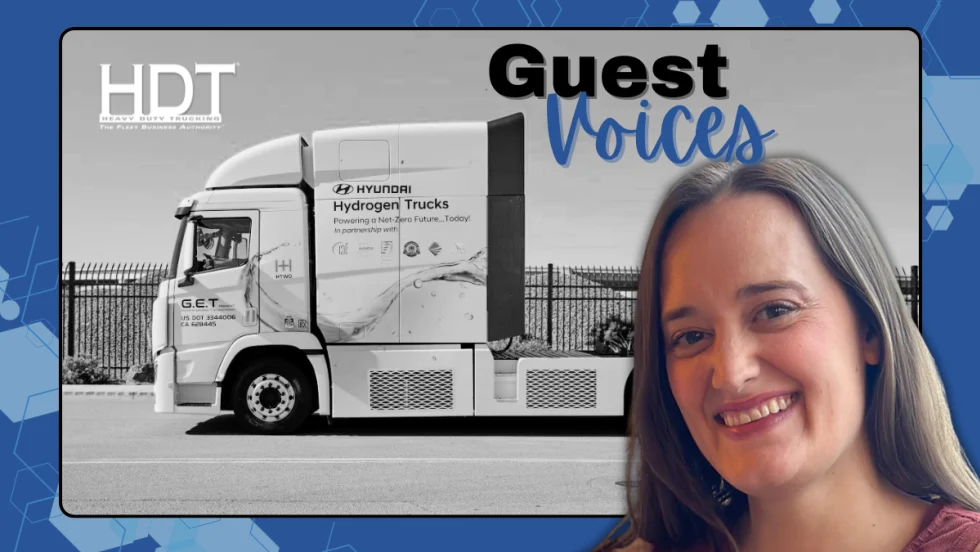
Hydrogen Fuel Cell Trucks Are Ready for the Long Haul. Now Policymakers Must Act
Accelerating the growth of hydrogen-fuel-cell-truck adoption would help make zero-emission trucking is not only possible, but practical and profitable, argues the Center for Transportation and the Environment in this Guest Voices blog.
Read More →
A New Definition for Long-Haul Heavy-Duty Trucking
Understanding the various routes that make up long haul is important as we move through trucking’s Messy Middle — a time when fleets have a variety of powertrain solutions to choose from, writes NACFE's Mike Roeth.
Read More →
How Collaboration is Driving the Growth of Heavy-Duty EV Charging Infrastructure
To overcome the challenges of transitioning to electric medium- and heavy-duty vehicles, it will take local governments, public-private partnerships, utilities, investors, and other stakeholders working together, says the CEO of Greenlane in this guest article.
Read More →