




Listen: Everything You Need to Know about Hydrogen Fuel Cells
Fuel-Cell Trucks and the Sleeper Enigma
Will the future of long-haul heavy-duty trucks be hydrogen or battery-electric? NACFE's Rick Mihelic points out an important factor that no one's talking about.
by Rick Mihelic, director of emerging technologies, NACFE
April 21, 2022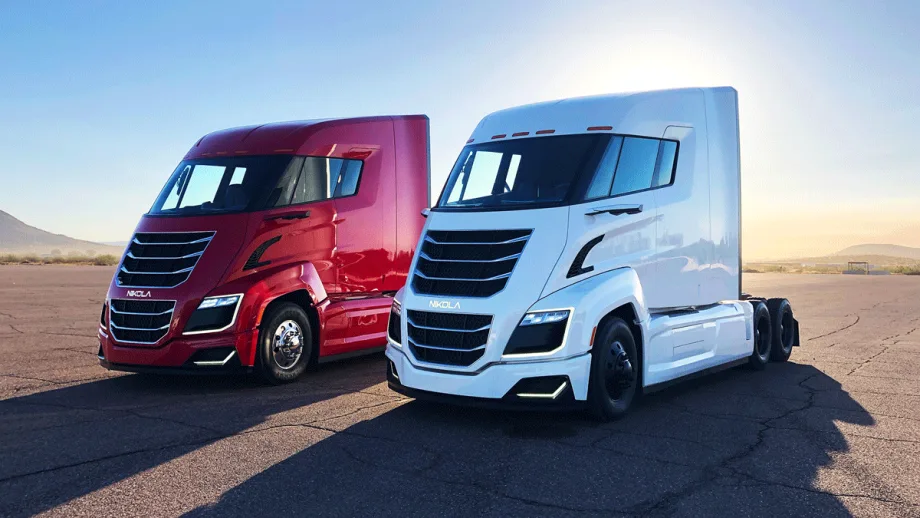
Nikola’s fuel-cell vehicle plans indicate a sleeper version will be offered at some point, but right now, FCEV trucks are all day cabs.
Photo: Nikola
4 min to read
Will the future of long-haul heavy-duty trucks be hydrogen or battery-electric? That question seems to preoccupy a lot of webinars and media stories. The arguments always seem to hover around two topics: refill times and payload weight capacity. While those two topics have some significant details to debate, I have yet to see an article that addresses a more fundamental issue — the sleeper.
Long-haul is a vague definition with a lot of nuances to it, but a conservative definition is that the truck regularly travels more than 500 miles per day and rarely returns to base. These vehicles tend to have sleepers. The EPA greenhouse gas regulations even define these tractors as primarily high-roof sleepers. Sleeper options from truck makers range from perhaps 36 inches to more than 70 inches in length.
In the alternative-fuel world, compressed natural gas vehicles have been making market share inroads for more than a decade. But when the North American Council for Freight Efficiency asked truck makers and fleets how many CNG tractors they have put on the road that had sleepers, the answer is somewhere near zero.

A rare CNG sleeper cab.
Photo: Rick Mihelic
Why CNG Trucks Are Day Cabs
CNG vehicles overwhelmingly are day cabs. They universally store the pressurized fuel in cabinets behind the cab in the gap between the tractor and trailer. These fuel cabinets require approximately 24.7 inches of chassis length, according to one OEM’s body builder information. The fuel cabinets are frame mounted, not tied directly to the cab.
Comparing these to a comparable diesel is challenging, as vehicle specifications differ, with many option content choices available. A day cab with under-cab chassis-mounted fuel tanks can have a shorter wheelbase as a diesel-powered vehicle than one that is powered by CNG. A day cab also can be configured in such a way as to have the same wheelbase as the CNG truck. One example specification of a CNG day cab tractor I found indicated it had a 200-inch wheelbase. OEM information I found indicated 197 inches was as short as possible.
When migrating to sleeper cabs, the CNG cabinet will nearly always add length over a comparable diesel. The diesel fuel tanks on a sleeper truck are mounted on the chassis underneath the sleeper. The CNG truck, however, would have the fuel tanks mounted behind the sleeper, resulting in an additional nearly 25 inches of wheelbase.
That added length impacts front-axle loading, maneuverability, and likely the ride. Those factors may contribute to the explanation of why CNG sleepers are rare.
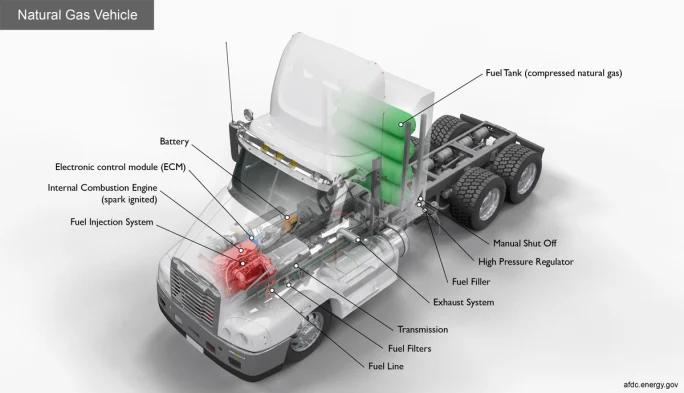
The cabinet holding the compressed-natural gas tanks will nearly always add length.
Source: U.S. Department of Energy
A number of fleets have opted to allow their drivers to stay overnight in hotels. This trend allows the fleet to use day cabs almost exclusively. The growth in regional-haul operations, where the driver returns to base each evening, also permits the use of day cabs. One fleet in NACFE’s Run on Less Regional was able to get a trailer to go more than 500 miles by swapping the tractors at the mid-point, allowing both drivers to get home each day. So there are operational duty cycles that can work for longer distances with day cabs.
However, the hydrogen or CNG long-haul sleeper tractor remains an enigma. Nikola’s fuel-cell vehicle plans indicate a sleeper version will be offered at some point in the future. Some aftermarket retrofits of CNG-powered vehicles have been done with sleepers. The majority of prototype fuel-cell trucks in use in California, though, seem tied to drayage operations where day cabs suffice.
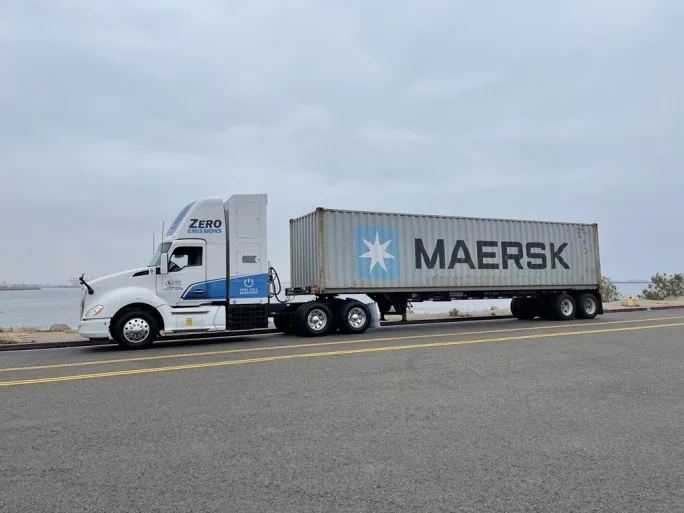
The majority of prototype fuel-cell trucks in use in California seem tied to drayage operations where day cabs suffice.
Photo: Kenworth
A different take on this is that hydrogen may be the best zero-emission solution for autonomous long- haul trucking, where a day cab, or no cab at all, may be pulling the trailers.
If hydrogen is truly the solution for long-haul trucking, it would be in everyone’s best interest to start fielding prototypes with sleepers that actually permit long-haul driving. Selling hydrogen as a long-haul solution but only fielding regional and short-haul trucks is not helping the story.

About the Author: Rick Mihelic is director of emerging technologies for the North American Council for Freight Efficiency. He has authored four Guidance Reports on electric and alternative fuel medium- and heavy-duty trucks and several Confidence Reports. President of Mihelic Vehicle Consulting, he has 38 years’ experience in the trucking and aerospace industries, including 20 years in commercial vehicle development for Paccar and Peterbilt.
Subscribe to Our Newsletter
More Blog Posts

Fragmented AI: Why Trucking Must Take Security More Seriously
As AI becomes embedded throughout transportation operations, the result can be a tech environment that looks more advanced on paper, but isn't necessarily more efficient, secure, or manageable in practice.
Read More →
We've Been Thinking About Truck Uptime Backward
The truck repair operations that minimize downtime aren’t necessarily the ones with the fastest technicians. They’re the ones who have the part.
Read More →
The Real Cost of Trailer Tires: Why It's Not Just a Maintenance Problem Anymore
Tire wear isn't random. The trucking fleet with a tire program that knows which trailers, positions, and routes are punishing tires the hardest is the one that buys fewer of them.
Read More →
A New Argument for Electrification: Managing Fuel Volatility
As oil prices surge amid Middle East conflict and a blocked Strait of Hormuz, fleets are feeling the squeeze in real time. In this guest column, Geotab's Neil Cawse argues electrification is no longer just about sustainability or ROI — it’s about insulating operations from what he calls a "volatility tax."
Read More →
The Time is Now to Expand Longer Combination Vehicles [Opinion]
The reauthorization of the federal highway bill offers a rare chance to advance double 53-foot LCVs. Industry leaders shouldn’t miss it, says a longtime trailer industry professional in this Guest Voices blog post.
Read More →
The Hidden Costs of 'Free' Smart Trailer Tech Installations [Commentary]
Free installation of smart trailer technologies may sound good on paper, but you could end up paying down the road.
Read More →
Protecting Small Trucking Fleets from Scammers: Lessons from the Insurance Frontlines
Hijacked DOT numbers, fake invoices, and high-tech cargo theft are on the rise. A veteran trucking insurance broker shares how to spot trouble early — and why a trusted advisor may be your strongest defense.
Read More →
Tire Retreading Makes Sense for Trucking Fleets. H.R. 3401 Could Make It Even Smarter.
Retreaded tires offer trucking fleets cost savings, sustainability gains, and supply chain security. New legislation, H.R. 3401, could make retreads even more attractive and support U.S. jobs.
Read More →
Hydrogen Fuel Cell Trucks Are Ready for the Long Haul. Now Policymakers Must Act
Accelerating the growth of hydrogen-fuel-cell-truck adoption would help make zero-emission trucking is not only possible, but practical and profitable, argues the Center for Transportation and the Environment in this Guest Voices blog.
Read More →
A New Definition for Long-Haul Heavy-Duty Trucking
Understanding the various routes that make up long haul is important as we move through trucking’s Messy Middle — a time when fleets have a variety of powertrain solutions to choose from, writes NACFE's Mike Roeth.
Read More →