





New EPA Proposal Could Erase GHG Emissions Standards for Trucks
Don’t Feel Sorry for CARB and EPA: They had it Coming
Climate legislators overreached badly with the Advanced Clean Fleets rule. And now they’re paying a heavy price for their arrogance.
July 29, 2025

CARB and EPA weren't interested in working with the trucking industry on new emissions regulations. And now their climate agenda is in shambles.
Image: Canva/Kenworth
5 min to read
You’d be hard-pressed these days to find any groups out there taking more of a relentless ass-beating from the second Trump administration than the U.S. Environmental Protection Agency and the California Air Resource Board (CARB).
But they only have themselves to blame.
In the past six months, the Trump administration and its allies in the Republican-controlled Congress have been gleefully gutting a whole host of unpopular diesel emissions regulations.
EPA and CARB have been dictating emissions policies at diesel engine manufacturers for decades now. And in that time, the agencies became de facto dictators in terms of regulations and technology OEMs had to follow in order to sell trucks in the United States.
To be fair, those policies were largely in line with those in other developed countries around the world.
But they’ve never been popular.
That’s because each successive round of regulations added cost and complexity to diesel trucks. And – as is always the case with new technologies – there were teething issues that hurt fleet productivity.
In time OEMs and fleets ironed out those technical issues. But it was an expensive, time-consuming process that fleet managers aren’t eager to go through again.
An Unworkable Plan
But DEF tanks and clogged diesel particulate filters were nothing compared to the next round of emissions regulations, slated to hit trucking in a couple of years.
That’s because for True Believers in CARB and the EPA, 2027 was going to be Year Zero.
Beginning that January CARB and EPA were going to start the process of wiping diesel engines off the face of the planet completely.
Dubbed the Advanced Clean Fleets Rule, the process would start in CARB compliant states – mostly on the West Coast.
OEMs would be required by law to sell so many zero-emission trucks in order to continue selling limited numbers of diesel-powered units.
In theory, this would begin forcibly weening the trucking industry off diesel heading into 2036. That year, the sale of new diesel-powered trucks in CARB states would be outlawed completely. And then, in 2042, it would be illegal to run diesel trucks in CARB states, at all. All trucks would be required to be zero-emission vehicles by that date.
I’ve noted for years that these environmental regulators are True Believers when it comes to fighting Climate Change. They truly believe the clock is ticking. And there is only a limited amount of time remaining before humans can check rising global temperatures before we get to a runaway greenhouse effect with catastrophic consequences for the planet and our civilization.
And so, as zealots are wont to do, CARB and EPA decided they were simply going to cram their aggressive agenda down the country’s throat – with virtually zero buy-in from the industry that was going to be impacted by these massive changes the most.
Moving freight is not optional in a modern, global super economy.
And there were very real concerns out there that CARB and EPA’s heavy-handed approach would cause massive economic unrest and supply chain disruptions as the emissions regulations tightened up.
Looking back at it all now, I find myself wondering how those CARB and EPA folks talked themselves into believing that any of the stuff they were proposing was going to fly.
I’ve written for years about the glaring problems with CARB and EPA’s emissions policies. But here are a few high points, just off the top of head:
The – No Joke! – trillion-dollar price tag for this massive technology transformation was expected to be borne almost entirely by private businesses.
As yet, zero-emission powertrains only perform as well (on a one-to-one operational basis) with diesel trucks in a few applications.
Zero-emission vehicles are wildly expensive compared to diesel trucks.
There is nowhere near the infrastructure necessary to support the widescale deployment of hydrogen fuel cell or battery-electric trucks.
CARB and EPA’s apparent bias against internal combustion engines led them to completely ignore valid clean fuel options like renewable diesel fuel or renewable natural gas. Both of these fuel choices already offer performance parity with diesel-powered trucks. And they would have offered substantial and almost immediate reductions in NOx and particulate matter emissions.
Turning a Deaf Ear to Trucking
And it’s not like the North American trucking industry didn’t try to work with CARB and EPA.
I know many industry insiders who made multiple trips to Washington or Sacramento. They went to present trucking’s viewpoint and enter into good faith negotiations to find a path forward that would deliver a cleaner planet without bankrupting businesses and risking serious economic disruptions.
Their proposals and suggestions were ignored.
As a result, the Advanced Clean Fleets Rule has been hanging over this industry like a specter for a decade now. It’s hard to overstate the sense of dread hanging that’s been hanging over truckers as we’ve drawn ever closer to 2027.
I don’t know of anyone in this industry who thought CARB and EPA’s regulatory roadmap to 2042 ever had a hope in hell of succeeding.
And I’d be willing to bet that a hell of a lot of people in this industry had those regulations in the back of their minds when they went into their polling booths last November.
And here we are today, with the Advanced Clean Fleets Rule and other unpopular emissions regulations in shambles.
A Better Path Forward in the Future?
And the irony here is that it didn’t have to be this way.
CARB and EPA could have listened to the trucking industry’s valid concerns regarding these regulations.
They could have adopted national renewable diesel and renewable natural gas standards. Doing so would have given zero-emission technologies more time to scale, thereby bringing prices down.
It would’ve given states and businesses time to invest in hydrogen and electric-charging infrastructure.
And it would have done so with minimal disruptions to fleets’ bottom lines, to economy and the supply chain.
But – again - CARB and EPA ignored the trucking industry. Instead, they decided to cram an extremely aggressive and disruptive regulatory agenda down the trucking industry’s throat. And they came across as arrogant, dismissive and uncaring in the process.
And the irony of all this is that because they managed to infuriate so many people with their insistence on an unworkable plan, CARB and EPA have set any meaningful progress on combatting climate change back by years.
Sooner or later, a more climate-friendly president and congress will take the reins of power in Washington. And climate legislators will get another chance to save the planet. Hopefully when they do, they’ll take the hard lessons they learned this time around to heart.
Subscribe to Our Newsletter
More Blog Posts

That Time Mack Trucks Threw Me a Birthday Party
Sometimes the best birthdays are the ones you never planned. Mine happened courtesy of one of America's oldest truck manufacturers, and it reminded me why I still love this industry after more than three decades.
Read More →
Trucking Should Prepare for Long Siege of High Fuel Prices
Many in trucking are treating today's fuel-price surge as a temporary disruption. History suggests they may be making a costly mistake.
Read More →
30 Days on the Road: April 2026
There was a glut of good news for the North American trucking industry. HDT's Jack Roberts takes a look back at our major stories from the month.
Read More →
30 Days on the Road: HDT's Monthly News Roundup for March 2026
HDT's Monthly News Roundup takes a look at the major North American trucking industry news stories from March, 2026.
Read More →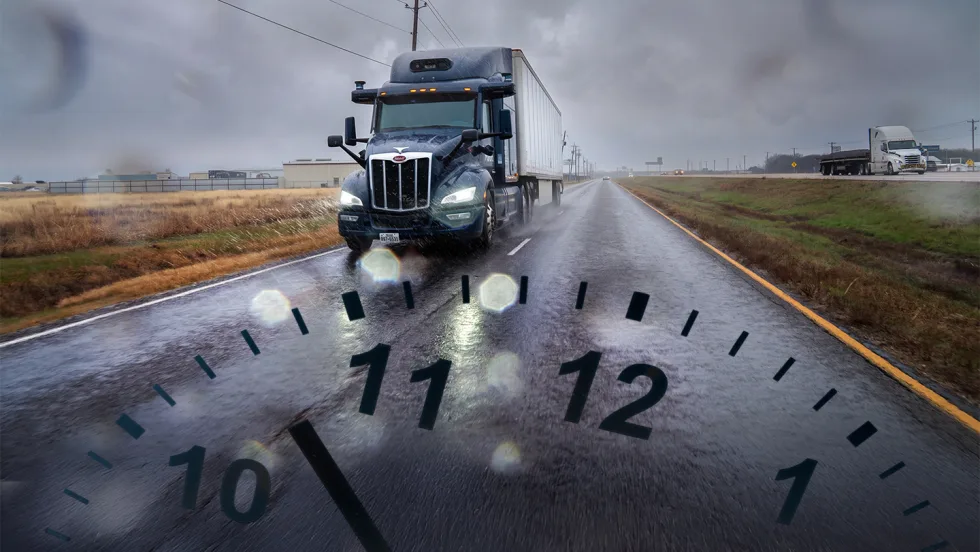
The Major Autonomous News No One is Talking About
Both Aurora Innovation and PlusAI have made under-the-radar announcements that signal a massive game-changer for trucking is coming soon.
Read More →
HDT's Monthly News Roundup: February 2026
February was dreary and dull -- as usual. But the North American trucking industry finally showed some signs of life. But how long that will last is anybody's guess.
Read More →
Like it or Not, The New Year is Here!
HDT's Monthly Trucking Newsletter looks back on the top stories from January, 2026.
Read More →
The Robots are Here
After a bruising year for trucking, CES 2026 felt subdued. Until it suddenly offered a glimpse of trucking's next disruption and reminded everyone that technology never waits for the next freight cycle.
Read More →
Robots and Road Rage
Computers never get angry. And that's a good thing on crowded stretch of interstate.
Read More →
For the Love of Old Trucks
Old trucks generally get ignored in classic car circles. Maybe that's changing.
Read More →