




ATA’s Spear Blasts “Mad Dash” CARB Emissions Timelines
American Trucking Associations CEO and President Chris Spear calls emissions compliance deadlines “unrealistic” for the trucking industry at the Technology & Maintenance Council Annual Meeting.

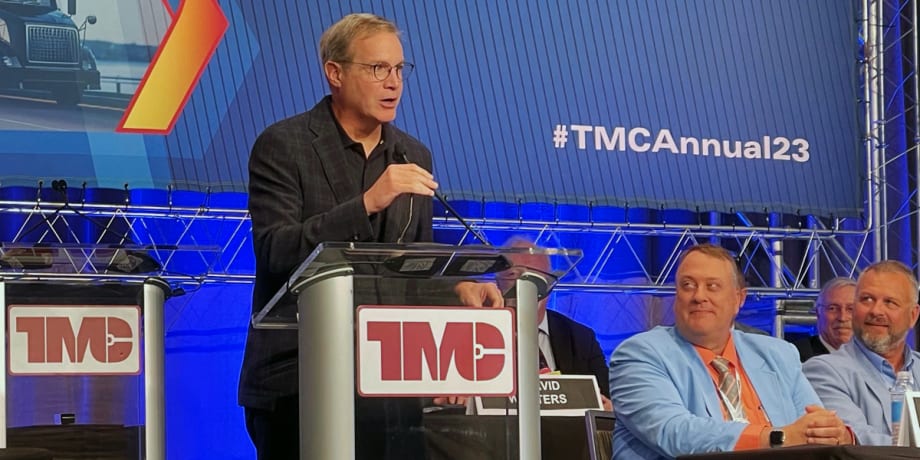
American Trucking Associations CEO and President Chris Spear calls emissions compliance deadlines “unrealistic” for the trucking industry at the the Technology & Maintenance Council Annual Meeting.
Photo: Jack Roberts
American Trucking Associations CEO and President Chris Spear called on members of the Technology and Maintenance Council to join together to push back against what he called “unrealistic” diesel exhaust emissions mandates emanating from the California Air Resource Board and the U.S. Environmental Protection Agency.
“The next decade could fundamentally reshape our industry if we do not speak loudly and rationally and with volume to our lawmakers,” Spear told attendees at the Town Hall Meeting in the Orlando Convention Center on Feb. 27. “Our industry is now faced with unachievable CARB emissions goals. And for 40 years, this industry has reshaped its emissions outcomes to the point that 98% of emissions have been removed from our tailpipes. And we are committed to removing the remaining 1.5% of emissions that remain. But just not on the timeline that California thinks is doable. These mad emissions dashes are going to fail. And the people behind them are going to be embarrassed when they do. And it is ATA’s job to put these issues front and center before our lawmakers.”
Despite the growing move toward battery-electric trucks, Spear said electrification will not solve emission issues in the short term.
“Where are the minerals needed for these battery systems — lithium, graphite and cobalt to name a few — going to come from? China? The Congo? The government says it will open new mining leases here in the U.S. But we all know how long that will take. I look at TMC as problem solvers, and call on its member to join ATA in helping mold regulations that will solve these emissions problems. But do so in a responsible way.”
Investing for the Long Haul
Citing the ongoing trucking manpower shortage, particularly for drivers and technicians, Spear also urged TMC members to reaffirm their ongoing commitment to training and recruiting.
“TMC understands that training is the foundation of any industry’s success,” Spear said. “And I say that it is paramount that we extend that idea by attracting new talent by investing in ... every new individual we hire into trucking. We need to send a message: ‘You have a future if you join the trucking industry.’ We need to promote that fact that this industry offers good pay without the expensive investment in a college education. And we need to make it clear that we will invest in you if you join trucking and stay with us for the long haul. That is a message that we need to relay to the country today.”
Spear also noted that ATA remained engaged with Congress and was working both parties in an extremely partisan environment.
“The new Congress has a three-vote margin, a split Senate, and a we have a Democratic administration," he said. "Regardless, our job is to remind them that we matter. We are the glue of this economy. We are an integral part of the supply chain. We are now through the darkest days of the pandemic supply chain issues. And our economy continues to be No. 1 in the world. Our job at ATA is to make sure your story is told at the highest levels of our government. We make sure that your elected officials have a granular understanding of why trucking matters, and that they don’t forget it. And our voice is much louder, and more clear, if we are all united in delivering that message.”
More Fuel Smarts
Trucking’s Diesel Squeeze Isn’t Letting Up
With diesel topping $6 a gallon nationally, ATA's Bob Costello explains why fleets should prepare for continued pressure at the pump.
Read More →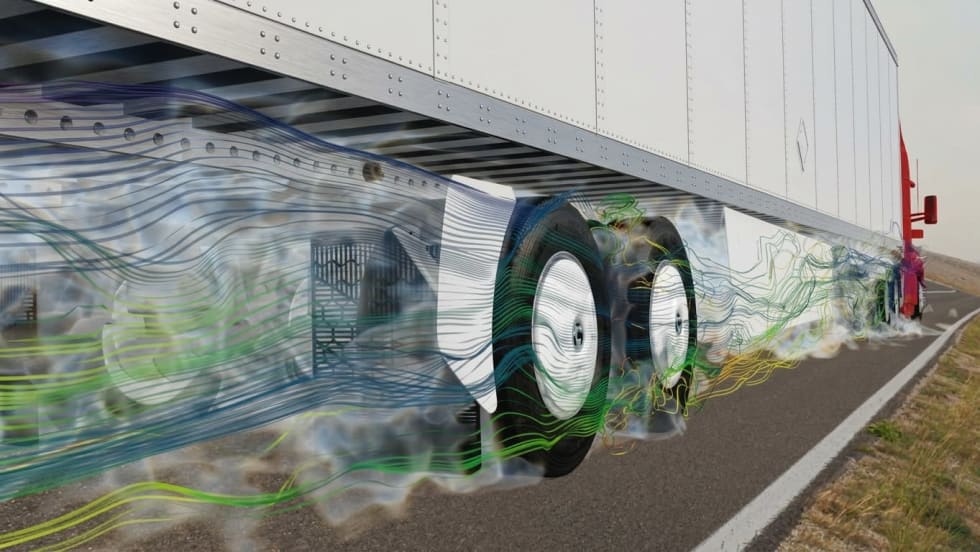
FlowBelow Redesigns Trailer AeroSlider to Cut Fuel Use
The lighter trailer aerodynamic system installs in less than 45 minutes, according to the company, with potential payback in under a year depending on fuel prices and trailer mileage.
Read More →
Why Diesel Price Relief Efforts May Fall Short
Diesel prices have eased from September’s record high, but doubts about additional Russian supply and limits on dyed-diesel tax relief mean trucking fleets still face expensive fuel. And prices could go higher.
Read More →
Why Small Fuel Savings Matter in Trucking
Can better fuel economy help pay for driver raises? In this podcast, GP Transco explains how small efficiency gains create room to reinvest in its people.
Read More →
How GP Transco Cuts Trucking Fuel Costs, a Tenth of a Gallon at a Time
What’s another tenth of a mile per gallon worth? GP Transco shares how equipment upgrades and driver coaching turn small gains into meaningful fuel savings.
Read More →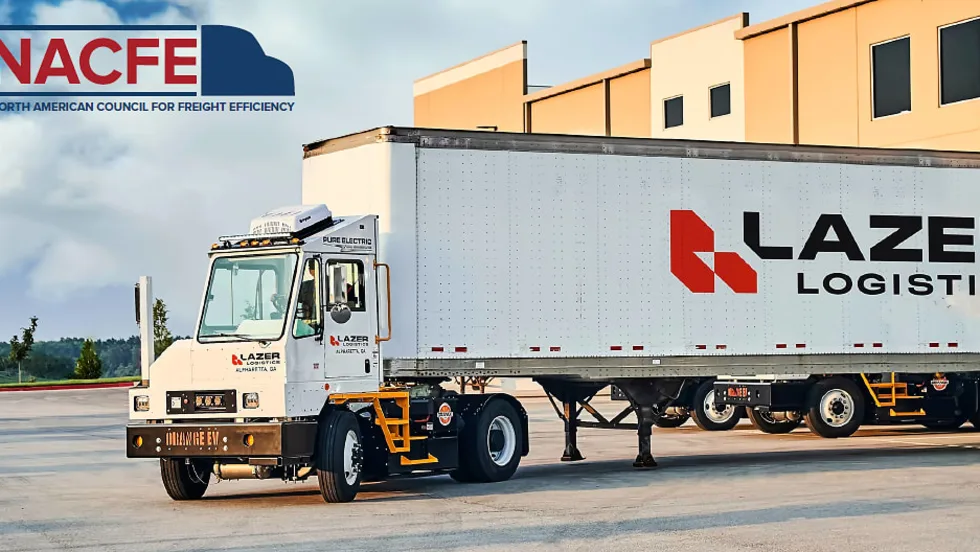
Electric Yard Tractors Move Beyond Pilots
Operating-cost savings have overtaken sustainability goals as the leading reason surveyed fleets are adopting battery-electric terminal tractors, according to new NACFE research.
Read More →
Geotab Links Fleet Card to Vehicle Data
The new card combines fuel discounts with telematics-based purchase controls. Geotab’s analysis also points to potential savings from choosing lower-priced fuel stops.
Read More →
Fleet Economics Shape Electric Truck Outlook
ACT Research expects costs, charging infrastructure, and technology improvements to drive zero-emission commercial vehicle adoption as federal regulations and incentives retreat.
Read More →
Wex Adds Cardless Fuel Payments for Over-the-Road Customers
A new fuel card feature for Wex customers offers convenience and security.
Read More →
New California Law Could Shed Light on Electric Truck Prices
Why do battery-electric Class 8 trucks remain so expensive? A California bill signed by Gov. Gavin Newsom would give fleets and state agencies more visibility into what manufacturers charge.
Read More →