





Learn more about the stringent new-truck emissions regulations.
Senators Push Against Truck Emissions Rule
U.S. Senator Deb Fischer introduced legislation to overturn a regulation on heavy-duty vehicle emissions that Fischer says will be challenging to implement.
February 10, 2023
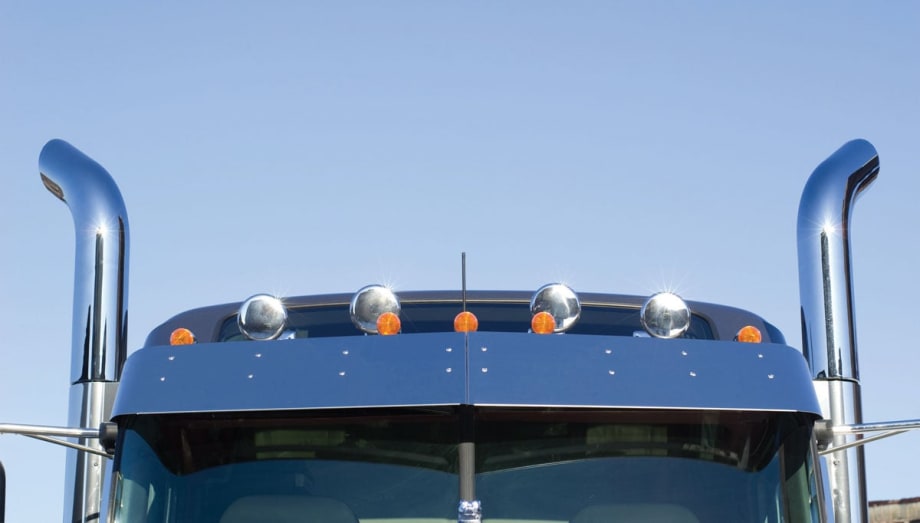
U.S. Senator Deb Fischer introduced legislation to overturn a regulation on heavy-duty vehicle emissions that Fischer says will be challenging to implement.
Photo: Mack Trucks (from files)
2 min to read
U.S. Senator Deb Fischer (R-Neb.) led 33 of senators in introducing legislation to overturn a regulation on heavy-duty vehicle emissions that Fischer says will be challenging to implement, and make new compliant trucks cost prohibitive for small business owners.
The Environmental Protection Agency’s rule, finalized in December 2022, and to go into effect on March 27, covers nitrogen oxides (NOx) and other air pollutants including particulate matter (PM), hydrocarbons, and carbon monoxide (CO). The rule would also change requirements regarding emission control systems and emission-related warranties.
Fischer says the “onerous regulation” would “jack up vehicle costs.”
“This aggressive EPA rule – which will hit mom and pop truck operations the hardest – is also ineffective because it incentivizes operators to keep using older, higher-emitting trucks for longer,” she wrote in a press release. “During a period of high inflation and supply chain disruptions, the last thing this country needs is more expensive freight costs and fewer truckers.”
She says the Biden Administration has an “obsession with excessive climate regulations.”
New: Republican senators led by @SenatorFischer introduce CRA seeking to overturn @EPA heavy duty truck emissions rule https://t.co/H8WngjewFspic.twitter.com/IdrXeAJONL
— davidshepardson (@davidshepardson) February 9, 2023
“We’ve already made significant progress over the past few decades in reducing heavy vehicle emission, but the administration insists on imposing additional rules to achieve unrealistic reductions at a massive cost to small business owners. This overreaching, inflexible rule is costly and impractical,” said Sen. Kevin Cramer (R-N.D.), one of the cosponsors of the resolution.
The Owner-Operator Independent Drivers Association also opposed the original rule.
“If small business truckers can’t afford the new, compliant trucks, they’re going to stay with older, less efficient trucks, or leave the industry entirely. Once again, EPA has largely ignored the warnings and concerns raised by truckers in this latest rule,” said OOIDA President Todd Spencer.
President of Clark Freight Lines in Pasadena, Texas, Danny Schnautz says these types of regulations have a negative impact on equipment.
“The prior years of over-ambitious emission standards have already created unreliable equipment for many years and even driven one of the primary engine manufacturers out of the on-road industry. These ongoing emission systems failures are devastating,” he said.
More Fuel Smarts

How Volvo Updated Its D13 for EPA 2027 [Watch]
Volvo’s updated D13 promises lower emissions without sacrificing performance or fuel economy. Take a closer look at what changed inside the engine in this HDT Spotlight video.
Read More →
Diesel Price Spike Shortens Payback for Natural Gas Trucks, Report Says
Energy Vision estimates fleets could recover the higher purchase price of an RNG-fueled Class 8 tractor in 1.3 to 2.8 years under current fuel-price scenarios.
Read More →
Calstart Becomes Catalyst Mobility, Reflecting Broader Focus
Calstart is now Catalyst Mobility, reflecting the nonprofit’s growing national role in clean transportation, including zero-emission trucks, infrastructure and incentive programs.
Read More →

Record Diesel Prices Squeeze Trucking Fleets
Average U.S. diesel prices have climbed to nearly $6 a gallon, surpassing the 2022 record as tight refinery capacity and Middle East disruptions keep fuel costs elevated.
Read More →
Sponsored•September 9, 2026
How Fuel Delivery Shapes Engine Performance
Fuel delivery depends on more than what happens at the injector. For fleet, maintenance and technical professionals, looking at the full path from pump to injector can provide useful context for understanding engine performance.
Read More →
East Coast Port Launches $45M Electric Truck Push
The Port Authority of New York and New Jersey announced millions in incentives for zero-emission drayage trucks, yard tractors, and new charging hubs near the port.
Read More →
California Bill Could Shed Light on Electric Truck Prices
Why do battery-electric Class 8 trucks remain so expensive? A California bill headed to Gov. Gavin Newsom would give fleets and state agencies more visibility into what manufacturers charge.
Read More →
Detroit Opens Orders for EPA 2027 Engines
Detroit isn’t starting from scratch to meet EPA 2027 diesel emissions standards. Its Gen 6 DD13 and DD15 engines keep much of today’s platform while updating the fuel and aftertreatment systems.
Read More →
Zero-Emission Truck Corridor Planned for West Coast
California, Oregon, Washington, British Columbia and Baja California are coordinating plans for truck charging and hydrogen fueling from Canada to Mexico.
Read More →
A Closer Look at Kenworth’s Electric T880E Vocational Truck [Video]
Learn more about Kenworth's T880E battery-electric vocational truck at the Paccar Technical Center, including its range, applications, upfitting considerations, and PTO options, in this HDT Spotlight video.
Read More →