




What I Learned at the ACT Expo 2025 Truck Show
The past year has been a rough one for climate activists. What would it mean for the trucking industry’s premier clean-fleet technology trade show?

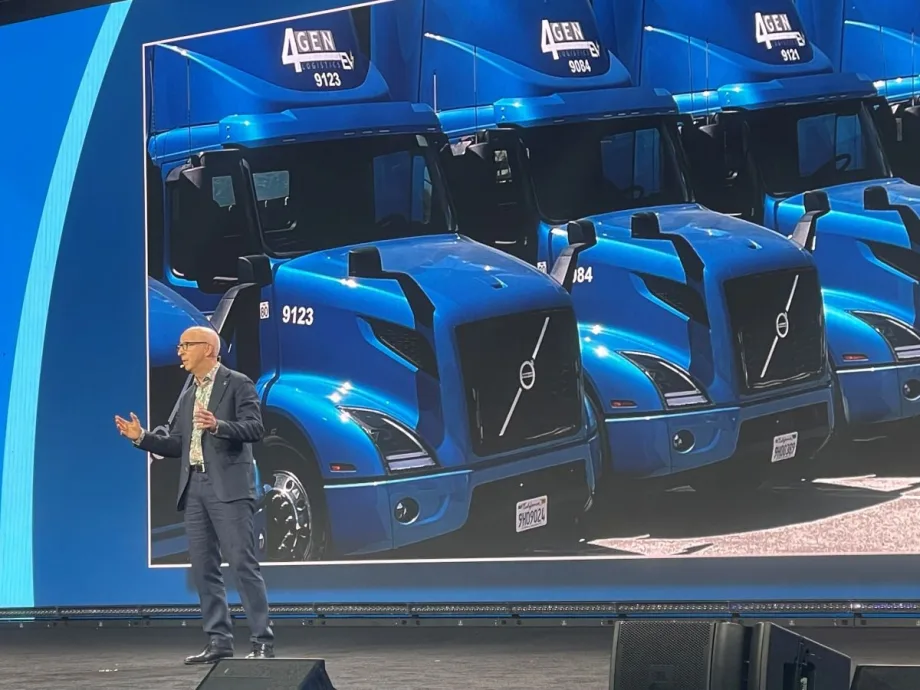
Lars Stenqvist, chief technology officer, Volvo Group, argued for a wider array of technology options to help fleets reach long-term emissions goals.
Photo: Jack Roberts
I was curious what the mood was going to be at ACT Expo this year.
That's because life has a way of throwing curveballs at you.
And the reelection of Donald Trump last Fall was certainly a curveball for anyone concerned about combatting climate change or advancing a zero-emissions agenda for commercial vehicles.
So, ahead of ACT Expo, held April 28 to May 2 in Anaheim, I naturally wondered if attendance would drop off? What would the mood be? What would show attendees and exhibitors be talking about?
We don’t have official numbers yet. But attendance at the show didn’t seem to be diminished in the slightest. Many keynote speeches and educational sessions were jammed. And the show floor was equally lively.
And yes -- there was a great deal of confusion regarding the Trump administration’s actions on emissions regulations and green vehicle technologies at the show.
But on the whole, most people I talked to seemed to regard Trump’s actions as an overcorrection to policies that were a bit too extreme to begin with: A pause, rather than a retreat, is how many people characterized the emissions landscape, at the moment.
And the general hope is that once Trump is out of office, the pendulum will swing back toward more realistic, and manageable, emissions policies.
Furthermore, attendees told me there was real hope that in this new era of more manageable climate policies, fleets will be given the power to choose the powertrains and fuels that work best for them.
That’s probably why renewable natural gas as a truck fuel was suddenly being discussed in sessions and on the show floor.
I also picked up on a strong undercurrent at the show that leads me to believe that we are rapidly nearing widespread commercialization and deployment of autonomous trucks hauling freight in real-world fleet operations.
To be frank, there was far more worry about the impact of Trump’s tariffs and trade wars at the show than the current rollback on emissions regulations.
In other words, the North American trucking industry is doing what it always does: It just keeps on trucking. Trump and CARB be damned.
An Unrealistic Plan
As I talked with folks and walked the floor at ACT Expo, I began to think that maybe this little Trump-initiated emissions pause might actually be a good thing for the trucking industry.

ACT Expo educational sessions and keynote addresses were well attended throughout the show.
Photo: Jack Roberts
On the one hand, I certainly get the sense of urgency coming from CARB and other climate change policy makers.
As I’ve noted before, if the planet was taking this threat seriously, we really ought to have been to the point where we are today in terms of clean fuels and new powertrain technologies 25 years ago.
So, I get the sense of urgency.
On the other hand, trucking is a hugely diverse industry. Let’s be honest, here: A lot of people in it simply don’t believe that climate change is real.
An equally large number of people in the industry understand the threat. And they genuinely want to do something to help. But they don’t want the government dictating to them what technologies they have to use to meet long-term emissions goals.
Forget infrastructure and operational issues. The idea that the CARB was going to mandate (essentially) two alternative powertrain technologies that would magically meet the needs of every commercial fleet in North America right now was always silly and doomed to failure.
As I’ve been arguing for over a year now, it’s apparent that CARB and the U.S. Environmental Protection Agency needed to be casting a far wider net when it comes to cleaner and greener fuels and technologies.
I’m talking about biodiesel. Renewable diesel fuel. And renewable natural gas.
These are fuels that can make an immediate and meaningful impact on greenhouse gas emissions emitted by commercial vehicles. And they can do so with minimal disruption to fleet operations and business models.
Taking a Page from NASA’s Playbook
A study last year found that it would likely cost the North American trucking industry over $1 trillion to convert to zero-emission technology by 2040.
As I've noted, that’s pretty much the equivalent of asking a private business sector to pull off a Moon Landing all on its own – without any real help from the federal government.
That was never a realistic plan, either. And there was always one huge problem with it that bothered me.
Allen Shepard was the first American in space, in 1961. And he didn’t even orbit the Earth. NASA just shot him up into space and then brought him right back down – kind of like Katy Perry’s ride a couple of weeks ago.
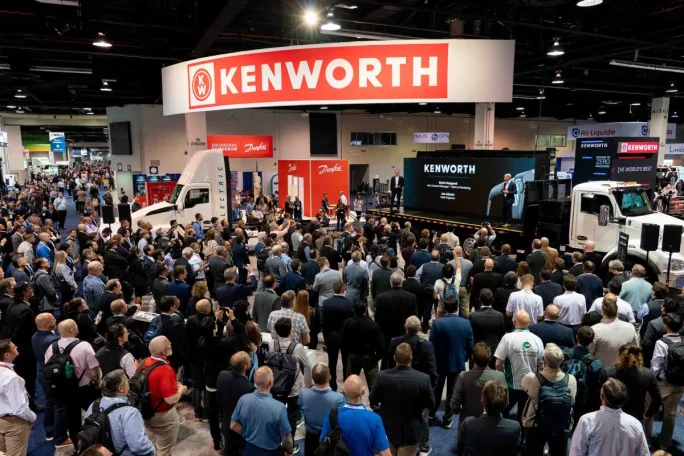
The ACT Expo show floor was jammed, as this crowd at the Kenworth electric trucks press launch shows.
Photo: ACT Expo
NASA didn’t send Allen Shepard to the Moon on its very first mission.
Doing so would have been insane – and doomed to failure.
Which is why NASA did things correctly: The space program moved ahead in logical phases with clearly defined operational and educational goals.
The Mercury Program mastered the basics of space flight. The Gemini Program moved on to more advanced zero-G maneuvers and tackled the realities of living and working in outer space.
And the Apollo Program focused on finally landing men on the Moon and returning them safely to the Earth.
And, unfairly or not, a lot of fleets felt like they were being handed some not-ready-for-prime-time powertrain technologies and fuels and told to go land on the Moon right out of the box.
The trucking industry needs a more nuanced, phased-in approach to clean- and green-fleet technologies.
Hopefully, this pause in the back-and-forth on emissions regulations will ultimately provide more steps, more new clean fuels and more clean powertrain technologies that can make an immediate impact on climate change while allowing fleets to keep moving freight and making profits.
More Blog Posts

That Time Mack Trucks Threw Me a Birthday Party
Sometimes the best birthdays are the ones you never planned. Mine happened courtesy of one of America's oldest truck manufacturers, and it reminded me why I still love this industry after more than three decades.
Read More →
Trucking Should Prepare for Long Siege of High Fuel Prices
Many in trucking are treating today's fuel-price surge as a temporary disruption. History suggests they may be making a costly mistake.
Read More →
30 Days on the Road: April 2026
There was a glut of good news for the North American trucking industry. HDT's Jack Roberts takes a look back at our major stories from the month.
Read More →
30 Days on the Road: HDT's Monthly News Roundup for March 2026
HDT's Monthly News Roundup takes a look at the major North American trucking industry news stories from March, 2026.
Read More →
The Major Autonomous News No One is Talking About
Both Aurora Innovation and PlusAI have made under-the-radar announcements that signal a massive game-changer for trucking is coming soon.
Read More →
HDT's Monthly News Roundup: February 2026
February was dreary and dull -- as usual. But the North American trucking industry finally showed some signs of life. But how long that will last is anybody's guess.
Read More →
Like it or Not, The New Year is Here!
HDT's Monthly Trucking Newsletter looks back on the top stories from January, 2026.
Read More →
The Robots are Here
After a bruising year for trucking, CES 2026 felt subdued. Until it suddenly offered a glimpse of trucking's next disruption and reminded everyone that technology never waits for the next freight cycle.
Read More →
Robots and Road Rage
Computers never get angry. And that's a good thing on crowded stretch of interstate.
Read More →
For the Love of Old Trucks
Old trucks generally get ignored in classic car circles. Maybe that's changing.
Read More →