




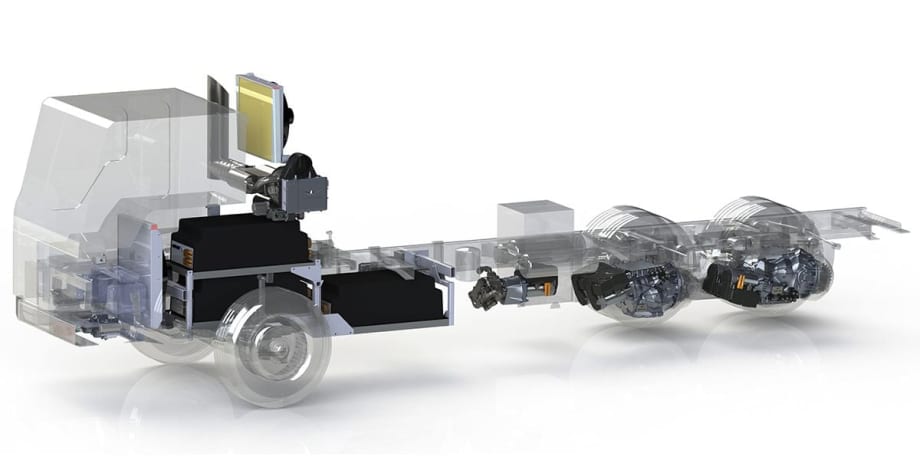
Wrightspeed’s Fulcrum turbine-powered generator charges batteries that power electric motors at the truck’s rear axles. The motors act as generators during braking, further charging batteries. The turbine will burn a variety of fuels.
3 min to read
Wrightspeed’s Fulcrum turbine-powered generator charges batteries that power electric motors at the truck’s rear axles. The motors act as generators during braking, further charging batteries. The turbine will burn a variety of fuels.
When the diesel in one of Louis Ratto’s trash collection trucks blew, he took it as an opportunity. The CEO of the family-owned Ratto Group, which operates refuse and recycling companies in Marin and Sonoma Counties, north of San Francisco, had the truck towed to Wrightspeed in San Jose, Calif., and told its proprietor, Ian Wright, “Here you are. Go to it.”
“It” was converting the truck’s diesel-and-automatic-transmission powertrain to a turbine-electric, plug-in series hybrid, a heavy-duty version of the Wrightspeed Route truck now delivering packages for FedEx. The two met several years ago at a trade show in Long Beach where Wright had a Route in the ride-and-drive exercise. The truck intrigued Ratto.
Ad Loading...
“I had been looking at alternatives to diesel because it had become so expensive, and the air quality people in California don’t like diesel anyway,” he said. “I looked at the Parker hydraulic hybrid, but it had drawbacks, including that you still had a diesel engine. I looked at compressed natural gas, which a lot of the big [refuse] companies are running now, but found out there are some negatives with it,” including range and maintenance.
Landfill gas is free but it must be filtered, and natural gas filling stations are expensive. So Rotta kept looking.
“And then I saw this [the Wrightspeed turbine-electric] and said, ‘Hey, look at this. This is out of the box. This could work.”
He and Wright agreed to retrofit 17 Freightliner Condor trucks with Route HD powertrains. The blown diesel put a truck in Wright’s hands about six months ahead of schedule. He figures its conversion should be finished by the end of this year.
Each retrofit will cost about $200,000, which is $150,000 more than a natural-gas conversion but $300,000 less than buying a new diesel chassis set up with a Canadian-made Labrie automated-sidearm packer body, as Rotta prefers.
Ad Loading...
The conversion will breathe new life into the Condors. “They’re really pretty good trucks,” and though they’re no longer produced, he’s found sources for parts to keep them running through the “brutal” constant stopping and starting of a residential trash truck.
The turbine engine will make about 325 hp, Wright says, and can burn a variety of fuels, including diesel and natural gas. Because it’s a series hybrid, the turbine doesn’t directly propel the truck, but turns a generator to produce electricity that’s sent to lithium ion batteries that will store up to 78 kilowatt-hours. They power a pair of electric motors that drive through 4-speed gearboxes that replace the differentials on the rear tandem axles. The motors are each rated at 230 kilowatts and together could produce up to 1,000 hp and 40,000 lb-ft, Wright says. But they’ll be electronically limited “because the drivers would have too much fun with that.”
Motors become generators during braking, sending electricity to the batteries so the turbine works less, and reducing wear on foundation brakes. Plug-in capability will allow a truck to run up to 40 miles on grid power, and the turbine generator gives it unlimited range.
Wright says he’s gotten interest in the Route HD from large fleets and truck builders, “but it’s too soon to talk about it.”
Ratto believes the Route HD’s efficient powertrain could save 50% to 90% in fuel over a straight diesel powertrain. “I’m hoping to convert all 200 of my residential trucks,” he says. “And if this works out, it will take me off the radar that California has for diesels.”
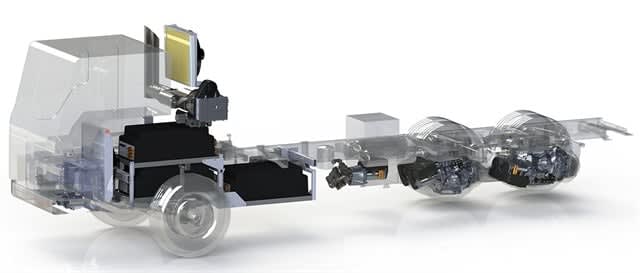
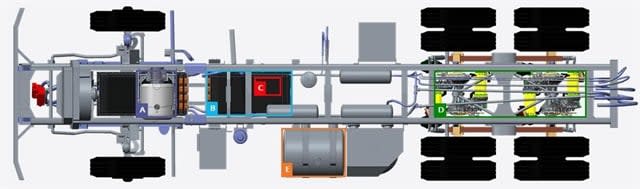
The Wrightspeed Route HD plug-in series hybrid includes a turbine-powered generator (hidden by the cab) that sends electricity to the batteries. They relay juice to a pair of electric motors and gearboxes, one set for each rear axle. The motors together could make up to 1,000 hp, so they will be electronically limited. Regenerative braking also produces power and reduces wear on foundation brakes.
Fuel in the News
Study: Upstream Methane Barrier to Natural Gas Trucks
According to a study co-authored by researchers from the Environmental Defense Fund and Columbia University’s Lenfest Center for Renewable Energy, heavy-duty trucks fueled by natural gas will deliver on their “widely promised climate benefits only if widespread emissions of heat-trapping methane across the natural gas value chain are reduced.”
The challenge to powering trucks with natural gas, according to Jonathan Camuzeaux, one of the study’s authors and Senior Economic Analyst at EDF, is that its main ingredient, methane, has 84 times the warming power of carbon dioxide over a 20-year timeframe.
“Natural gas trucks have the potential to reduce overall climate impacts compared to diesel, but only if we clean up the highly potent greenhouse gas emissions from the systems that produce and deliver the fuel,” said Camuzeaux.
Allen Schaeffer, executive director of the Diesel Technology Forum, said that “as the authors suggest, this report does raise serious questions about whether large-scale moves to natural gas as a transportation fuel is truly a climate-positive consideration, or a move that could make things worse.”

The Environmental Protection Agency said California can’t enforce its Heavy-Duty Inspection and Maintenance Regulation, known as Clean Truck Check, on vehicles registered outside the state. But California said it will keep enforcing the rule.
The Trump administration has announced it will no longer criminally prosecute “diesel delete” cases of truck owners altering emissions systems in violation of EPA regulations. What does that mean for heavy-duty fleets?
Natural gas is quietly building a reputation as a clean, affordable, and reliable alternative fuel for long-haul trucks. And Ian MacDonald with Hexagon Agility says the Cummins X15N is a big reason why.
Mercedes-Benz has begun a new series of tests in Europe to validate vehicle compatibility with megawatt chargers and assess charging performance, thermal management, and usability on long-haul duty routes.
Safety, uptime, and insurance costs directly impact profitability. This eBook looks at how fleet software is evolving to deliver real ROI through proactive maintenance, AI-powered video telematics, and real-time driver coaching. Learn how fleets are reducing crashes, defending claims, and using integrated data to make smarter operational decisions.
Fleet software is getting more sophisticated and effective than ever, tying big data models together to transform maintenance, safety, and the value of your existing tech stack. Fleet technology upgrades are undoubtedly an investment, but updated technology can offer a much higher return. Read how upgrading your fleet technology can increase the return on your investment.
Idle reduction for heavy-duty trucks has come a long way. An updated playbook from the North American Council for Freight Efficiency explains what technologies deliver results today — and what’s coming next.









