




Will You Be Ready For Seven-Dollar Diesel?
Over the next five years, trucking needs to go all-out for fuel economy.


If nothing else, the past year of roller-coaster oil prices should be warning enough for you to put fuel economy at the top of your to-do list. If you haven't done that, maybe you ought to consider some further insights from Derek Kaufman.
One of this industry's deep thinkers, Kaufman is president of C3 Network Inc., which helps startup companies and manages new product launches. His take on the fuel situation: We should be planning for diesel prices as high as seven bucks a gallon over the next five years.
Kaufman made that observation at the Heavy Duty Manufacturers Assn. Heavy Duty Dialogue, which kicked off the industry's first Heavy Duty Aftermarket Week in Las Vegas in late February.
He said fuel prices will rise for a number of reasons including environmentalists, world trade bashers, terrorists and a fumbling U.S. Congress. "It's not about passing on a fuel surcharge any longer," he said, "because surcharges always assume a return to lower prices. There will be no permanent move downward."
He believes that several efforts by the trucking industry will be "tipping points" that enable it to cope with higher fuel prices over the next five years. Among them:
• Maintenance – Periodic oil analysis and recommended oil change intervals will be replaced with real-time trend analysis of fuel economy conditions on board the truck. Friction reducing additives will be replaced with higher-tech Boron oxides. Time-release additives will maintain proper acid levels in EGR engines, and soot measurements will indicate wear and lubricant viscosity. This will apply to any component that involves rotating friction: engines, transmissions, drive axles, wheel hubs.
• Inventories – Fuel will make it too expensive to ship emergency orders for parts. Radio frequency signals will be embedded in every part, and make it possible for dealers and distributors to instantly find needed parts in other stores in their own locales. Searches might be done through Google.
• Shipping docks – Trucks waiting and idling must be eliminated. The shipping dock should be run like a NASCAR pit stop. Packaging specialists will map out the flow of freight, much like Federal Express and UPS load cargo planes today. Trucking companies will finally adopt drive-through side loading to eliminate trailer spotting.
• Nanotechnology – Nano tube paint mixtures will make tractor and trailer finishes more slippery. Similar technology is used for lightweight polarized aircraft windows that tint at the push of a button. Nano tubes will be used on turbo veins and air inlets to optimize air flow.
Kaufman believes that trucking needs to lead other industries in saving fuel. "We should be," he said, "the poster children of oil conservation."
We couldn't agree more. If we really concentrate on fuel economy, and oil prices don't skyrocket, where will that leave us? Better off, I'd say.
Doug Condra
President
E-mail Doug Condra at dcondra@truckinginfo.com, or write PO Box W. Newport Beach Calif. 92656
More Fleet Management

What Geotab's New AI Connector Means for Fleets
Fleets can now ask their usual AI assistants questions about maintenance, safety, fuel use, and vehicle performance, using their live Geotab data, and take action on the answers without leaving their preferred AI tool.
Read More →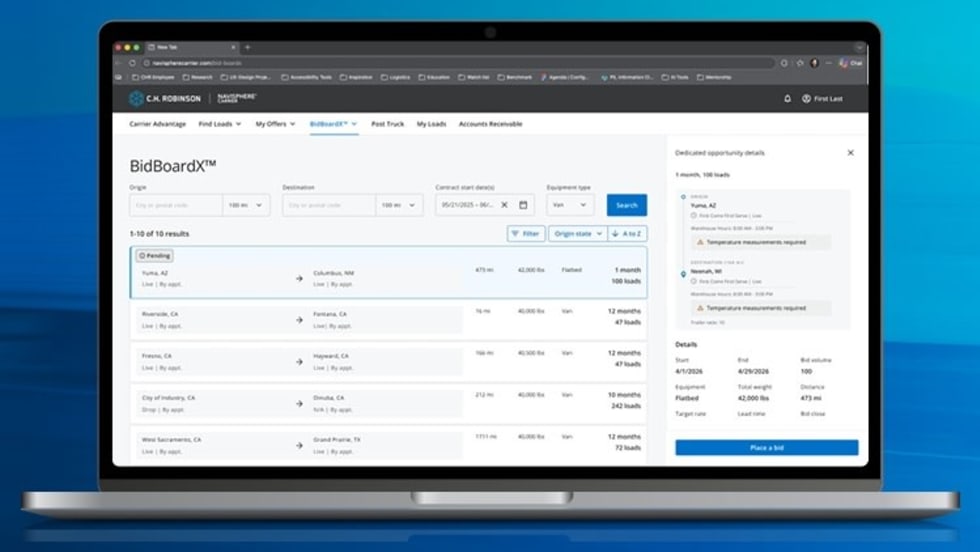
New C.H. Robinson Tool Opens Door to More Predictable Freight
BidBoardX lets carriers search, bid on, and secure committed freight opportunities through a single digital marketplace.
Read More →
New York City's Microhub Project is Delivering Results
Trucking, last-mile delivery companies, and environmental advocates like what they are seeing so far with New York's microhub program.
Read More →
Why Truck Detention Keeps Costing Fleets Time and Money
A 2024 ATRI study found detention affects nearly 40% of truckload stops and costs the industry more than $15 billion annually. Despite the toll on drivers, fleets, and supply chains, the problem remains stubbornly persistent.
Read More →
Time is Running Out to Apply for Exclusive HDT Event
Heavy Duty Trucking Exchange brings fleet managers and suppliers together for the deeper conversations that lead to ideas, partnerships, and solutions. Time is running out to apply for the September event.
Read More →
Amazon Launches Less-Than-Truckload Freight Offering for All Businesses
This launch is the latest addition to Amazon Supply Chain Services, a portfolio of supply chain capabilities from Amazon, including freight, distribution, fulfillment, and parcel shipping.
Read More →
Import Cargo Volume to See Year-Over-Year Gain Again in June, Then Remain Below 2025 Levels Into Fall
After July, the report predicts a weakening in import volume as consumer uncertainty remains high and the impact of increasing inflation takes its toll.
Read More →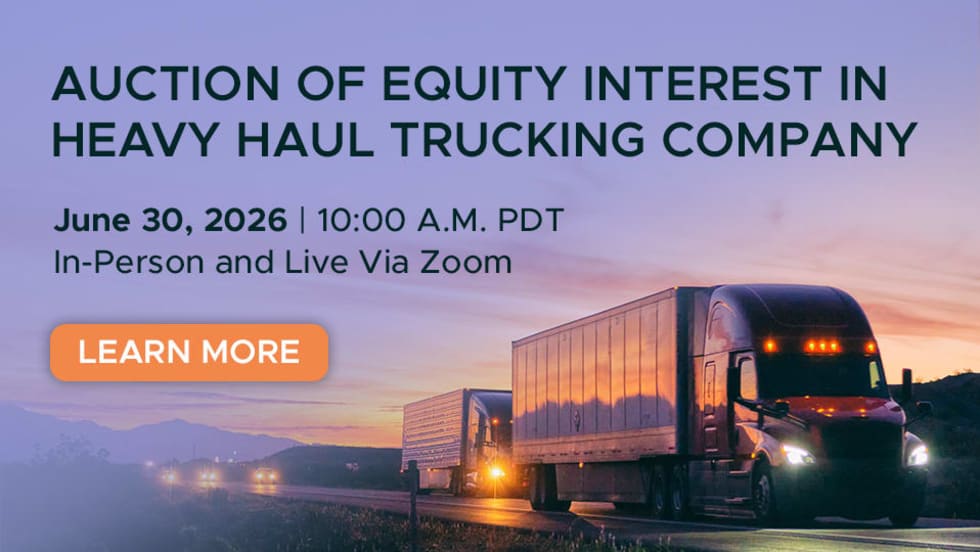
AUCTION OF EQUITY INTEREST IN HEAVY HAUL TRUCKING COMPANY!!
Mark your calendar: June 30, 2026 (10:00 a.m. PDT). A 37.5% ownership interest in MagnaTrans, LLC, a California limited liability company doing business as Magna Transportation Group, will be sold in an in-person and online auction to the highest bidder or bidders under Article 9 of the Uniform Commercial Code. The Rancho Cucamonga-based heavy haul and over-dimensional trucking company operates across California, Oregon, and Arizona.
Read More →
Volvo Trucks Adds Unattended Over-the-Air Software Update Capabilities
The latest evolution of Volvo’s over-the-air update technology allows software updates to run while trucks are parked, helping fleets keep vehicles current without disrupting operations.
Read More →
How Waste Connections is Using Data, Telematics, and AI
How do you manage and maintain more than 18,000 connected trucks? Data. Lots of it.
Read More →