




What Drivers Should Know About Brake Problems
If you know what to look for, and are sensitive to the symptoms, you can spot many potential brake problems before they become real liabilities. And having concluded there's a problem, you can report it to the shop in a way that might prompt more than a readjustment of the slack adjusters.

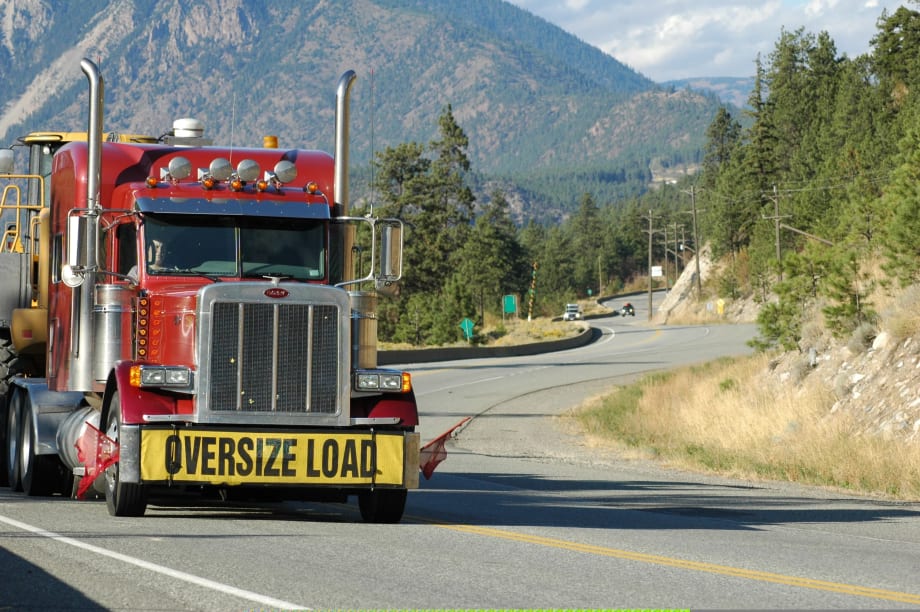
On roads like this, there's no room for doubt that your brakes are working perfectly.
On roads like this, there's no room for doubt that your brakes are working perfectly.
Brake troubles often remain invisible until the problem shows up in an unusual circumstance, such as a full-pressure panic stop, or a situation where a fast release is needed, but the brakes just won't let go.
If you know what to look for, and are sensitive to the symptoms, you can spot many potential problems before they become real liabilities. And having concluded there's a problem, you can report it to the shop in a way that might prompt more than a readjustment of the slack adjusters.
Since brake adjustment – or lack of it – is an obvious problem, as in easy enough to spot, we won't even go there. You need to know that your brakes are properly adjusted. If you fail to determine that the brakes are at least properly adjusted, then shame on you.
Below are some common brake malfunctions and how they might appear to a driver. Many will have a fairly obvious impact on drivability, but may be very difficult to detect in a shop without using specialized diagnostic tools like performance-based brake testers. And we describe what you should be writing on the vehicle inspection report to draw attention to the problem back at the shop.
Balance Problems
Ideally, each wheel on a truck (save the front wheels) should be doing an equal share of the braking work. The wheels on the left side should be providing the same stopping force as the wheels on the right. Same for tractor wheels versus trailer wheels, and even the rear versus the front axle in a tandem grouping.
If you were to notice your truck pulling distinctly to the one side or the other, it's quite conceivable that no obvious problem would reveal itself during a visual inspection. Assuming (as we will throughout this piece) that adjustment is correct, the source of the imbalance could be any one (or a combination of) a dozen or more factors.
Lining material could be mismatched or the inner surface of one drum could be glazed. The air hoses and fittings between the valves and the brake chambers could be mismatched, or one might have a different (smaller or larger) inner diameter. One brake actuator chamber or slack adjuster might be the wrong size, or be malfunctioning. There could be a kink in a hose, or a blockage inside a valve, or a defect in the foundation brake that causes the hardware to deflect under the force of the application.
The problem could be easy to detect during a visual inspection if there's a broken or defective part. If the problem is internal, the mechanics will have to dig a little harder to find it. In any case, it's up to you to point out the problem.
Note the circumstances where the problem occurs, i.e., truck pulls to one side or the other at high or low speed, during light or heavy application (or maybe only above 20 psi application pressure), when lightly or heavily loaded, or only on wet pavement, etc. Note the trailer number too, as the two vehicles function as a system. Trailer performance affects tractor performance and vice versa. Be as specific as possible.
Timing Problems
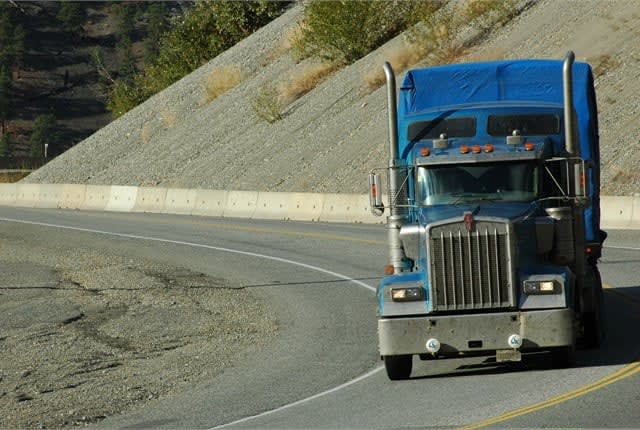
Brake balance and timing are critical: even ABS or electronic stability won't help you if the brakes are not applying and releasing as they should.
Tractor-trailer brakes are supposed to apply and release in order, rear first – by a slight margin. And release nearly immediately. When tractor brakes apply first, or with more force, the trailer could bump against the tractor, causing stability problems, or at least causing the tractor brakes to do more of their share of he work in stopping the truck.
In this case, if the trailer brakes aren't releasing as quickly as they should, it could compromise control in a skid. You have probably experienced trailer brakes hanging on a little longer than you'd like. That's worth writing up.
Application timing is controlled by the pressure at which various valves open and let air flow from the tanks into the brake chambers. Trailer valves are supposed to be set to a lower crack (or opening) pressure, and hence apply sooner than tractor brakes. Somewhere along the line, whether due to age or improper installation, the valves can open at the wrong pressures upsetting the application and release timing.
Additionally, for the brakes to release, the air has to evacuate from the chamber quickly so the brake linings can back away from the drum. If there's a physical obstruction, like a kink or a blockage the air may not escape fast enough, causing that brake to remain applied longer than you'd wish.
Physical obstructions could cause brakes to delay applying, or cause them to hang up, too. Poorly lubricated cams, bushings etc. can be a problem here. Twists and distortions in the hardware can affect release and application timing too.
Be aware of a pushing sensation when you apply the brakes. That could indicate the trailer brakes are applying later than the tractor brakes. Be aware too of the sensation of the trailer brakes remaining applied after you've taken your foot off the treadle valve and applied some throttle. It'll feel like your powering up against a trailer with the brakes still on.
Whatever brake problems you might have, they can be identified by the driver if you know what to look for. The problem may be beyond your ability to repair, but that's what the mechanics are all about. Just be as specific as possible when writing up the inspection report so they can get to the root of the problem.
And never, under any circumstances, drive a truck with brakes that you're not entirely happy with. Ever heard the expression "smoking gun"? You know who usually winds up holding that one.
Related Stories:
More Drivers

From One Generation to the Next: How Mentorship Builds Safer Truck Drivers
After three decades in trucking, Harold Perry shares what he's learned about driver safety, mentorship, and helping the next generation build confidence behind the wheel.
Read More →
Truck Drivers Need More Than Another Alert
Fleets have more visibility into truck health, safety events, and driver activity than ever. The next challenge is turning all that information into useful guidance for the person who has to decide what to do next.
Read More →
FMCSA Removes 110 Truck Driver Training Schools from Certified ELDT List
Federal regulators also are targeting more than 160 additional training providers and launching a nationwide audit of third-party CDL skills testers as part of a broader crackdown on trucking fraud.
Read More →
Hours of Service Pilot Programs: FMCSA Readies for 2027 Rollout
Two pilot programs could eventually reshape hours-of-service rules, giving truck drivers options to pause their 14-hour clock or use longer split sleeper rest periods.
Read More →
Medical Cards, English Proficiency Reshape Roadcheck Violations
Medical-card violations jumped to the top of the driver out-of-service list during CVSA’s 2026 International Roadcheck, while English-language proficiency violations appeared among the leading violations for the first time.
Read More →
Driver Trust Can Make or Break the Success of Fleet Safety Technology
New Teletrac Navman research suggests that onboarding, transparency about driver data, and positive feedback can play a significant role in how commercial drivers respond to safety and coaching technology.
Read More →
EEOC Sues KLLM Over Alleged Sex Discrimination in Driver Training
KLLM is facing a federal sex-discrimination lawsuit over policies the EEOC alleges put female truck driver trainees at a disadvantage.
Read More →
FMCSA Moves to Codify English Language Requirements for Commercial Drivers
By changing regulations on English-language proficiency requirements for commercial drivers, rather than relying on a guidance memo, the FMCSA said future administrations won't be able to walk back the Trump administration's stricter enforcement with just a memo.
Read More →
Drivers Put Western Star Trucks to the Test at Star Nation Experience
Watch to get an inside look at the Western Star trucks, technology, and community behind the Star Nation Experience 2026!
Read More →
Trump Administration Looks to Put More Veterans Behind the Wheel
The Freedom Haulers program pulls together existing and expanded programs at several federal agencies to recruit veterans to drive commercial heavy-duty trucks and cut the red tape for them to get a CDL, training, and employment.
Read More →