




Don't Let Poor Brake Adjustment Catch You Unawares
While equipment defects are a cause in only a small percentage of truck crashes, brake defects account for a large percentage of the trucks taken out of service. Many of those defects are adjustment issues.

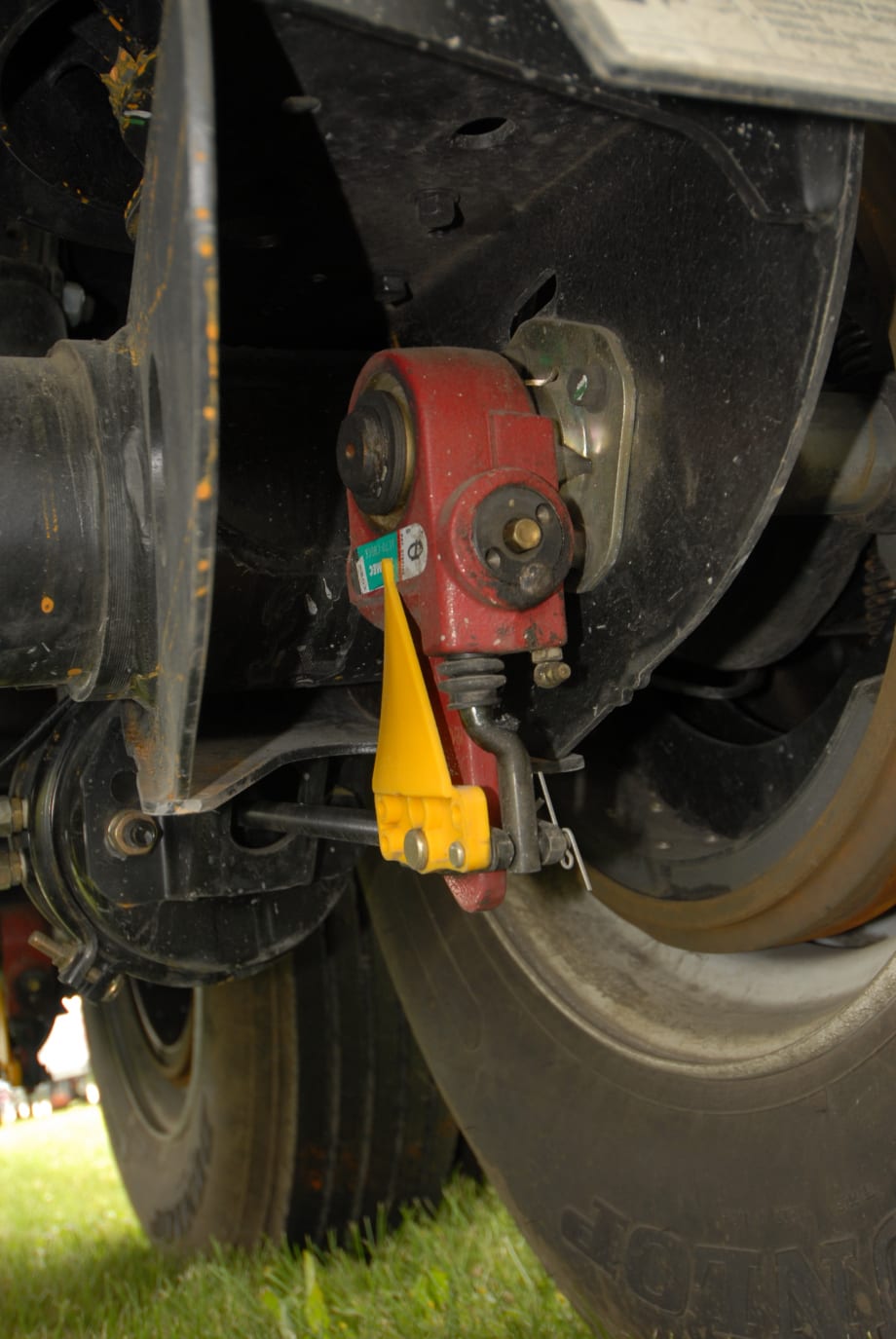
Everybody worries about getting a ticket for having badly adjusted brakes, but a ticket would be preferable to the other possible outcome. While equipment defects are a cause in only a small percentage of truck crashes, brake defects account for a large percentage of the trucks taken out of service. Many of those defects are adjustment issues.
Yes, marking and measuring brake stroke is a grand pain in the posterior, but it’s technically part of the trip inspection. If you sign the trip inspection form, you’d better be sure the brakes are in adjustment.
There are a couple of so-called short-cut methods for determining brake adjustment, but they’re far from accurate enough to pass muster with DOT inspectors. Those guys mark and measure brake stroke right down to an eighth of an inch, which doesn’t leave you much of a margin for guesswork.
You could release the spring brakes and build the system pressure to 100 psi, make a full pressure application and note the pressure drop. Some say a 2-psi per axle drop in system pressure (10-psi on a 5-axle unit) is acceptable. It may be, but how do you know you haven’t got two brakes adjusted well below the limit and three over-stroking by an eighth of an inch? You can’t tell, but the creeper cops can.
Some say that if the slack adjuster is at no more than a 90-degree angle to the push rod when the spring brakes are applied, the adjustment is okay. In the same vein, many believe that if, when using brake stroke indicators, the pointer is inside the markers when the spring brakes are applied, the adjustment is okay. Neither is true, and neither of these methods is an accurate way of measuring brake stroke.
Constant Adjustment
Slack adjusters, as the name implies, are designed to take up the slack in the stroke as friction surfaces wear away. In “normal” service in a U.S. highway environment, a manual slack adjuster might need adjustment every 10,000 miles or so, says Dale Holman, president of TruckWatch Services in Georgetown, Ontario.
“But there’s no such thing as normal when you’re talking truck brakes, and that’s why slack adjusters are designed to be adjusted. You make the adjustment when it’s required, not because some mileage interval has come and gone. It’s not like an oil change.”
Manual slack adjusters require operator intervention, and could get close to the adjustment limit in a short time under certain conditions. Automatic slack adjusters do an admirable job overall of keeping stroke within limits, but a lot of auto slacks are found to be out of adjustment during roadside brake inspections. With manual slacks, improper adjustment is often a matter of negligence or laziness on the part of the operator, but when auto slacks go out of adjustment, there’s usually something else going on.
If you take nothing else away from this piece, remember this: Automatic slack adjusters normally don’t require manual readjustment. If you have a brake that is over-stroking and it has an automatic slack adjuster, you have a problem with either the brake or the adjuster. If you readjust it, you aren’t really fixing the problem. A manual readjustment may bring the brake back into compliance and improve the way the brake operates, but it will only be temporary.
Faulty auto slacks can be a factor, Holman says, but that’s rare. “If there is a mechanical issue, it’s more likely to be improper initial installation, or faulty or worn components elsewhere in the brake system.
“But in my experience, the primary cause of auto slacks stroking beyond their limit, is – believe it or not – good drivers,” he says. “I’m talking about the driver who never makes an application harder than 15 or 20 psi because he or she never has to. They’re the ones who manage speed well, keep a safe distance, and coast up to traffic lights. These drivers hardly ever put enough torque through the adjuster to cause the ratchet to roll over to the next peg. Consequently, as the brakes wear naturally, the auto slacks aren’t compensating.”
What these drivers need to do is make half a dozen full pressure applications once a week or so to get the adjuster to turn over, and then visually check the stroke before leaving the yard.
Next page: Brake stroke indicators[PAGEBREAK]
Brake Stroke Indicators
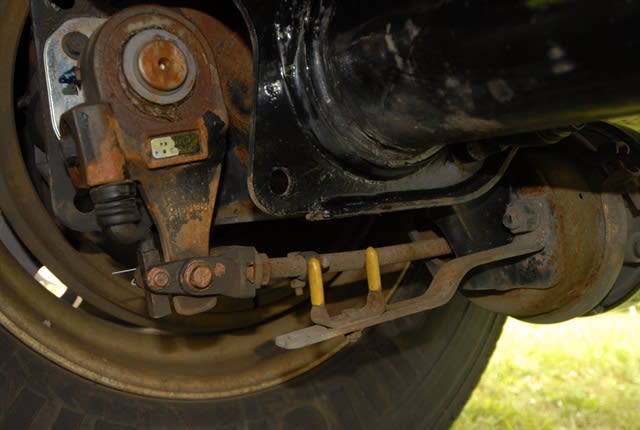
Brake stroke indicators are one of the best ideas to come along since sliced bread, but they aren’t infallible.
The North American Brake Safety Conference recommends the use of effective visual brake stroke indicators as “the single most meaningful change that can be made to improve brake compliance.”
Several types of stroke indicator exist, from colored markings on the push rod itself to external pointers that indicate the length of the pushrod stroke. After a time, the colored markings usually become unreadable because of corrosion or dirt buildup, and they’re difficult to see even at the best of times.
The external types are good, but only as good as their initial setup. If not set up properly, they won’t provide correct information. They can slip over time, too, so periodic verification of the marker placements is necessary.
When visually checking stroke with a brake stroke indicator, drivers have to use the correct procedure, which they often don’t.
1.) With all the brakes released, the system pressure must be built up to between 90 and 100 psi (the same pressure used by officials to check break adjustment). Place the transmission in low gear and shut off the engine. The driver should verify that all the stroke indicators are reading “zero,” or the indicator is in line with the marker closest to the face of the brake chamber, indicating it’s in the rest position. If not, there could be a problem with the return springs or something may be binding elsewhere in the foundation brake, preventing a full retraction of the pushrod.
2.) With the system pressure between 90 and 100 psi, the stroke travel should be checked while making a full brake application. This may require jamming a stick or something between the steering wheel and the brake pedal if you’re working alone. In this state, none of the stroke indicators should read beyond the legal stroke limit.
Checking the brake stroke while the spring brakes are applied isn’t good enough. It’s said that a new parking brake spring with no other mitigating factors will exert the equivalent of about 60 psi of force to the pushrod. That’s still about 40 psi less than is required by an official brake inspection. That additional 40 psi can make a big difference in stroke travel, especially where loose or worn componentry is present. That difference could be enough to force the pushrod beyond its stroke limit.
If you’re an owner-operator, stroke indicators are a no-brainer. Set up properly, maintained, and used according to the instructions, brake stroke indicators are a near sure-fire way to keep your auto slacks from running away from you.
More Drivers

From One Generation to the Next: How Mentorship Builds Safer Truck Drivers
After three decades in trucking, Harold Perry shares what he's learned about driver safety, mentorship, and helping the next generation build confidence behind the wheel.
Read More →
Truck Drivers Need More Than Another Alert
Fleets have more visibility into truck health, safety events, and driver activity than ever. The next challenge is turning all that information into useful guidance for the person who has to decide what to do next.
Read More →
FMCSA Removes 110 Truck Driver Training Schools from Certified ELDT List
Federal regulators also are targeting more than 160 additional training providers and launching a nationwide audit of third-party CDL skills testers as part of a broader crackdown on trucking fraud.
Read More →
Hours of Service Pilot Programs: FMCSA Readies for 2027 Rollout
Two pilot programs could eventually reshape hours-of-service rules, giving truck drivers options to pause their 14-hour clock or use longer split sleeper rest periods.
Read More →
Medical Cards, English Proficiency Reshape Roadcheck Violations
Medical-card violations jumped to the top of the driver out-of-service list during CVSA’s 2026 International Roadcheck, while English-language proficiency violations appeared among the leading violations for the first time.
Read More →
Driver Trust Can Make or Break the Success of Fleet Safety Technology
New Teletrac Navman research suggests that onboarding, transparency about driver data, and positive feedback can play a significant role in how commercial drivers respond to safety and coaching technology.
Read More →
EEOC Sues KLLM Over Alleged Sex Discrimination in Driver Training
KLLM is facing a federal sex-discrimination lawsuit over policies the EEOC alleges put female truck driver trainees at a disadvantage.
Read More →
FMCSA Moves to Codify English Language Requirements for Commercial Drivers
By changing regulations on English-language proficiency requirements for commercial drivers, rather than relying on a guidance memo, the FMCSA said future administrations won't be able to walk back the Trump administration's stricter enforcement with just a memo.
Read More →
Drivers Put Western Star Trucks to the Test at Star Nation Experience
Watch to get an inside look at the Western Star trucks, technology, and community behind the Star Nation Experience 2026!
Read More →
Trump Administration Looks to Put More Veterans Behind the Wheel
The Freedom Haulers program pulls together existing and expanded programs at several federal agencies to recruit veterans to drive commercial heavy-duty trucks and cut the red tape for them to get a CDL, training, and employment.
Read More →