




Transmissions: Automating for Fuel Savings
Traditional thinking on automated manual transmissions has it that AMTs are the great equalizers – bridgers of skill gaps between the best and the worst drivers in the fleet. While that’s still true, AMTs now bring even more to the fuel-economy table, offering fuel savings in their own right beyond what even the most professionally driven manual transmission could accomplish.

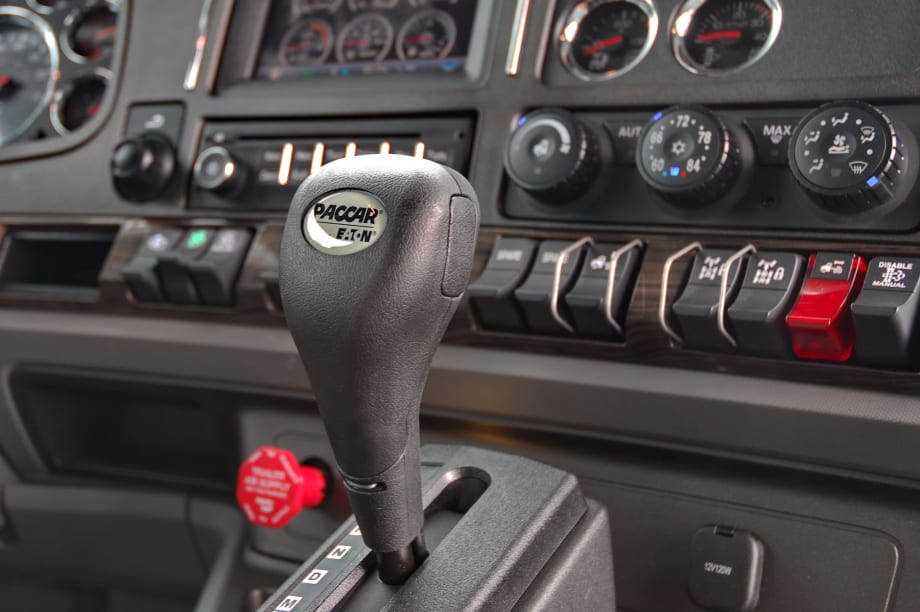
Drivers still have some control over automated manual transmissions, but the equipment will usually do a better job of improving fuel economy if it’s simply left alone.
Drivers still have some control over automated manual transmissions, but the equipment will usually do a better job of improving fuel economy if it’s simply left alone.
Traditional thinking on automated manual transmissions has it that AMTs are the great equalizers – bridgers of skill gaps between the best and the worst drivers in the fleet. While that’s still true, AMTs now bring even more to the fuel-economy table, offering fuel savings in their own right beyond what even the most professionally driven manual transmission could accomplish.
Volvo Trucks broke a barrier of sorts when it introduced the downspeeding concept with its XE13 powertrain package in the fall of 2011. With axle ratios of 2.64:1, a 0.78:1 overdrive transmission and an engine cranking out 1,750 pounds-feet of torque, XE13 offered highway cruise speeds of 65 mph at an engine rpm of just 1,150. The powertrain package was aimed at fleets whose trucks spend the vast majority of their time in top gear.
Cruising at 1,150 rpm has obvious fuel economy advantages, but such a drivetrain would be difficult to manage effectively with a manual transmission – especially for inexperienced drivers. Volvo’s I-Shift, along with the relatively high torque output, was the key enabler.
The transmission takes the driver out of the gear-choice loop, letting the technology and system programming manage the shifting tasks.
All the driver has to do is accept that it works and leave it alone.
Sister company Mack followed with its SuperEconodyne drivetrain using the mDrive AMT. Daimler Trucks North America just launched production of its Detroit DT12 AMT in an optimized powertrain with Detroit engine and axle and some fuel-saving features such as skip-shifting and eCoast.
Earlier this year, Eaton and Cummins got into the act with a bit of a different twist. The two companies announced they are collaborating on a new fuel-saving powertrain package that lends itself exclusively to an automated domain.
The Eaton Fuller Advantage Series, a small-ratio-step overdrive automated transmission, will be mated to Cummins’ ISX15 with SmartTorque2 ratings.
The small-step ratio is in the top two gears only to optimize fuel economy at highway speed and while up- and down-shifting on small highway grades.
This small step between the top two gears, and between fourth and fifth gear as well in low range, would trip drivers up and make the transmission difficult to drive. But because it’s automated, drivers won’t have to deal with the uneven cadence between the gears.
Looking for the best possible gear train efficiency, “Eaton chose ratios that meshed really well with the fuel economy sweet spot of the ISX,” says Shane Groaner, manager of product planning for Eaton’s NAFTA region.
“This transmission was designed specifically for the ISX’s fuel and power curves, but to get there we used some uncommon gear ratios which would have been awkward for the driver. It would be like climbing stairs that weren’t all the same height.
“The engine and transmission, on the other hand, don’t care. Automation opens up a lot of doors to play games with gear ratios.”
With the downspeeding concept and the new approach Eaton and Cummins are taking, we are seeing movement away from just adding shift actuators to manual transmissions.
We are now seeing engine and transmission combinations optimized for fuel efficiency, regardless of driver skill or preconceptions.
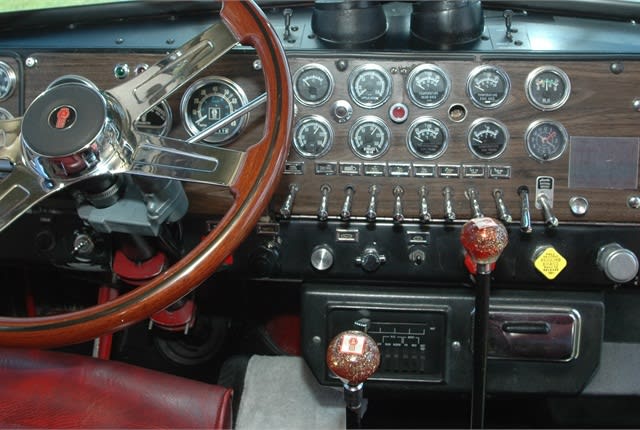
Few drivers today would even know what to do with a two-stick, duplex transmission. Gear-shifting proficiency was once considered a measure of the man. Today it’s fuel economy.
Harmony in motion
In the early days of AMTs, it was a bit like the blind leading the blind. The transmission and the engine were sending data back and forth, but because of technical limitations of the day, neither unit had a truly complete picture of what the truck was doing.
That’s no longer the case.
Roy Horton, Mack’s powertrain product marketing manager, says seamless communication between the engine and the transmission has improved performance dramatically.
“Our mDrive uses sensors and real-time communication with six other vehicle ECUs in addition to its own internal sensors to know when, what gear, and how quickly to make a shift,” he says.
“It’s always trying to match engine torque output to road conditions and driver demand, all the while maintaining the most efficient operation of the engine at any moment in time – while maintaining Mack’s unique engine performance signature.”
While there is now a great deal of information going back and forth between the engine and the transmission, the engine and the transmission share three key pieces of information, says Kelly Schmitz, Cummins’ director for customer engineering, Global On-Highway.
“The transmission and the engine both estimate the vehicle load and the grade of the road. We used to do that independently, but with the two sharing that data, we’re able to get a much more accurate assessment of the situation.”
The key, of course, is matching the gear ratio to operating conditions in order to keep the engine in or as close to the fuel economy sweet spot as possible.
Ed Saxman, Volvo’s product marketing manager, calls it harmony.
“It’s like the way the Bee Gees sing together,” Saxman says. “Their voices are different, but each knows intuitively what the others will sing and the magic just happens. The communication channels between the two components are vast and wide open within the Volvo architecture. There are no secrets, and that’s the key to successful integration between the engine and the transmission.”
It’s that in-depth and intimate communication that gets the best out of the engine-transmission combination, and sometimes it’s almost a matter of a hair’s breadth of difference in engine speed.
Brad Williamson, manager of engine and component marketing for Daimler Trucks North America, says it’s all about the engine’s fuel mapping and the transmission’s shifting strategies.
“For example, if the recommended engine speed at a set cruise speed is 1,325, that is what a good driver would run at. But if the computers sensed a headwind or a slight grade, or maybe a heavier than optimum load, it might decide that 1,360 is the best engine speed, and it’ll run there,” he says. “It’s more of a knowledge thing than a mechanical thing.”
Williamson points to other advantages offered by AMTs that manuals (and their drivers) can’t deliver consistently.
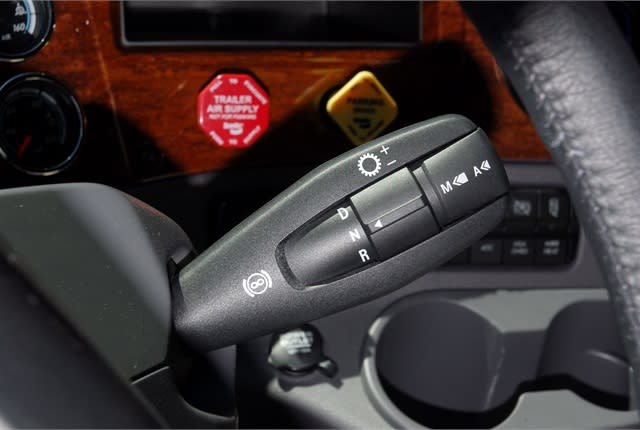
A greater degree of driver intervention is possible with an AMT, but it’s certainly not required.
“Good drivers will skip-shift when they are thinking about it. Our DT12 will do it every time the opportunity presents itself,” he says. “The AMTs don’t have to think about it, or remember to do it. And automated transmissions never get tired or have bad days. They just always do the right thing.”
With improvements in data acquisition and data sharing, automated manual transmissions are only going to get better.
The next step in the evolution will have to be human acceptance of the need to change.
One of the biggest improvements to come along in recent years is the downspeeding concept and the really low ratio drive axles.
But a lot of operators are reluctant to go there. There’s tons of baggage to be shed about lugging engines and 100-mph axles. That’s where the fuel savings lie.
Low axle ratio ratios coupled with low engine speed and gobs of carefully managed torque is the future of fuel economy.
All we have to do as owners and operators of trucks is get over the “I want what I had before” syndrome.
Automatic vs. automated: What’s inside
The terms automatic and automated are often – but erroneously – used interchangeably. Automatic transmissions and automated manual transmissions are completely different critters. The most fundamental difference is that the automatic transmission uses a torque convertor rather than a typical two-plate manually activated clutch. But that’s only the beginning.
Automatic
The key difference between a manual and an automatic transmission is that automatic transmissions use the same set of gears to produce all of the different gear ratios. It’s a planetary gearset that makes this possible.
Rather than a traditional gearshift as in the case of a manual transmission, the ratios in the planetary gears change, driven through a series of clutches that force the planetary ratios to change.
This effectively becomes the “gear shift,” but because the input shaft passes through a hydraulic torque convertor, the engine does not have to decelerate during a gear change. The engine turns a turbine inside the torque convertor housing at the front of the transmission (where the clutch is on a manual transmission). The torque is transmitted through the planetary gears to the output shaft, which drives the wheels.
The gear ratios are determined by the number of teeth on the gears inside the planetary gears, and which of those gears is actually engaged.
Automatics used in heavy-truck applications typically have five or six forward speeds, and one reverse speed.
The ratios vary from something like a first gear of 3.1:1 in an on-highway transmission to a final drive of 0.65:1.
In the case of the Allison Highway Series transmission, direct is fourth gear, and fifth and sixth gears are overdrive of varying ratios.
Automated
Automated manual transmissions are, as the name implies, a standard manual gearbox with electrical or pneumatic servos that automatically (under electronic control) execute the gear changes and manage the clutch. Beyond the electronic control and the actuation of the gear changes, the automated manual isn’t much different from its fully manual, driver-controlled brothers.
The manual transmission engages and disengages different sets of gears on two countershafts linked to the output shaft to create various gear ratios.
Generally, North American heavy-duty manuals have 8, 9, 10, 13, 15, or 18 gear ratios (four or five gears with a two-speed range splitter as well as hi-lo splitter in some cases) plus a two- or three-range reverse gear.
The gear steps are more or less equally spaced (usually 25% to 35%) to improve the predictability of a gear change for the driver.
Multi-speed manuals such as the 13- and 18-speed models have close gear steps to permit better matching of engine speed to road speed. These range from first-gear ratios of between 12:1 or 14:1 up to direct 1:1 final drive or overdrive ratios of 0.73:1 to 0.84:1.
European models use a 12-speed platform (four gears with a three-range splitter) and closer steps, but the low gears and the final drive ratios are similar to their North American counterparts.
Allison's TC10 TS
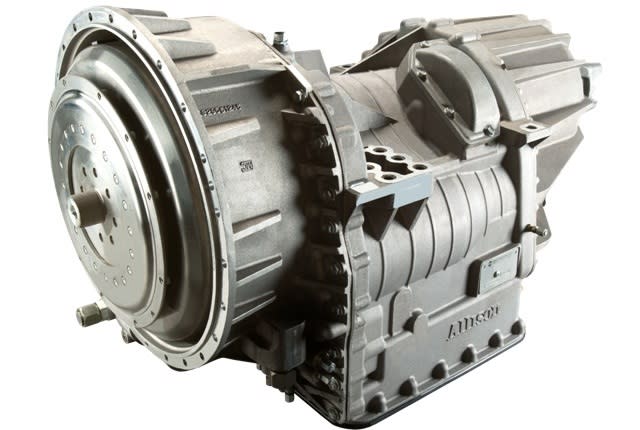
Allison says its new TC10 Tractor Series offers fuel economy benefit over traditional AMTs.
The new kid on the block from Allison is a combination of automatic and twin-countershaft manual design. The TC10 Tractor Series transmission uses a torque converter for engine coupling rather than a clutch, but also uses a twin countershaft gearbox with 10 forward speeds (5 speed main with two-speed planetary range shifter) and two reverse speeds.
It's targeted toward regional applications were there's lots of shifting going on, says Steve Spurlin, executive director of application engineering and vehicle integration for Allison Transmission.
"The ranges between the gears are closer than most full manual transmissions so we can get closer to the optimum output of the engine while maintaining performance," he says. "We use load-based shift schedules and full communications protocols with the engine along the J1939 data bus."
The TC10 offers full power shifting, just like an automatic, so the engine and the turbocharger don't have to spool down between shifts and sacrifice engine and vehicle momentum.
Allison says in three-week, side-by-side, in-fleet comparisons between the TC10 and AMTs and manual transmissions, they saw a 5% improvement in fuel economy.
More Fuel Smarts
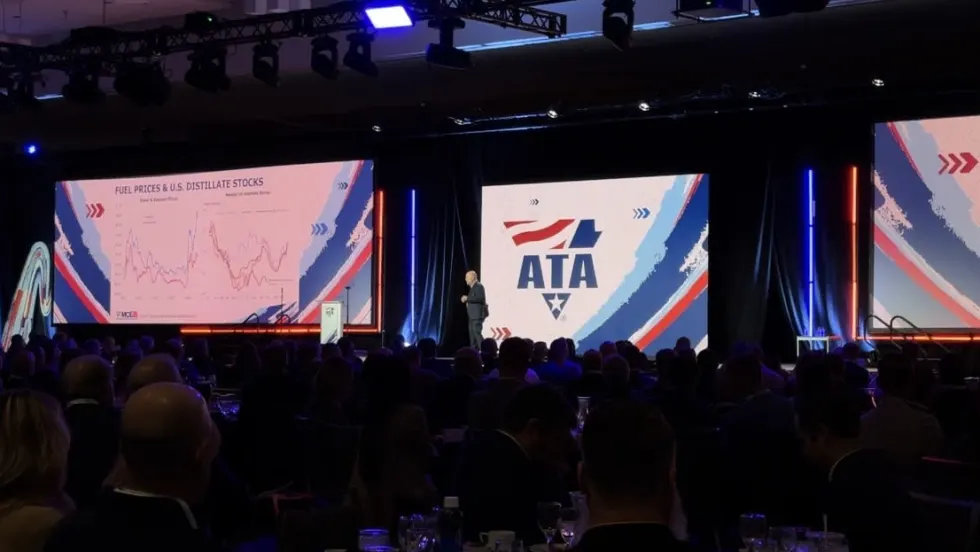
Trucking’s Diesel Squeeze Isn’t Letting Up
With diesel topping $6 a gallon nationally, ATA's Bob Costello explains why fleets should prepare for continued pressure at the pump.
Read More →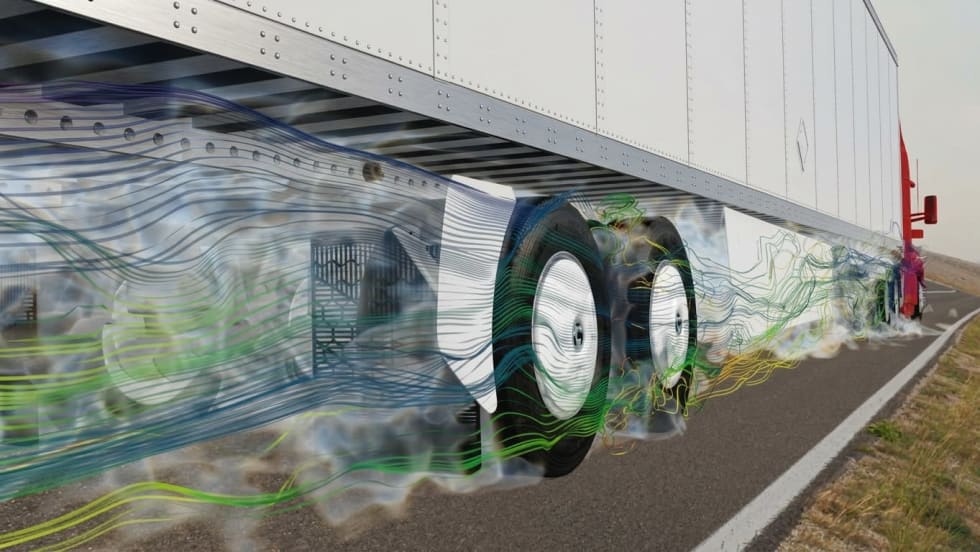
FlowBelow Redesigns Trailer AeroSlider to Cut Fuel Use
The lighter trailer aerodynamic system installs in less than 45 minutes, according to the company, with potential payback in under a year depending on fuel prices and trailer mileage.
Read More →
Why Diesel Price Relief Efforts May Fall Short
Diesel prices have eased from September’s record high, but doubts about additional Russian supply and limits on dyed-diesel tax relief mean trucking fleets still face expensive fuel. And prices could go higher.
Read More →
Why Small Fuel Savings Matter in Trucking
Can better fuel economy help pay for driver raises? In this podcast, GP Transco explains how small efficiency gains create room to reinvest in its people.
Read More →
How GP Transco Cuts Trucking Fuel Costs, a Tenth of a Gallon at a Time
What’s another tenth of a mile per gallon worth? GP Transco shares how equipment upgrades and driver coaching turn small gains into meaningful fuel savings.
Read More →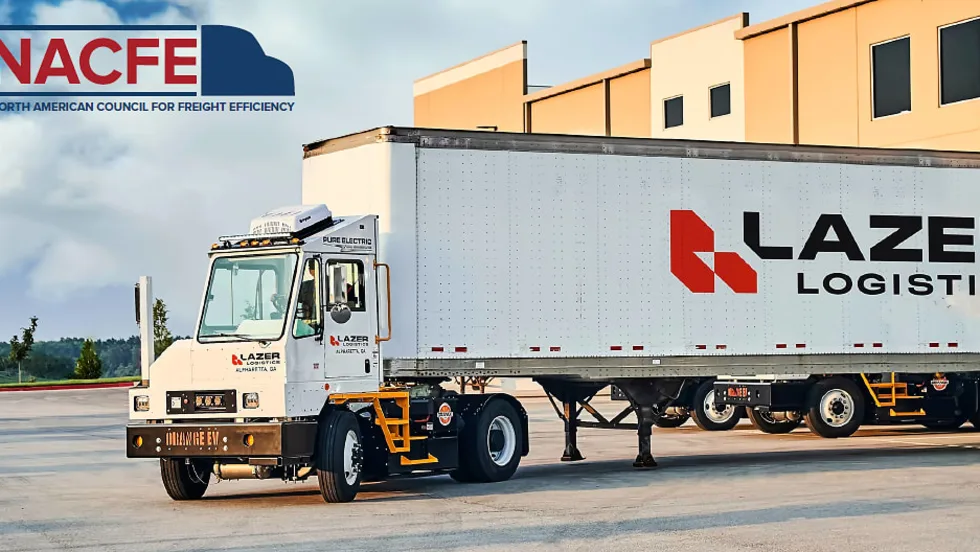
Electric Yard Tractors Move Beyond Pilots
Operating-cost savings have overtaken sustainability goals as the leading reason surveyed fleets are adopting battery-electric terminal tractors, according to new NACFE research.
Read More →
Geotab Links Fleet Card to Vehicle Data
The new card combines fuel discounts with telematics-based purchase controls. Geotab’s analysis also points to potential savings from choosing lower-priced fuel stops.
Read More →
Fleet Economics Shape Electric Truck Outlook
ACT Research expects costs, charging infrastructure, and technology improvements to drive zero-emission commercial vehicle adoption as federal regulations and incentives retreat.
Read More →
Wex Adds Cardless Fuel Payments for Over-the-Road Customers
A new fuel card feature for Wex customers offers convenience and security.
Read More →
New California Law Could Shed Light on Electric Truck Prices
Why do battery-electric Class 8 trucks remain so expensive? A California bill signed by Gov. Gavin Newsom would give fleets and state agencies more visibility into what manufacturers charge.
Read More →