




What to Know About Today's Oil Analysis
Analyzing samples of used oil not only reveals the health of your engine, but also can prove whether the oil in the crankcase is holding up well enough to leave in there a bit longer.

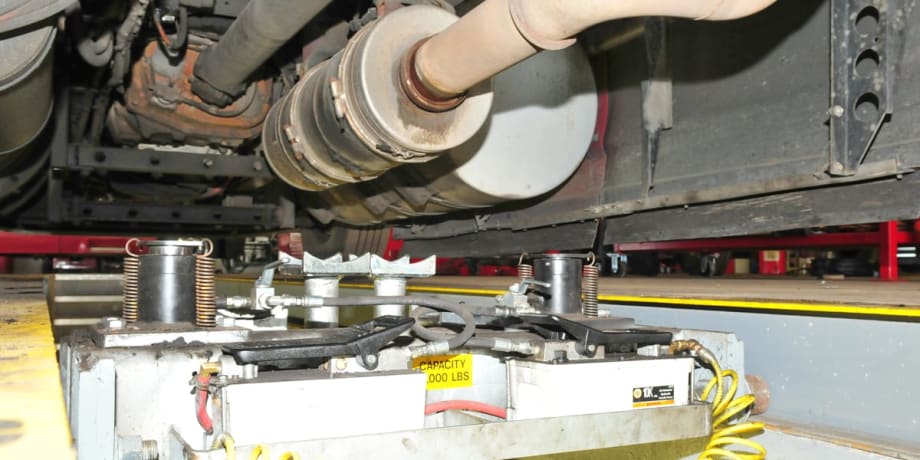
Oil samples should be draw mid-stream right from the engine as the oil drains out.
Photo: Jim Park
Oil changes used to be a monthly ritual. Not long ago, 10,000 miles was about all you could expect from engine oil. We’re up to 50,000 miles today in many instances, and annual oil changes may be on the horizon. With today’s advanced oils and optimum operating conditions, intervals of 100,000 miles are feasible – even likely.
The oil-drain intervals recommended by manufacturers are biased on the side of caution. Engine makers develop maintenance requirements and warranty based on expected use cases, and they require end users to uphold their part of the bargain – in this case, changing the oil on a predetermined interval.
But if the oil is still functional at the end of that period, why dump it?
Oil analysis helps determine the condition of the oil and whether, based on operations conditions, applications and other criteria, the oil can remain in the crankcase a bit longer. Fleets can work with their engine makers and oil suppliers to develop drain interval extension programs, which usually involve regular oil analysis.
“At Shell Rotella, we figure out what the initial drain interval would be using our products, do the analysis at that drain interval, and then if everything looks good, we’ll extend the next drain interval by 20%,” says Karin Haumann, OEM technical manager at Shell Global Solutions. “I think you can probably get an additional 60% of your drain interval going out in 20% increments. But if we see any red flags in any one of those analyses, we’ll probably recommend stepping back to the previous interval so we’re not pushing things beyond where they should be.”
Pushed too far, oil can experience oxidative oil thickening, which would increase the oil’s viscosity. It also can load up with soot to the point it actually becomes abrasive, or it can become diluted with fuel or coolant, which reduces its lubrication properties. And the additive package can deplete over time.
“Analysis allows us to see how much additive depletion there’s been,” says Haumann. “We’re looking for, is the oil oxidized? Is the viscosity still good? Where are the contamination limits? How are the wear metals, and is there a depletion in the anti-wear capability?”
What the numbers reveal
Analyzing samples of your engine oil provides an accurate picture of not only how the oil is performing, but also how various engine parts are wearing. Monitoring key engine oil properties enables fleets to predict issues and schedule maintenance before problems become too expensive or serious to repair.
“Used-oil analysis reports contain many of the key indicators of the oil’s condition, such as base number, acid number, viscosity, oxidation, fuel soot percent and fuel dilution percent, as well as wear metals,” says Darryl Purificati, OEM technical liaison at Petro-Canada Lubricants. “Also, the presence of glycol or coolant, which would be shown through increases in silicon, potassium and/or sodium and potentially water, can be the first signs of a failing exhaust gas recirculation cooler seal, so would require the immediate attention of a technician or mechanic.”
Increases in various metals and alloys can mean that a component in the engine is wearing at an accelerated rate — a failing camshaft, a coolant leak attacking the liners, or an engine requiring mechanical adjustment, for instance.
“Spotting the signs early could result in significant cost and maintenance savings,” says Purificati. “If iron, aluminum, lead and copper have all increased, the protection of vital engine components may have been compromised.”
Each individual engine will have its own wear-metal signature. Different makes and models of engine will be different, because they are made of different materials. What is considered normal wear will vary from engine to engine and application to application. While it’s important to watch for signs of wear, it’s the wear trends that matter.
“An oil sample is just a single snapshot in time,” says Shell’s Haumann. “We’re looking for trends over time that can indicate problems with the health of the engine. That provides a broader picture of what’s happening in the engine.”
A single sample taken annually, for example, would provide a snapshot, but without the context of time, it’s not that valuable.
“In some cases, trend patterns are linear, such as most wear metal accumulation,” Purificati says. “But some trends may demonstrate a curve increase, like severe oxidation, which may indicate an immediate need to change out the engine oil.”
A proper trend analysis can help operators develop a baseline for “normal” operations, he says, meaning easier identification of issues when they may arise. Additionally, oil labs have thousands of samples in their databases to help determine broader trends based on engine make, model and application, and can tell how your samples compare.
Optimum intervals vary
Both the frequency and number of samples and the oil drain intervals you may be able to stretch to are going to vary considerably.
For years, recommended drain intervals were based on distance and/or time period. Vehicles carrying heavy loads, running across rugged terrain, or having a high percentage of idle time were treated the same as those with less-strenuous duty cycles, Cummins officials point out. Today, drain intervals are based on fuel economy as a proxy for how hard the engine has been working or how much it has been idling — both good predictors for oil performance and possible engine wear.
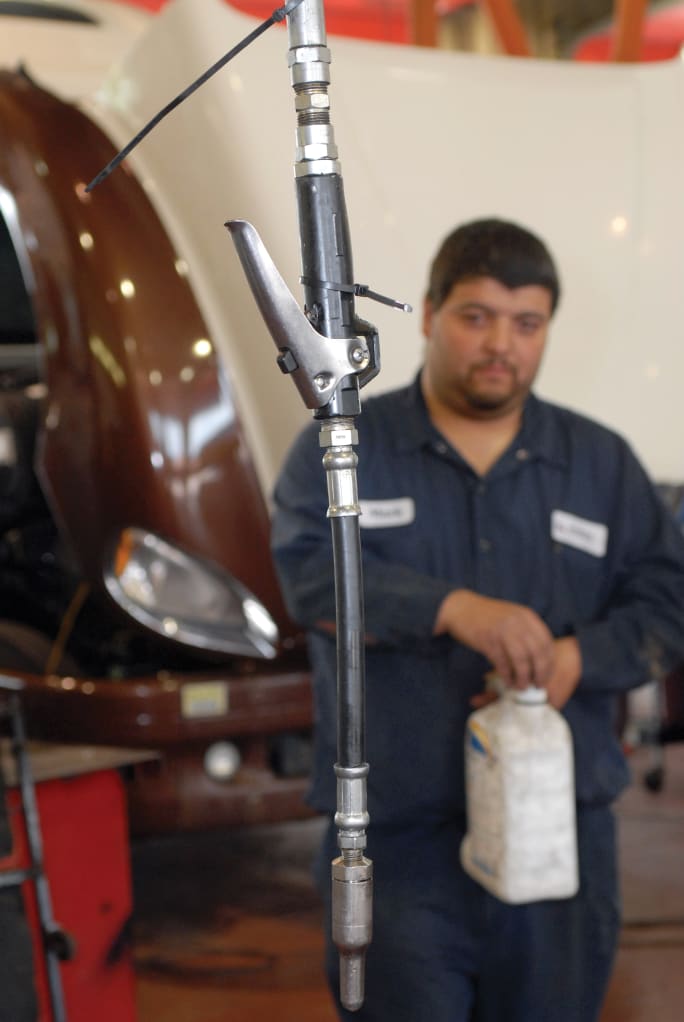
Pushing oil drain intervals from 50,000 to 100,000 miles can save a lot of cash and downtime, but you'll need support and guidance from your OEM and your oil supplier.
Photo: Jim Park
“Odometer readings don’t tell you anything about the work that’s being done in that engine,” says Jason Gerig, commercial sector manager of Chevron Lubricants Americas. “It tells you how far the truck moved, but not what it was doing. It could have been climbing hills all day or running in stop-and-go traffic. Or it could be idling a lot. Fuel burn is a key piece in measuring the work the engine is doing, but also what that lubricant needs to do.”
The oil drain interval for Detroit’s Gen 5 DD15, for example, indicates 75,000 miles for “efficient long-haul” trucks, 60,000 miles for long-haul, 45,000 miles for short-haul, and 35,000 miles for severe duty.
“With participation in the Cummins OilGuard program, we allow for select customers to extend oil drain intervals to 100,000 miles,” says Ryan Denton, corporate chemical technology manager for Cummins. “Customers’ duty cycles vary, but in general, any customer using EPA 2021 X12 or X15 engines that achieves at least 7 mpg will be able to routinely change their oil at a 75,000-mile ODI when using the Fleetguard LF14001NN oil filter.” Excessive idling would shorten that interval.
Obviously, those aren’t decisions fleets can make on their own, as any move toward longer drain intervals has warranty implications.
Fleets desiring an 80,000-mile oil change interval through Cummins’ OilGuard program, for example, will be required to submit samples every 10,000 miles in order to establish fine-grained trends.
“Multiple oil samples during an oil drain interval provide a deeper understanding of the customer’s oil degradation profile in relation to their specific duty cycle,” says Denton. “These trends help us understand maintenance process effectiveness as well as the performance of the engine.”
Newer oil formulations
Another thing to consider is the oil you’re using. Numbers that could be concerning for one oil may be “normal” with another.
Chevron’s Gerig says fleet managers will need to make adjustments if they’re using a newer ultra-low-ash engine oil, which has a sulfated ash content in the 0.4% range, compared to more traditional CK4-FA low-ash oils with sulfated ash content in the 1% range.
“The first thing you will see is a difference in the additive footprint,” he says. “In the new CK4/FA4 ultra-low-ash oils, you will no longer see zinc and phosphorus, which is typically present in most traditional CK4/FA4 low-ash oils. The different components in the ultra-low-ash additive technology can also impact how coolant contamination was typically detected via sodium and potassium.”
There are also differences in oil life measurements. For instance, the ultra-low-ash oils tend to have a very high oxidation starting point and high tolerance level compared to traditional formulations.
“Previously an oxidation level in the 20-25 range would be concerning,” he says. “However, now you can see that number elevate into the 30 and 40 range with no impact on other indicators like viscosity, acid number or wear metals.
“The measurement of TBN (total base number) and TBN retention is also no longer relevant,” Gerig says. “It is not uncommon to see TBN deplete rapidly in the service interval. However, when looking at the other measurements such as viscosity, oxidation, and wear metals, there is no indication of a problem with the oil. This false indicator creates a lot of unnecessary concern, so it’s highly recommended to replace TBN with TAN (total acid number), which correlates better with all the other indicators.”
Similarly, molybdenum is a metal that is used in some piston rings, so its presence in a sample could indicate higher levels of ring wear. But Shell’s Haumann says molybdenum is used as an additive in the company’s oils.
“If we have an idea of what the formulation is on the fresh oil side, then the results can be a little better interpreted when we see the used oil,” Haumann says.
That means you need to be clear when labeling samples and completing the paperwork. It needs to include accurate descriptions of the engine (year, make and model) as well as the brand and classification of the oil.
Is oil sampling worth the trouble? The value proposition will be different for every fleet, but at roughly $350 per oil change, with labor, parts and disposal costs, plus downtime, cutting one or maybe two drains can save serious money.
“A truck that operates 150,000 miles per year would require two to four oil samples depending on service intervals,” says Gerig. “That is less than $60 per year. That $60 per year could easily save you $10,000 in unnecessary repairs or lost revenue.”
Even if all the samples come back good, oil analysis records have also been linked to higher resale values.
More Maintenance

Color Match Smarter: Tools That Restore & Perform
For fleet managers and collision repair professionals keeping heavy-duty trucks on the road, getting the color right the first time isn't just about appearance — it's about efficiency, turnaround time, and bottom-line results. Discover how today's digital color tools are transforming the repair process from guesswork to precision.
Read More →
Wrong Repair Prompts Recall of Freightliner, Western Star 4x2 Trucks
DTNA is recalling more than 2,400 trucks that received an incompatible software fix instead of the hardware repair required to address brake valve corrosion.
Read More →
Truck Drivers Need More Than Another Alert
Fleets have more visibility into truck health, safety events, and driver activity than ever. The next challenge is turning all that information into useful guidance for the person who has to decide what to do next.
Read More →
The Maintenance Checks Trucking Fleets Should Prioritize Before Fall Freight Picks Up
Making it through August isn’t the same as being ready for the next several months of operation. Find out what systems may have suffered from summer heat and need to be checked out before fall.
Read More →
What Three Fleets Are Doing Differently When Buying Truck Parts in 2026
With freight improving but costs still climbing, fleet maintenance executives explain how they're balancing price, quality, and supplier relationships.
Read More →
Paccar Recalls 2027 Trucks Built This Summer for Possible Electrical Problem
The nearly 6,000 Kenworth and Peterbilt trucks in the recall could potentially lose engine power, among other things.
Read More →
Will API PC-12 Oil Change Trucking Fleet Maintenance?
The new API PC-12 heavy-duty engine oil category reflects the changing demands of modern diesel engines. But fleets like Foodliner are looking to getting their own data before making decisions on adopting the new oils and questions such as extending oil drain intervals.
Read More →
Brake Safety Week to Focus on Drums and Rotors
Commercial vehicle inspectors are focusing on truck brakes during CVSA's Brake Safety Week, August 23-29.
Read More →Possible Battery-Cable Fires Prompt Recall of 15,000+ International MV and HV Trucks
On the recalled vehicles, manufacturing variations can cause the battery interconnect cable to contact the auxiliary stud and hold down the bracket.
Read More →
Rush, MCT Team Up to Grow Refrigeration Service Network
The joint venture will operate MCT's network of Carrier Transicold dealerships and mobile service locations, with the companies promising greater service capacity and uptime for refrigerated fleets.
Read More →