




Something New: Gassy Fuel
A refiner in Nevada has formulated still another alternative fuel, a mixture of natural gas and petroleum it calls GDiesel

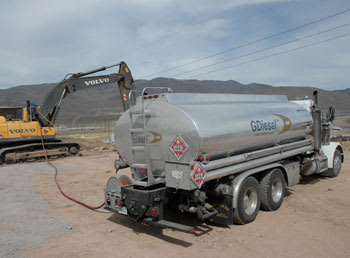
GDiesel's maker sells directly to users, and to truckstops and fueling stations in northern Nevada. Customers say the gas-diesel blend burns cleaner than standard ULSD fuel.
A refiner in Nevada has formulated still another alternative fuel, a mixture of natural gas and petroleum it calls GDiesel.
Advanced Refining Concepts, of Sparks, says it developed the product over three years, actually starting in a garage. It began producing it in August. It burns cleanly and efficiently for lower emissions and better performance.
"We finely disperse natural gas into ultra low-sulfur diesel fuel at 295 degrees, which results in a fog," explains Peter Gunnerman, a founding partner. "We pass this through our catalytic process that attaches carbon to the molecules in the diesel."
He calls the process ClearRefining, and the resulting GDiesel ends up at between 6 to 8 parts per million of sulfur, or about half the legal limit of 15 ppm. A lubricity chemical is added to protect engine parts.
The product's volume is slightly higher than ULSD, but Gunnerman won't say how much gas is added because competitors could deduce the product's cost by adding up commodities prices. ARC sells the product at its own pumps in the Reno area, directly to customers, and to truck fueling stations, which resell it as GDiesel or blend it into ULSD diesel.
GDiesel's retail price is about the same as No. 2 ULSD, Gunnerman says, but it's better. He has testimonials from fleet customers who say cold engines start easier, and while operating they emit less smoke and return greater miles per gallon numbers. The Nevada Division of Environmental Protection examined the product's specifications and read public comments about it, and has designated GDiesel an official alternative fuel to straight diesel. More information about the product and the company is at www.advancedrefiningconcepts.com.
GDiesel's maker sells directly to users, and to truckstops and fueling stations in northern Nevada. Customers say the gas-diesel blend burns cleaner than standard ULSD.
More Fuel Smarts

Record Diesel Prices Squeeze Trucking Fleets
Average U.S. diesel prices have climbed to nearly $6 a gallon, surpassing the 2022 record as tight refinery capacity and Middle East disruptions keep fuel costs elevated.
Read More →
How Fuel Delivery Shapes Engine Performance
Fuel delivery depends on more than what happens at the injector. For fleet, maintenance and technical professionals, looking at the full path from pump to injector can provide useful context for understanding engine performance.
Read More →
East Coast Port Launches $45M Electric Truck Push
The Port Authority of New York and New Jersey announced millions in incentives for zero-emission drayage trucks, yard tractors, and new charging hubs near the port.
Read More →

California Bill Could Shed Light on Electric Truck Prices
Why do battery-electric Class 8 trucks remain so expensive? A California bill headed to Gov. Gavin Newsom would give fleets and state agencies more visibility into what manufacturers charge.
Read More →
Detroit Opens Orders for EPA 2027 Engines
Detroit isn’t starting from scratch to meet EPA 2027 diesel emissions standards. Its Gen 6 DD13 and DD15 engines keep much of today’s platform while updating the fuel and aftertreatment systems.
Read More →
Zero-Emission Truck Corridor Planned for West Coast
California, Oregon, Washington, British Columbia and Baja California are coordinating plans for truck charging and hydrogen fueling from Canada to Mexico.
Read More →
A Closer Look at Kenworth’s Electric T880E Vocational Truck [Video]
Learn more about Kenworth's T880E battery-electric vocational truck at the Paccar Technical Center, including its range, applications, upfitting considerations, and PTO options, in this HDT Spotlight video.
Read More →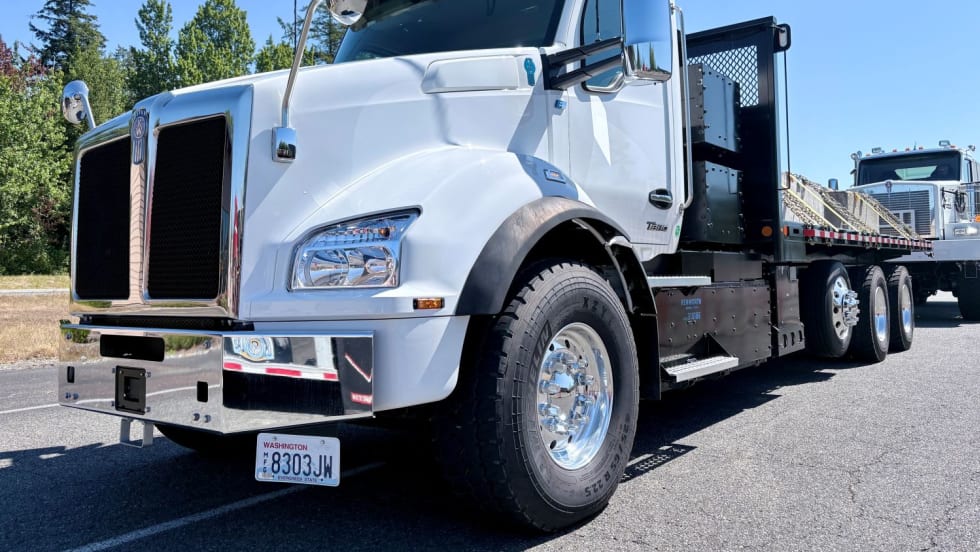
Kenworth T880E Brings EV Power to Vocational Trucks
A closer look at the Kenworth T880E’s range, charging, powertrain and upfit options — and where fleets are showing the most interest.
Read More →
Jennie Abarca Is Proving Electric Trucks Can Do the Job
HDT Truck Fleet Innovator Jennie Abarca is building confidence in fleet electrification one load at a time while openly sharing the challenges she encounters along the way as a small-fleet owner.
Read More →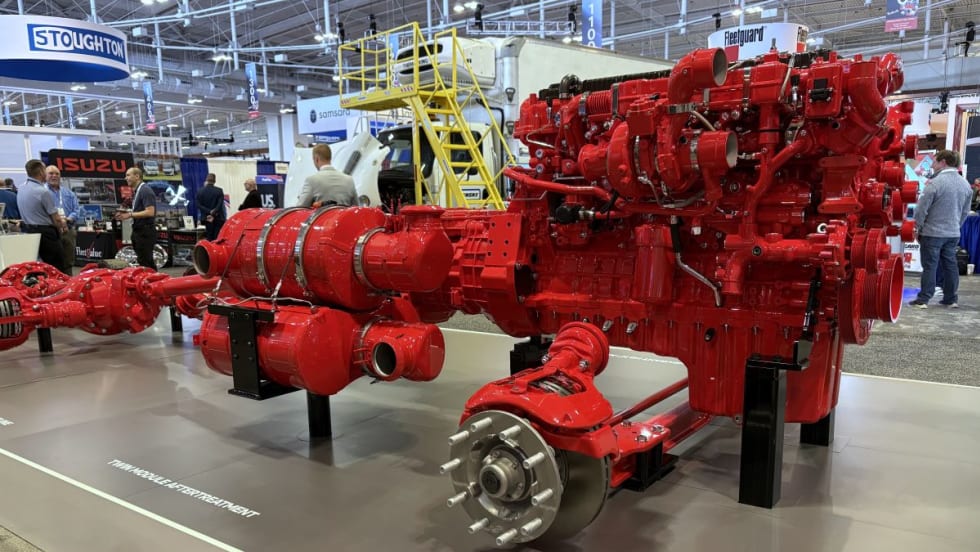
Cummins Adjusts 2027 Engine Rollout After EPA Proposal
The engine maker will gradually introduce its new Model Year 2027 diesel engines while continuing to offer current models during the transition, citing the EPA's proposed emissions rule changes.
Read More →