




Q&A: UPS' Anthony Marshall on the Parcel Carrier's First Class 8 Electric Truck
Anthony Marshall, vice president of maintenance and engineering for the UPS transportation fleet, spoke to HDT about how its new Freightliner eCascadia fits into the company’s operations, driver reaction, figuring return on investment, UPS' sustainability goals, and more.

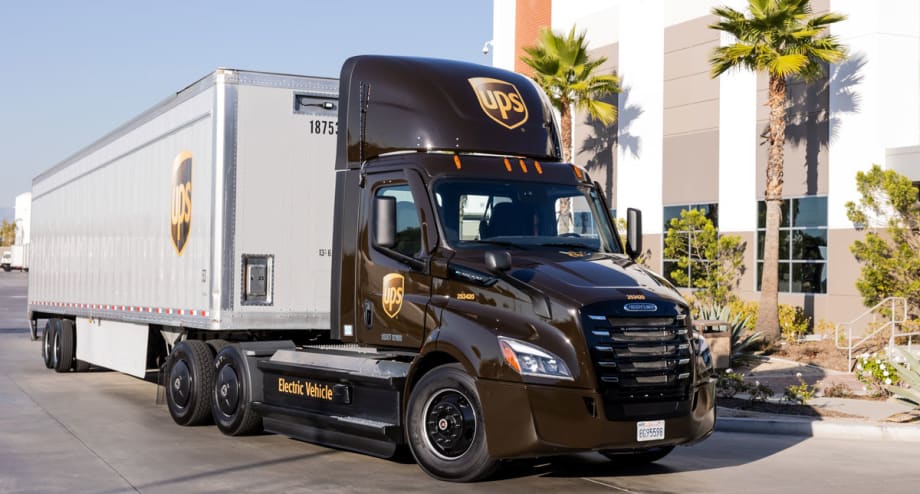
The first of 10 battery-electric Freightliner eCascadias at UPS' Compton, California, facilities.
Photo: UPS
Electric and alternative-fuel vehicles aren't new to UPS. In fact, the parcel-delivery giant has invested more than $1 billion over the past decade in alternative fuels and advanced-technology vehicles. The fleet already includes more than 1,000 electric vehicles, but it recently added its first battery-electric Class 8 truck, a Freightliner eCascadia, to its operations in Compton, California — the first of an order of 10.
Anthony Marshall, vice president of maintenance and engineering for the UPS transportation fleet, spoke to HDT about how the new BEV fits into the company’s operations, driver reaction, figuring return on investment, UPS' sustainability goals, and more.
The following interview is lightly edited for length and clarity.
HDT: What kind of operations is the new eCascadia being used in?
Marshall:For the Freightliner eCascadia, with it being amongst the first commercially available electric semi trucks in the U.S. and the first electric semi truck in UPS' fleet, we were very excited to take delivery of that into our Compton facility. So that vehicle will be used in our normal operations, similar to any other diesel or natural gas vehicle, Class 8 truck semi we have, and we're going to run it through the paces and really put it to the test. We want to get to the point of carbon neutrality by 2050 for UPS. That's a big part of our plan and our strategy.
HDT: What kind of range are we talking about?
Marshall: Freightliner actually advertises on their website specifications 220 miles, but we're thinking we're going to get an average of close to about 250. One thing about UPS’ business, we actually cube out before we weigh out. So there’s an opportunity to run a little bit less weight, which actually extends the life of the battery cycle for us.

"When we're looking at EVs, first and foremost we need the right vehicle to match the operational needs," says UPS' Anthony Marshall.
Photo: UPS
HDT: You've had it operating a few months now; what's the early feedback?
Marshall: Actually, a lot of good feedback, We have a lot of good metrics saying things are working the way they're supposed to for us. From an operations standpoint, the drivers love it.
HDT: One of the complaints drivers have had over the years with natural gas trucks has been that they don't have quite that get up and go of diesels — but we hear that electric trucks are a world different there.
Marshall: Oh, most definitely. That whole concept of instant torque changes that whole avenue of how those things operate, and how the vehicle is utilized. Being able to have all that power literally at the step of a pedal is immaculate for drivers.
How is Buying Electric Trucks Different from Diesel Trucks?
HDT: What goes into these purchasing decisions? How do you figure the return on investment when you've got some technology that's this new?
Marshall: When we're looking at EVs, first and foremost we need the right vehicle to match the operational needs. And then we consider where it makes good business sense to grow and scale. That's always been our recipe for success for implementing new technology in the most beneficial way. So when we look at costs and things like that, we look at different routes where we can gain from this.
We do a lot of extensive research before we actually purchase a unit, We have a lot of a lot of fantastic people working at UPS, they go through all the documents and all the numbers and everything else, and make sure it makes sense for us financially.
HDT: So how is buying or spec'ing an EV tractor different from a diesel tractor?
Marshall: Actually, outside of initial cost purchase, it's pretty much the same. Use Freightliner, for example, the eCascadia, compare it to their normal diesel or natural gas vehicle, the features and similarities are almost the same, the cab features, everything else. The powertrain, of course, is different. Of course, initial cost is a little more, but as time goes on… you'll start to see that cost come more in line with what we're typically see now, in our other vehicles.
HDT: And this is in California. I know they have a lot of incentives and grant programs for zero-emissions vehicles. Is that helping there?
Marshall: Well, you know, every little bit helps. Even for large corporations such as us, every little bit helps. So anytime there's opportunity for us to take advantage of those grants, we try to in the most effective way as possible. As we get closer to our carbon neutrality goals, every little bit that we can help to be able to get us their sooner, we take advantage of, for sure.
The Challenges of Charging Infrastructure for Electric Trucks
HDT: We've learned in the past few years that the charging aspect of battery-electric vehicles is just as important as the truck. Can you tell us more about what you're doing there?
Marshall: The infrastructure side, it actually takes a lot of work. When we think about EV infrastructure, you work a lot with your local utilities, your state government officials, and those folks to bring this stuff all together. It takes a slew of people to actually make the infrastructure work the way it's supposed to. So when we go through our paces with our engineers, and our groups internally to determine where we can do that and working with other utilities as well. And those officials.
Infrastructure, of course, is going to be the biggest thing for anything to have scalability for us. And the more we get more acclimated to that, and the more we do with those, the easier it'll be for a lot of fleets.
HDT: I know some fleets have said, it's a long process to get that planned and executed and work with utilities and get all the permissions. How long have you worked on it?
Marshall: Well, generally speaking, as a company, we've been investing in alternative fuel for more than 20 years. With the global fleet we have over 15,600 alternative fuel vehicles. We understand how that process needs to work. So we have a lot of different folks to help with that process to get us where we need to be.
HDT: So UPS has a bit of a leg up there, no doubt, over somebody who's just going straight to they've had diesel and they're getting an electric truck. That's a bigger learning scale for them.
Marshall:Truly. And we also do it so when we do these things, it's not just to benefit UPS. We understand that there are smaller fleets out there, they can't do some of the things that we do, so we kind of help create that pathway forward as well. And also lead by example — what can the possibilities be for them as well?
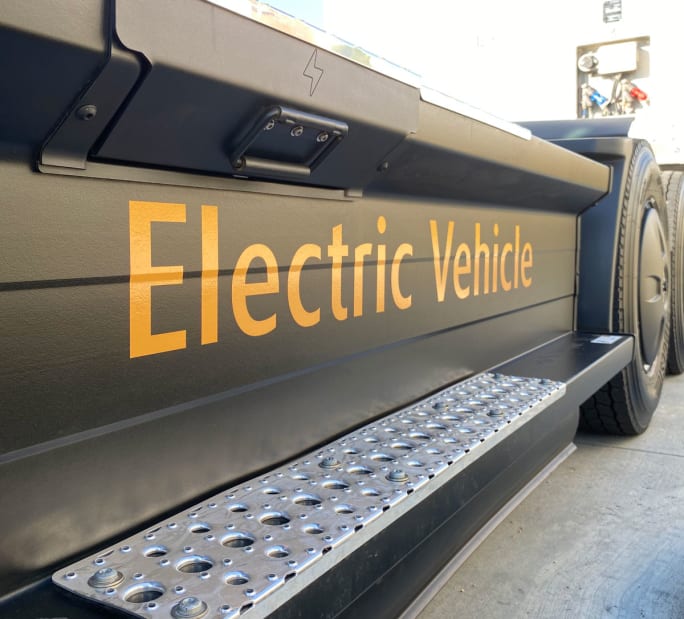
"That whole concept of instant torque changes that whole avenue of how those things operate, and how the vehicle is utilized."
Photo: UPS
HDT: As you said, UPS has a long history of alternative fuel vehicles, and electric vehicles. About a decade or so ago, there was a lot of excitement about EVs on the delivery side. We saw some companies come and go. How has the landscape changed since then with EVs?
Marshall: You see a lot of large players getting more involved with EV, not just on the Class 8 side but also on the actual delivery side as well. A lot of OEM manufacturers are really putting their best foot forward and trying to create solutions.
HDT. Right. So Freightliner obviously has lots and lots of experience with trucks, unlike perhaps some of the EV startups. But I understand that UPS also ordered some Tesla Semi trucks. Any word on what's the status with those?
Marshall: You're correct. We are committed to purchasing vehicles from Tesla. And we anticipate seeing those vehicles on the road in the United States in the next year or so. So as those vehicles become more available, and we can get those into our operations, we will fully engulf into those.
Other Alternatives on the Road to Zero Emissions
HDT: What other alternative fuels or advanced technologies are you excited about?
Marshall: Electrification does play a big role in UPS' decarbonization efforts. And we're focused on continuing to test, validate, deploy and scale those vehicles throughout our operations. However, renewable natural gas is one of the ways we've been lowering our carbon footprint and utilizing those vehicles. So while electrification will play a big role in decarbonizing our fleet, RNG plays a big part of today's solution for us at UPS.
HDT: Are you looking into hydrogen fuel cell vehicles at some point?
Marshall:Actually, we have. Fuel cell offers a unique opportunity, in most cases, to be near zero emissions, or in some cases, zero emissions, and having some range opportunity as well. It's not part of our full strategy right now, in regards to our sustainability goals, but something we play with.
So we have what we call the rolling laboratory. We take different technologies, and we'll test them and put them our environments and see how they work out. And then we will make a final decision on whether or not this is a good fit for us.
9 Keys to Drawing a Roadmap to Zero Fleet Emissions
HDT: A lot of fleets feel a bit overwhelmed trying to figure out where this path is to decarbonization. You can't just go out overnight and switch all to electric trucks. Any advice for fleets about figuring out how they're going to go down that path to zero emissions without too many detours?
Marshall: Fleets have an understanding that there's no such thing as a one size fits all, when it comes to all the different fleets and all the different types of transportation equipment that folks are using, whether it's port, on highway vehicles, whatever it looks like.
From a fleet standpoint, you always have to make sure you put your customer first in your decision-making process, understand how it's going to impact them as well. Just because one thing is good for one person doesn't necessarily mean it's going to work for another fleet as well. So just understand what your specific needs are, and work through those, you'll have a recipe for success.
From the HDT Archives (2019): UPS Sees Bright and Possibly Transformational Future for Electric Trucks
More Fuel Smarts

How Volvo Updated Its D13 for EPA 2027 [Watch]
Volvo’s updated D13 promises lower emissions without sacrificing performance or fuel economy. Take a closer look at what changed inside the engine in this HDT Spotlight video.
Read More →
Diesel Price Spike Shortens Payback for Natural Gas Trucks, Report Says
Energy Vision estimates fleets could recover the higher purchase price of an RNG-fueled Class 8 tractor in 1.3 to 2.8 years under current fuel-price scenarios.
Read More →
Calstart Becomes Catalyst Mobility, Reflecting Broader Focus
Calstart is now Catalyst Mobility, reflecting the nonprofit’s growing national role in clean transportation, including zero-emission trucks, infrastructure and incentive programs.
Read More →

Record Diesel Prices Squeeze Trucking Fleets
Average U.S. diesel prices have climbed to nearly $6 a gallon, surpassing the 2022 record as tight refinery capacity and Middle East disruptions keep fuel costs elevated.
Read More →
How Fuel Delivery Shapes Engine Performance
Fuel delivery depends on more than what happens at the injector. For fleet, maintenance and technical professionals, looking at the full path from pump to injector can provide useful context for understanding engine performance.
Read More →
East Coast Port Launches $45M Electric Truck Push
The Port Authority of New York and New Jersey announced millions in incentives for zero-emission drayage trucks, yard tractors, and new charging hubs near the port.
Read More →
California Bill Could Shed Light on Electric Truck Prices
Why do battery-electric Class 8 trucks remain so expensive? A California bill headed to Gov. Gavin Newsom would give fleets and state agencies more visibility into what manufacturers charge.
Read More →
Detroit Opens Orders for EPA 2027 Engines
Detroit isn’t starting from scratch to meet EPA 2027 diesel emissions standards. Its Gen 6 DD13 and DD15 engines keep much of today’s platform while updating the fuel and aftertreatment systems.
Read More →
Zero-Emission Truck Corridor Planned for West Coast
California, Oregon, Washington, British Columbia and Baja California are coordinating plans for truck charging and hydrogen fueling from Canada to Mexico.
Read More →
A Closer Look at Kenworth’s Electric T880E Vocational Truck [Video]
Learn more about Kenworth's T880E battery-electric vocational truck at the Paccar Technical Center, including its range, applications, upfitting considerations, and PTO options, in this HDT Spotlight video.
Read More →