




Q&A: DTNA's O'Leary on Electric Trucks, Vocational Market, and More
John O’Leary, the new chief at Daimler Trucks North America, talks about the challenges of a booming truck market, the launch of new vocational and electric trucks, its parent company, and more.

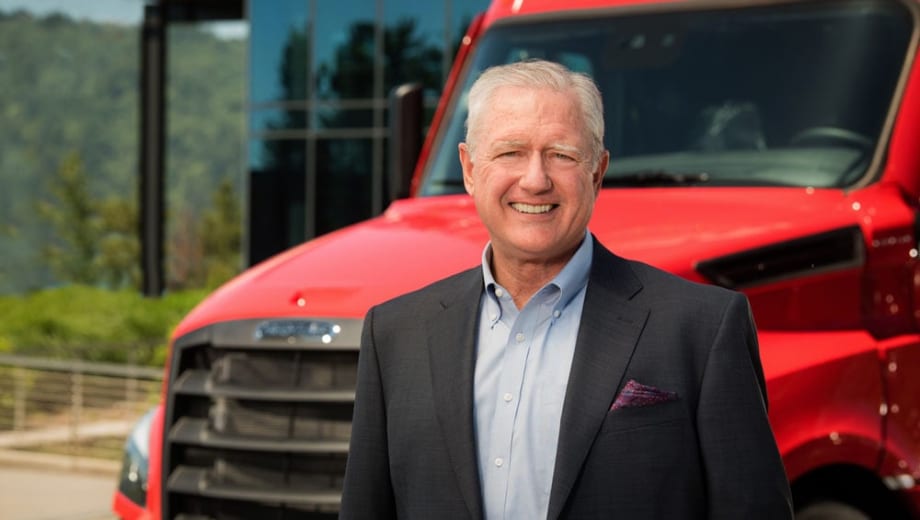
John O'Leary took the helm at Daimler Trucks North America April 1.
Photo: Daimler Trucks North America
John O’Leary took over as president and chief executive officer of Daimler Trucks North America April 1. In his first 100 days, he has been dealing with a booming truck market, the launch of new vocational and electric trucks, and more.
O’Leary now heads up DTNA brands Freightliner Trucks, Western Star Trucks, Thomas Built Buses, Freightliner Custom Chassis Corp. and Detroit Diesel Corp. He’s no newcomer to the company, having previously served leadership roles at Thomas Built and DTNA’s aftermarket business, as chief financial officer of DTNA, and most recently as the chief transformation officer for Mercedes-Benz Trucks in Germany.
When we talked to his predecessor Roger Nielsen in February, Nielsen told us O’Leary faces three big challenges in his new role:
The demand for new trucks is exceeding the capabilities of the supply chain to provide parts such as computer chips and other components needed to assemble the vehicles.
Making good on DTNA’s goals to increase its present in the vocational truck market, starting with the recent launch of the Western Star 49X.
Bring DTNA’s battery-electric vehicles to series production.
O’Leary also comes into his new position as the parent company prepares to split off Daimler Truck as its own business separate from Mercedes-Benz car operations.
We had a chance to talk to O’Leary about these challenges following his first 100 days in the job and how trucking fleets may be affected. (This interview has been edited for length and clarity.)
Q: During last week’s Daimler Truck Strategy Day, it was apparent that DTNA was the shining star in market share and benchmark performance compared to some other regions, especially Europe. How did it accomplish that?
A: It hasn’t always been that way. When I came here in 2000, it was struggling. Over the past 10-15 years, really 15, we really seemed to “get it” in terms of the need to be customer focused. We came up with some really great products. The Cascadia I think was a home run; the DD15 engine, a home run. The dealer network has really stepped up in terms of investments, and we’ve done a really good job of keeping control of our costs. Ultimately, when all that comes together, it portends good things if you can do all that.
I think we had a good vision of where we wanted to go and we executed on it. It sounds easy; it’s not. It’s a huge amount of everyday grinding, of people working hard – really hard.
It’s nice to be at the top of the podium., I think it’s great for MB trucks to have us as a benchmark to use [for inspiration on] some of those things they kind of took their eye off the ball a little bit as they talked at Strategy Day.
We are still benchmarking ourselves, we’re always out looking, whether it’s our competitors or other related type of companies who can we benchmark against to be the best. It’s how we are wired, it’s how we’re driven, and we don’t intend to quit that anytime soon.”
Q: Also from Strategy Day, Daimler Truck chief Martin Daum’s comment about “going all in” on battery electric and fuel cell technologies. That a bold statement. Any worry about potentially losing traction with customers who at this point in time are focusing on internal combustion engines?
A: We really understand right now what side of the bread is buttered for us. We fully understand that the trucks we’re selling today – that we’re selling a lot of – are ICE trucks. No desire to diverge from that, no desire to throw that out and say, ‘Forget about all that success and roll the dice on electrics.’
On the other hand, every big customer I speak to, the CEOs and COOs, and I speak to all of them, they’re all highly interested in that. I know there’s sometimes a mindset out there that it’s either/or, or that electric is going to be the end of trucking as we know it today. I don’t feel like that. It’s not like in 2024 there’s suddenly going to be zero diesel trucks on the road. This is a long, slow, transformation.
But the interest level has accelerated. Two years ago when you talked to people about electric trucks, there was a lot of [shrugging shoulders] ‘Yeah, that’s interesting.’ Now they’re the ones that raise the point first. Things have changed. There’s a lot of pressure in the political system, pressure in the social system. So you have to have a product. And like everything else, we evolve our products over time. The diesel engines we have in our trucks now are cleaner than they were in 1970. Like everything else, we want to be one of the leaders there. If people want to buy a great diesel, we’ll have those, and if they want to buy a great electric, we’ll have those too.
Composite of Zoom call screenshots.
Q: Daimler Truck in Europe is focused on hydrogen fuel cell trucks, including the recent unusual partnership with Volvo, cellcentric, to develop fuel cell technology. Are you pushing for hydrogen infrastructure here in North America?
A: In terms of infrastructure, right now, Europe is primarily focused on hydrogen and there’s some good reasons for that. In the U.S., it’s much more of a battery electric discussion. As Martin [Daum] said in his comments [during Strategy Day], I would say there’s plenty of room for both, and I would say there’s a need for both. Right now, the use cases for battery-electric in the U.S. is more compelling, with all these urban centers, it makes a lot of sense. That infrastructure is already starting to pop.
Ultimately, will there be a hydrogen fuel cell infrastructure in the U.S. for longer-range hauls? I think so. I do think though, you can’t do everything at once, so ultimately that will come later. And it won’t surprise me if the learnings in Europe are useful to help make that transition in the U.S. The good news is from a Daimler perspective, we have access to whatever they develop on the fuel cell from the propulsion side and can use it in our vehicles.
Q: You come into your role at an interesting time, as truck demand is through the roof and supply chain issues make meeting that demand a challenge.
A: It’s really a challenge. Every day we’ve got a great group of people working in supplier management and purchasing, and their sole focus is to go source, whether it’s chips or plastic parts or whatever else is on the list for that particular day, for vehicles that will be built, not tomorrow, but weeks out. Because of our Daimler connection, we have global reach in terms of being able to source those parts. We have had only a limited amount of downtime in our plants. Not to say we won’t have a day here or a day there, but for the foreseeable future it’s all right.
It’s like a roller coaster. There’s mornings where I wake up to an email from our head of manufacturing in North Carolina, they’re three hours ahead, about a major crisis, we might have to shut down for a month because we can’t get chips. But later that day I get one that says we found them, so my heart rate can go back down to its normal pace.
Q: The launch of the Western Star 49X marked the start of a new push for DTNA into the vocational market, in which you said you currently are number two in market share at 28% for on/off-highway vocational. Can you tell us how that’s going?
A: The launch of the 49x is going really well, it’s had a really nice reception. It’s a major foray into part of the market we haven’t been too successful in. In the past, we had plans and products, but they weren’t good enough, they weren’t getting the job done, so we said, ‘Let’s invest a lot of money and let’s do it right.’
So far I think we’re into a really good start. I think the timing is great because of the infrastructure bill that’s out there in terms of building bridges or highways or airports or whatever. We’re really well-positioned to start getting those into the hands of customers as they need them as they’re winning some of those contracts.
Q: During the Daimler Strategy Day, in addition to focusing on growing in the vocational market, you also said DTNA plans to grow its business with small to medium fleets. What can you tell us about that?
A: We have really strong penetration with the big fleets [58% of on-highway large/mega fleets, according to Strategy Day presentation]. It’s not like our penetration in the small fleets is terrible [at 33% market share of on-highway small fleets], so it’s nothing to be ashamed of, and I’m sure other OEs would be happy to have that, but for us that’s not what we aspire to be. We feel like we can put a product out there that can command that kind of better penetration than we do now.
For us it’s not about share, it’s about trying to get the best product in the hands of our customers. If they love our product and we take care of them on the service side and they get great TCO [total cost of ownership], the [market] share’s going to come.
More Equipment

ZF Expands Commercial Vehicle Push in North America
ZF is expanding its North American commercial-vehicle presence with new transmission applications, electrification, trailer technology and autonomous-driving systems.
Read More →
Tesla Wants a Self-Driving Semi. Are Cameras Enough?
Could Tesla’s camera-only autonomous driving technology work on an 80,000-pound Semi? In this commentary, HDT's Deborah Lockridge takes a look at Tesla, Cybercab, and how autonomous trucks see the road.
Read More →
Kodiak: Driverless Long-Haul Truck Launch on Track for 2026
Kodiak AI says its driverless long-haul safety case is 93% complete and it remains on track to begin commercial operations by year-end 2026.
Read More →
What DOT’s Automated Vehicle Strategy Means for Trucking
The U.S. Department of Transportation issued a new automated-vehicle strategy that outlines plans for driverless-truck regulations, cross-state freight corridors, and federal safety standards.
Read More →
East Coast Port Launches $45M Electric Truck Push
The Port Authority of New York and New Jersey announced millions in incentives for zero-emission drayage trucks, yard tractors, and new charging hubs near the port.
Read More →
PlusAI Going Public to Fund Autonomous Truck Launch
A SPAC deal could provide PlusAI with up to $300 million as it works toward a 2027 commercial launch of factory-built autonomous trucks.
Read More →
NHTSA Moves to Rewrite Truck Fuel-Economy Rules
The National Highway Traffic Safety Administration says it lacks authority to regulate medium- and heavy-duty truck engines separately from complete vehicles, but the existing standards have not yet been eliminated.
Read More →
Detroit Opens Orders for EPA 2027 Engines
Detroit isn’t starting from scratch to meet EPA 2027 diesel emissions standards. Its Gen 6 DD13 and DD15 engines keep much of today’s platform while updating the fuel and aftertreatment systems.
Read More →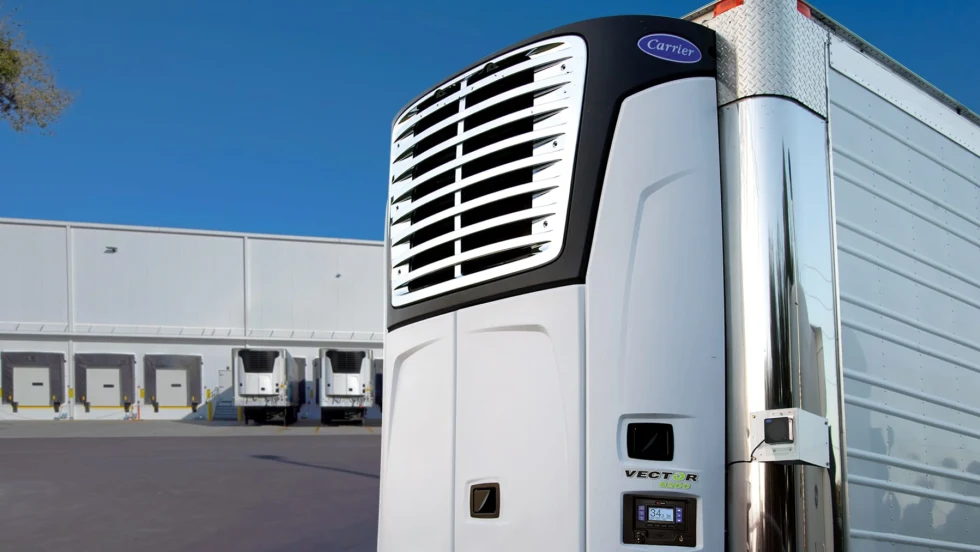
Carrier Transicold Adds All-Electric TRU for Stationary Cold Storage
Carrier Transicold’s new Vector 8200 all-electric transport refrigeration unit gives fleets a diesel-free option for temporary refrigerated and frozen trailer storage.
Read More →
A Closer Look at Kenworth’s Electric T880E Vocational Truck [Video]
Learn more about Kenworth's T880E battery-electric vocational truck at the Paccar Technical Center, including its range, applications, upfitting considerations, and PTO options, in this HDT Spotlight video.
Read More →