





Related: Q&A – Chris Hornady on Becoming Part of Daseke
Q&A: Don Daseke on Building a Nationwide Flatbed Carrier
The longtime businessman and investor talks about how he's adapted the Warren Buffet model to trucking as he builds a nationwide flatbed presence through mergers with well-run carriers, and why he got into trucking at an age when many are thinking of retirement.
September 8, 2015

Don Daseke
8 min to read
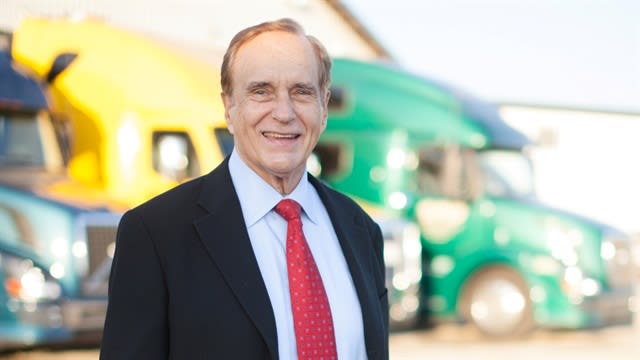
Don Daseke
Don Daseke bought his first trucking company in 2008 when he purchased Washington-based Smokey Point Distributing. A few years later, he added North Dakota-based E.W. Wylie. He soon decided to build a nationwide company focusing on flat deck and heavy haul, and has added companies such as Boyd Bros. and Bulldog Hiway Express to the fold. We talked to him about his unusual approach to mergers and acquisitions and why he decided to get into trucking at a time when many people would be thinking about retirement.
HDT: Congratulations on your latest acquisition, of Alabama-based Hornady Transportation.
Daseke: We call it a merger. A merger sounds better to people, and it's the truth. We come together, we don't eliminate any jobs, we're all one big team.
HDT: Your business model is different from the typical merger and acquisition scenario.
Daseke: The typical model of a roll-up is where you buy a lot of companies that are in the same business and then you figure out how you can cut costs. You consolidate accounting or dispatch or purchasing, eliminating jobs all across the country.
We don't do that at all. We have not eliminated one job in any company that has merged with us. In fact, we suggested to [Hornady Transportation CEO] Chris Hornady that he ought to add a couple people to the company. Our model is totally different. We have 14 people here in Dallas at our headquarters and 3,000 people in all the companies. We're not going to run any company from Dallas.
HDT: How did you develop this model?
Daseke: It's really a Warren Buffet model. For his Berkshire Hathaway [multinational conglomerate holding company], he looks for outstanding companies that are very well managed, and he provides them mentorship and capital. And we did the same thing. The only difference is, Berkshire Hathaway is in all different kinds of business that are totally unrelated, like they own BNSF Railroad and Dairy Queen and Geico Insurance, but there are limited synergies between those companies. It's tough for a DQ management team to learn much from a railroad management team or an insurance management team. All of our companies are in the open deck/flatbed/heavy haul trucking business, so we can learn from one another. We have a collaboration day each quarter where we share best practices between the companies. Hornady may have the best idea in recruiting and Boyd may have the best idea in maintenance and another company has a good idea in building a teamwork culture. We share those best practices and really figure out how we can work together as a family of companies.
HDT: Your path to getting into to trucking was a bit atypical. Can you give us a quick overview?
Daseke: By education I'm a CPA. I spent several years in the computer business of IBM. I started up a real estate company in 1972, and went through the terrible real estate market of the '80s where because of the tax law change and saving and loan crisis and oil market collapse and overbuilding, all of the markets of the south were basically depressed. I had to work several years to get my real estate company to survive and eventually took it public as a real estate investment trust in 1994 and named it Walden. We initially had 6,000 apartment units and grew to 40,00 all across the South and sold it in 2000. Then in '98 I started a telecom company called Sage telecom and it did very well.
In 2008 is when I made my entry into the trucking business. And it was really an accident, in that I had a friend here in Dallas, an investment banker, he had been engaged to sell this trucking company up near Seattle and asked if I would take a look. I bought the company because I really believed in the management team. My philosophy has been to invest in people. Anybody can buy equipment or assets or terminals or trucks. In any business, people can buy assets. The difference between success and failure are the people, and I believed in those people.
What struck me about the management team was their passion for the business, their passion for customer service, their passion to work together as a team. They were absolutely dedicated to serving the customers and doing a great job.
That company [Smokey Point Distributing] has tripled in size and that started me on this business of buying outstanding, well managed, flatbed/open deck/heavy haul companies.
HDT: What struck you about the industry that prompted you to expand?
Daseke: As I got into the business, I realized that flatbed/heavy haul was truly a niche of the trucking business. That it's a totally different business than the dry van or refrigerated business or the bulk business. And that's why the giants in the business, like Hunt and Swift and other big companies, aren't really in this business.
I learned that probably the most fragmented part of the trucking business, with hundreds and thousands of small companies, are in the heavy haul/flatbed business.
So after I invested in the first company, a different banker brought me a similar company, E.W. Wylie, owned by a public utility. That company has been set up since 1938, very long established co. I looked around and said, is there a national company focused on this flatbed/open deck space? The answer was no. I asked, is there a public co in this space? No. We could be the first national company to really focus on this open deck/flatbed/heavy haul space with the objective of being the premier flatbed carrier in the country. And that's what our mission has been.
So for the last several years we've been merging companies with us that are truly not for sale. A company for sale, it's for sale for a specific reason. They've got financial problems, they’ve got management issues, ownership is unhappy about something. We don't want those companies part of Daseke. We wanted companies with phenomenal management teams with a long history of success, excellent customer service, passionate about the business, passionate about the people in that company. That's what we want to be part of us. So we've been approaching companies directly that have those characteristics.
These companies had a great reputation, were safety focused, had great management teams and a proven record of success over many generations. Most importantly, they really cared about their people.
HDT: So one of the things you mentioned that Daseke can bring to these companies is mentorship. What are some of the lessons you learned in other businesses that you are bringing to the trucking industry?
Daseke: Hopefully I'm bringing some of the things I've learned. I've been a builder of companies. I built our real estate company from nothing, built the telecom company from nothing. That first company had less than 75 trucks and today we have 3,000. I'm a CPA by education and that hopefully helps -- I understand the numbers. I've learned a lot about motivating managers and working with people over the years, and hopefully I bring that to the table -- that you need to listen to your people, you need to respect them, you need to treat them with integrity. Those are very basic things, but you also have to have fun as a management team. Some managers forget about some of those things, they forget about respect or forget about having fun or don’t do the little things in motivation that are really important to make a team successful.
Another thing I've found: We can learn from one another in this business. I don't profess to have all the answers.
HDT: You mentioned the other thing is access to capital. What are the Daseke companies doing with that access?
Daseke: It's easier for us to get credit lines form the major banks because of our size. A small company typically has more difficulty getting capital, and new equipment costs more these days. We do have purchasing power, on fuel and tires, equipment, insurance, medical insurance; a lot of things we can do because of our size that are advantageous and help our bottom line. All of that helps our access to capital. We're still a private company and we have a far stronger balance sheet than most companies; we can buy equipment in volume; at the end of this year our average tractor will be less than 2 years old. That helps in saving fuel, that helps in attracting drivers. And the most important challenge of our business are the drivers. We try to do everything possible to attract and retain the best drivers in the business.
HDT: An article in the Wall Street Journal following the Hornady announcement says consolidation in the flatbed business is being triggered by lower demand for equipment hauling to the oil shale fields. Are you seeing that?
Daseke: I'm not so sure about that. Sure, part of the flatbed business that carries oil related materials is down, no question about that. But that's not a big reason for consolidation in the flatbed market. Oil is just one category of industrial things carried on flatbeds – aerospace, metals, construction equipment, building materials … we have all of these other categories that are equally if not more important than oil equipment.
HDT: So … what's next? What are your plans going forward?
Daseke: We will continue to look for outstanding companies to join our family. They have to have the same criteria; and we're not going to grow for the sake of growth alone. We're going to grow because it makes sense for companies to be part of our family. We're going to stay focused on this flatbed/heavy haul niche. And we're going to stay focused on companies that operate safely.
Subscribe to Our Newsletter
More Fleet Management

Sponsored•September 1, 2026
How Telematics Improves Visibility, Control, and Performance in Refrigerated Fleets
Explore how telematics help refrigerated fleets improve visibility, uptime, efficiency, compliance, and cargo protection across connected cold chain operations.
Read More →
What the U.S.-Canada Trade War Means for Trucking
Escalating U.S.-Canada tariffs could disrupt cross-border freight, reduce truck volumes, raise costs, and create new uncertainty for carriers on both sides of the border.
Read More →
What Are Trucking’s Top Concerns for 2026?
The American Transportation Research Institute wants to know what's worrying trucking fleet managers, drivers, and other stakeholders in its annual Industry Issues survey.
Read More →

American Trucking Associations Looks for a New Leader
ATA President and CEO Chris Spear abruptly left his job at the association on August 21, at a pivotal time for the trucking industry.
Read More →
Public Wi-Fi Cybersecurity Risks: How Truck Drivers and Fleets Can Protect Their Data
Public Wi-Fi can expose truck drivers and fleets to credential theft, malware, and other cyber threats. Here’s how to reduce the risk on the road.
Read More →
For Nicky Cupp, Fleet Innovation Starts With Frustration
HDT Truck Fleet Innovator Nicky Cupp turns everyday pain points at Fraley & Schilling into opportunities for better technology and smarter processes.
Read More →
Adam Buttgenbach’s Approach to Electric Trucks: Start With Where They Fit
HDT Truck Fleet Innovator Adam Buttgenbach helped PepsiCo build one of North America’s largest EV fleets by focusing on where electric trucks make operational sense.
Read More →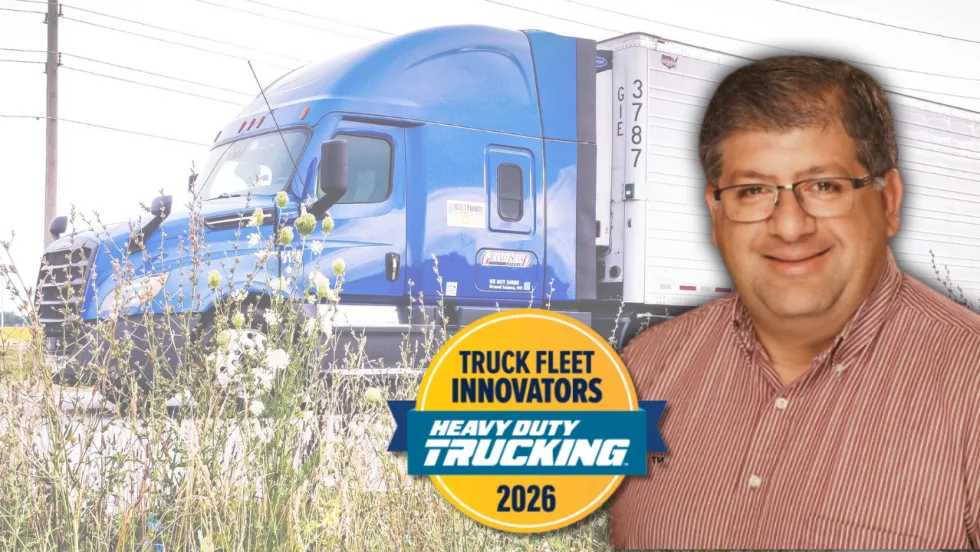
Deen Albert: Let Automation Do the Math, People Make the Decisions
HDT Truck Fleet Innovator Deen Albert makes sure people are still at the heart of operations at Grand Island Express, even while adopting artificial intelligence tools. AI-assisted dispatch helped boost revenue 25% with the same number of trucks.
Read More →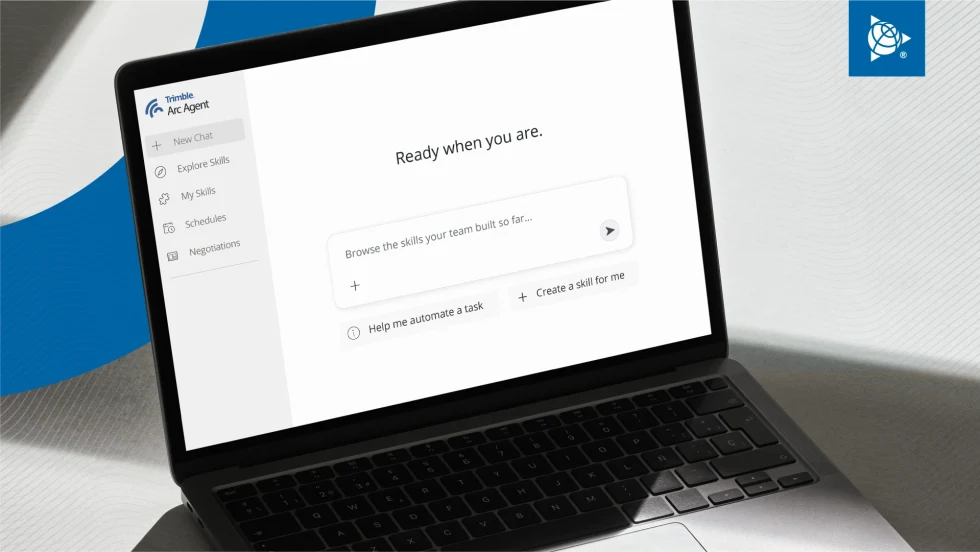
Trimble’s New AI Agent Takes Aim at Fleet Back-Office Busywork
Arc Agent works across Trimble TMS products to automate repetitive tasks such as freight orders, maintenance, invoices, fuel costs and more.
Read More →
How HDT’s 2026 Truck Fleet Innovators Are Rethinking Fleet Operations
Meet five trucking leaders who are challenging assumptions, solving operational problems, and putting innovative ideas to work.
Read More →