




Peterbilt Chief on EVs, Autonomous Tech and the New Model 579
Peterbilt just culminated a five-year development process with the launch of its New Model 379 Class 8 truck – but it’s far from the only thing the company has been working on. We talked to General Manager Jason Skoog about the new truck, electrification, and autonomous technology.


Peterbilt General Manager Jason Skoog
Photo: Peterbilt
Peterbilt just culminated a five-year development process with the launch of its New Model 379 Class 8 truck – but it’s far from the only thing the Paccar company has been working on. We chatted with General Manager Jason Skoog about the new truck, electrification, and autonomous technology. (Interview has been lightly edited for length and clarity.)
Q: Jason, you had an exciting week with the launch of the New Model 579. What was your top takeaway from the launch?
A: When you launch something virtually, your first goal is to get a great first reaction. Based on feedback I’ve gotten, we really hit the mark. The bold styling really resonated with a lot of our customers.
Q: Just a few months ago, the battery-electric version of the Model 579 became available for orders. Will the New Model 579 also be available in an all-electric version?
A. Not immediately at launch. Diesel still runs today and will for quite some time. We’re focused on getting it to market with the diesel powertrain, and the electric will eventually follow.
Q: So will there be an overlap between production of the previous Model 579 and the new one?
A. Yes, there will. From April through July, there will be a moderate ramp up of the new model and a moderate ramp down of the previous version. The customers that still want to take the last of the current model, ramping up new suppliers and things like that, there will be a few months’ time.
Q: How do you balance the development of traditional internal combustion engine powered trucks, electric drivetrain development, and autonomous truck research? There’s a lot happening there.
A: [Laughs] We do it with a lot of great people. And you’re right, there is a lot going on. All of those, especially on the emerging things, electric powertrains or autonomous development, the future’s bright for both of them right now. As you look through to 2024 when you see more regulations related to a certain percentage [of new trucks] having to be zero emissions, the best solution for that is EVs for now. One thing Paccar does very well is meet our customers’ needs and do it in a way that’s balanced across product portfolios.
Q: Where do hydrogen fuel cells fit into that?
A: My thought on fuel cells is that the [return on investment] is probably a lot further out than it is on [battery] EVs, but that doesn’t mean we’re not looking at what fuel cells can do and testing at the Paccar level and understanding what their capabilities are and things of that nature. A lot of things have to happen for fuel cells, just like they have to happen for electric. We see [battery] EVs for zero emissions through the middle of the decade. Hydrogen is going to be the middle of the decade and further out before you start to see some sort of reasonable ROI that people can get their heads around.
Q: One of the challenges for electric vehicle adoption is the charging infrastructure. How is Peterbilt addressing this?
A: A couple months ago we announced a partnership with Faith Technologies and Schneider Electric [to provide charging infrastructure solutions.] We’ve quoted a ton of EVs. The thing we bring to every conversation with a customer that wants a quote, we immediately start the conversation on the infrastructure. How many trucks, how far do they need to go every day, how long can they be charged. Then you have to get with an infrastructure advisor that can come in and do a site assessment. Then you start talking about, this is the size of charger you’re going to need and this is what it’s going to cost. We’re looking to package everything together for our customers. Other Paccar companies, like Paccar Financial and PacLease, are offering some finance programs that allow a customer to bundle everything together. We felt infrastructure was vitally important to get EVS going.
Q: Will the pace of development in vehicle electrification have any impact on Peterbilt's enthusiasm for improving diesel-powered equipment? I saw a recent global report from an analyst suggesting that some companies would only put in the minimal necessary investment on their internal-combustion engine development as they move toward zero emissions vehicles.
A: I feel that the diesel powertrain still has a long life left in it. There are regulation that go into effect in 2024 and more in 2027, and beyond that, I would assume the pace of change continues. But I still see diesel as a predominant factor throughout the decade – and that being the case, we’ve got to deliver a fuel-efficient, reliable diesel powertrain, so we will continue to invest in it. As long as fuel is the number one expense for a fleet, fuel economy will be important. And you’re still to the point where you’ve got economies of scale… that affect total cost of ownership, [that you don’t have for electric powertrain production. Through the middle of the decade you’ll probably see some cost reductions [in electric powertrains], but EVs today compared to diesel, ROI is still going to be on the diesel side, even if you fast-forward a few years.
Q: What would you say are the three greatest barriers to wide-scale adoption of electric trucks at this point in time?
A: I think there really are two, and that’s cost and infrastructure. A lot of people are interested; I can’t tell you the number of quotes we’ve done [for EVs], and we’ve got some orders, which is great, and we’re looking forward to getting those in customers’ hands. If I had to list a third, it would be comfort with technology change. Some people will want to be on bleeding edge, some leading edge, and some people are fast followers.
Q: One of my first exposures to the term “advanced driver assistance systems” and autonomous truck technologies was at a Peterbilt technology day in 2015. Paccar recently announced a global alliance with autonomous truck technology start-up Aurora. How do you see this accelerating the development of autonomous features in Peterbilt trucks?
A: We’ve been very close to the ADAS space and the autonomous space for quite a few years. We’ve had our office in Silicon Valley now for four or five years, and that positioned us early on with a lot of the autonomous development companies. Peterbilt has put quite a few trucks – in the hundreds of trucks – in the various autonomous projects. I feel we’ve been on the leading edge trying to understand the various technologies and how each system works. What the [Aurora] partnership does is, it really puts things into motion as far as how we’re going to architect things on the truck and enable even greater autonomous features in the next three or four years.
Q: When we started seeing autonomous-truck announcements and demonstrations five or six years ago, there were a lot of predictions that we would have “self-driving trucks” within the decade. More recently, it appears that most companies have backed off those initial optimistic predictions. Do you think we’ll actually see such trucks?
A: If you don’t make me say a date, I’ll say yes. I truly believe the technology will be there before the regulation, public acceptance, and legal framework of responsibility, if you will. I’ve “driven” one, at the Paccar Technology Center on a closed course, and it did everything I expected it to do.
Q: Why do you think we’ve seen this scale back on expectations as to when?
A: I think generally, change happens really slowly, and then it happens all at once. When the foundation of advanced driver assistance systems started to take hold, when you first started seeing a technology, you really can get excited and really paint the picture of how great it can be in the future. And that makes people think things are going to happen sooner rather than later.
But I think truly autonomous trucks will happen at some point in the future. I can’t tell you what day it would be. When I think something as powerful and as complex and as revolutionary as autonomous systems on a truck would be, it doesn’t surprise me that looking back three or four years ago when everyone thought it was coming sooner, when it still is quite a ways off. It truly will not be just evolutionary but revolutionary. And things take time – things happen slowly, then [snapping his fingers], all at once. It’s going to be slow, and all of a sudden you’ll see the adoption curve be pretty quick.
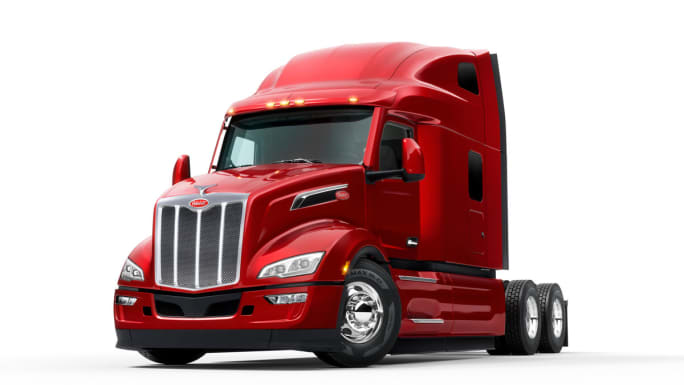
Skoog said the bold styling of the New Model 579 "really resonated with a lot of our customers."
Photo: Peterbilt
Q: Anything else you’d like to share with our readers?
A: We’re ecstatic about this New Model 579. This has been five years in the making, from the initial sketching and talking to customers about what the next generation would look like, and their desires, and all the stuff that goes into the new-product development process. It’s really nice to launch something, to have people see it and give you great feedback. What I’m most excited about is seeing more of them on the road and really getting the positive feedback we expect from a wider range of our customers. We truly felt like we hit a home run with this truck, and we’re looking forward to sharing it with everyone.
More Equipment

How Volvo Updated Its D13 for EPA 2027 [Watch]
Volvo’s updated D13 promises lower emissions without sacrificing performance or fuel economy. Take a closer look at what changed inside the engine in this HDT Spotlight video.
Read More →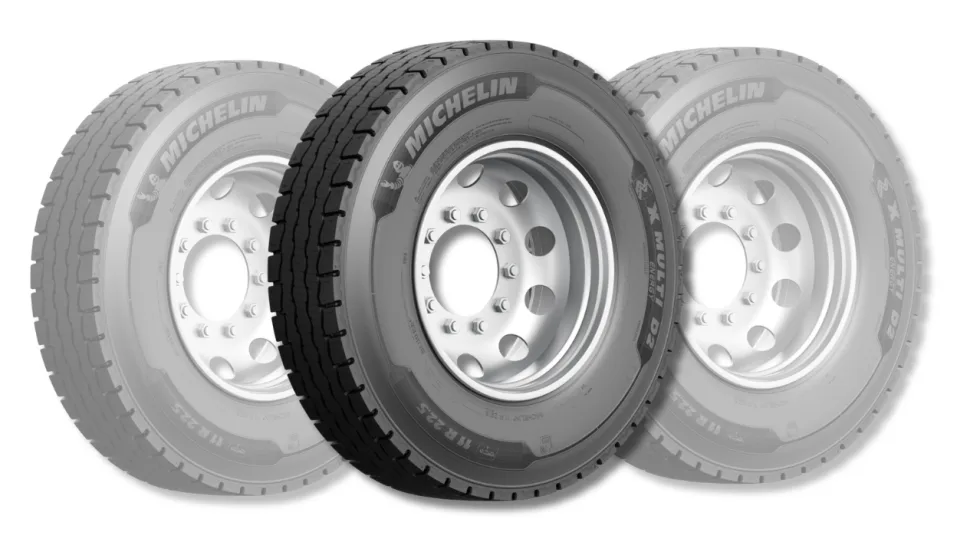
Michelin Tire Improves Efficiency and Durability for Regional Fleets
The Michelin X Multi Energy D2 is a regional haul drive tire engineered to help fleets improve fuel efficiency, durability and traction in demanding stop-and-go operations.
Read More →
ZF Expands Commercial Vehicle Push in North America
ZF is expanding its North American commercial-vehicle presence with new transmission applications, electrification, trailer technology and autonomous-driving systems.
Read More →
Tesla Wants a Self-Driving Semi. Are Cameras Enough?
Could Tesla’s camera-only autonomous driving technology work on an 80,000-pound Semi? In this commentary, HDT's Deborah Lockridge takes a look at Tesla, Cybercab, and how autonomous trucks see the road.
Read More →
Kodiak: Driverless Long-Haul Truck Launch on Track for 2026
Kodiak AI says its driverless long-haul safety case is 93% complete and it remains on track to begin commercial operations by year-end 2026.
Read More →
What DOT’s Automated Vehicle Strategy Means for Trucking
The U.S. Department of Transportation issued a new automated-vehicle strategy that outlines plans for driverless-truck regulations, cross-state freight corridors, and federal safety standards.
Read More →
East Coast Port Launches $45M Electric Truck Push
The Port Authority of New York and New Jersey announced millions in incentives for zero-emission drayage trucks, yard tractors, and new charging hubs near the port.
Read More →
PlusAI Going Public to Fund Autonomous Truck Launch
A SPAC deal could provide PlusAI with up to $300 million as it works toward a 2027 commercial launch of factory-built autonomous trucks.
Read More →
NHTSA Moves to Rewrite Truck Fuel-Economy Rules
The National Highway Traffic Safety Administration says it lacks authority to regulate medium- and heavy-duty truck engines separately from complete vehicles, but the existing standards have not yet been eliminated.
Read More →
Detroit Opens Orders for EPA 2027 Engines
Detroit isn’t starting from scratch to meet EPA 2027 diesel emissions standards. Its Gen 6 DD13 and DD15 engines keep much of today’s platform while updating the fuel and aftertreatment systems.
Read More →