




Behind the Wheel of an Electric Peterbilt Model 579
Peterbilt showcased the Paccar Innovation Center in Sunnyvale, California, to demonstrate its continuing efforts to identify, develop and deploy emerging technologies in trucking.


The most interesting thing about the electric Model 579 tractor is that fact that it uses a conventional Eaton AMT, instead of a large, single electric drive motor with a continuous torque curve.
Photos: Jack Roberts
Peterbilt showcased the Paccar Innovation Center in Sunnyvale, California, to demonstrate its continuing efforts to identify, develop and deploy emerging technologies in trucking.
Located in the heart of famed Silicon Valley, the Paccar Innovation Center also works closely with Kenworth and Paccar’s wholly owned European brand, DAF, on three core developmental areas, according to Jason Skoog, Paccar vice president and Peterbilt’s new general manager. Those include connectivity, driver interface systems, and driver assistance systems.
The Paccar Innovation Center is a small, but ultra-modern facility that includes space for 50 full-time employees, a five-truck work bay, as well as meeting and collaboration spaces. A Paccar Experience features various displays, including the futuristic WAVE concept truck developed in conjunction with Walmart a couple of years ago.
Just as importantly, Skoog said, is the center’s location in the heart of Silicon Valley, which gives Paccar engineers and designers access to many of the sharpest minds and start-up companies shaping emerging transportation technology. In fact, he noted that Paccar has met with more than 125 separate tech start-ups in the area since last November.
At the Innovation Center on June 27, Peterbilt showcased for trucking reporters several current developmental projects, including a Level 4 autonomous truck and two Class 8 electric trucks, in addition to highlighting its efforts to coordinate next-generation research and identify emerging technologies that will benefit future vehicle performance. The Innovation Center is also accelerating partnerships in the development of electric and hydrogen fuel cell powertrains, as well as the deployment of big data analytics.
“Purposeful innovation is continuously engrained into every aspect of our business and it means we will be ready to deliver innovative options to our customers and their drivers,” Skoog said. “The Paccar Innovation Center allows Peterbilt to connect with and leverage the advancements being made by technology companies in Silicon Valley. When combined with the talented and experienced Peterbilt employees and worldwide Paccar resources, we have a team that will deliver innovative products and services now and into the future.”

There’s no Paccar MX diesel under the hood of the electric Model 579. Instead, that space is occupied by a large electric power converter and inverter that stores, manages and distributes power as needed while driving.
Behind the Wheel of Peterbilt’s Electric Model 579 Daycab
To highlight the work being done at the Paccar Innovation Center, Peterbilt offered CDL-holders the chance to take the demonstration model of its electric Model 579 for a brief evaluation run through the silicon heart of Sunnyvale, California.
The truck is being developed in partnership with TransPower, an electric vehicle-focused tech startup in the area that is looking to become a Tier 1 supplier of vehicle electrification component and technology for the trucking industry.
Matthew Vito, a systems engineer with TransPower, was on hand as a minder during the test drives and to answer questions or generally explain how the truck operates. Peterbilt and TransPower have been working together on electrification projects since 2015.
From the exterior, there are only a few clues that you’re not dealing with a conventional diesel-powered Model 579 tractor — chiefly the “eight-pack” battery assemblies on the frame behind the cab. These are 44-kw battery packs that give the truck up to 250 miles of range in highway driving conditions. Vito said each individual battery pack weighs approximately 800 lbs.
I was curious to know what was sitting under the hood in place of a conventional diesel engine, and Vito was happy to show me the power inverter and converter system that reside in that space on this truck. This is essentially a sophisticated power management system that collects, stores and distributes electric power as needed during driving operations, both from the battery packs themselves, and from the truck’s kinetic-energy braking system, which converts forward inertia into energy and captures it for future use.
Interestingly, Vito said, the system is remarkably efficient in terms of both range and recharging capability, needing only four hours connected to TransPower’s proprietary charging systems to retain a full change.
Peterbilt engineers opted to keep things familiar when it comes to their electric truck design. Nothing in the cab seems abnormal or out of place. Everything is right where it ought to be, doing right what it ought to be doing. There is, for example, a full air brake system on the electric Model 579, that engages and disengages with the familiar yellow and red knobs on the dash. And there’s a full-blown, normally functioning Eaton automated transmission as well, with its control panel mounted flush in the center section of the dashboard.
I was under the impression that electric vehicles don’t need conventional transmissions to operate. And they don’t. But that doesn’t mean they can’t take advantage of their benefits. Vito explained to me that most electric trucks use massive-sized electric motors with continuous torque curves — just like on a golf cart. But, he said, Peterbilt’s choice of a conventional AMT means that TransPower is able to fit the truck with two, much smaller electric motors in sequence. These electric motors have a much shorter torque curve than the big motors. But that’s where the transmission comes into play, taking the torque the two motors produce and turning it into usable power. This saves on space and weight as well, Vito noted.
Putting the truck in “Drive,” just as I would on a diesel-powered truck, and disengaging the parking brake had the electric Model 579 jumping forward with surprisingly quickly response to the throttle inputs. The predominant noise at those point comes from the whine given off by the truck’s hydraulic system, as well as the normal chassis and suspension noises you tend to hear, along with an occasional pop front the air brakes. But that’s about it.
The electric Model 579 shifts out at the same speed and torque points a diesel engine would, so the overall feel while you’re driving is extremely familiar. In fact, if you had someone playing diesel engine sounds over the truck stereo, I’d be willing to bet more than a few experienced drivers wouldn’t know right away that they were actually driving a truck equipped with an electric drivetrain. The first giveaway that they were running a diesel would probably be when they put their foot in the throttle and felt the truck take off from a dead stop. Granted, we were running bobtail on our little route through Sunnyvale. But the acceleration this truck’s electric drivetrain offers is nothing short of astounding.
Beyond that, this is really a story of no new news to report, The Peterbilt Model 579 rides, drives, handles and feels exactly identical to any other diesel Model 579 daycab you’ve ever driven. Again, the only real differences are the lack of a diesel engine hammering away up in front of you and the attention-grabbing acceleration rate when you put your foot down on the accelerator.
For now, this electric Model 579 is simply a demonstrator truck, intended to showcase both Peterbilt’s work in the electric vehicle realm and the viability of the concept in real-world fleet operations. The company hasn’t made any decisions yet on putting it into production, and likely won’t be in a hurry to do so, if Skoog’s comments earlier in the day are any indication. Speaking on Peterbilt’s approach to new technology, he noted that the company wants to stake out leadership positions with any viable new technology, but is not interested in forcing anything on anybody until they are interested.
For Peterbilt, he said, this means ensuring that there is a real-world demand for the product, that it can perform as expected in those real-world operations, and that there must be a reasonable and timely return on investment for the use of that technology. Today’s demonstration drive proved that Peterbilt is ready and waiting to go when the electric truck market begins to blossom in North America and will be able to meet customer and driver expectations for that technology when it does.
Related: Quick Spin: Volvo FL Electric Truck
More Equipment
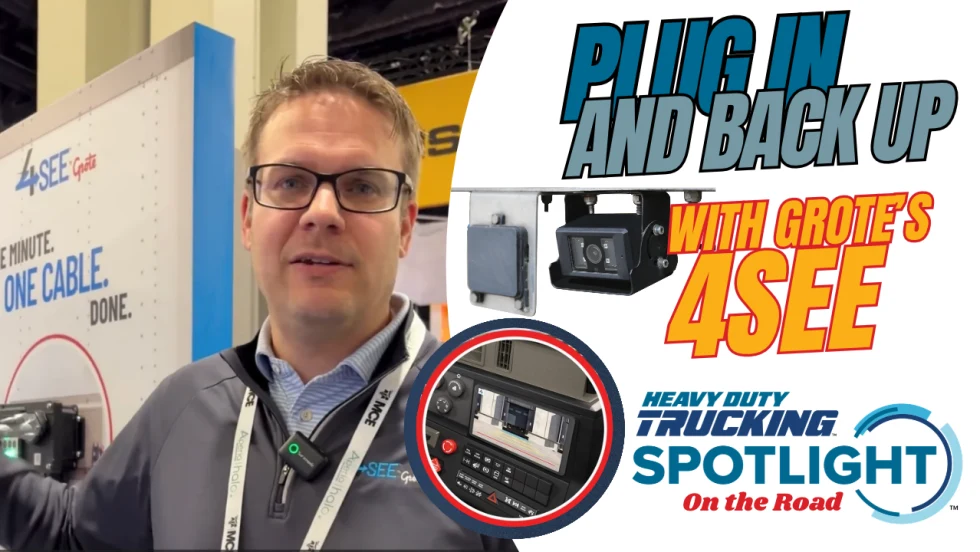
More Trailer Data Through the Same Seven-Way [Video]
Can trucking’s standard seven-way connector handle more cameras and trailer data? Grote’s Adam Slade shows HDT how the company is using new technology with its 4See trailer system, not only to add a new backup camera but also to expand other capabilities — without adding another connection.
Read More →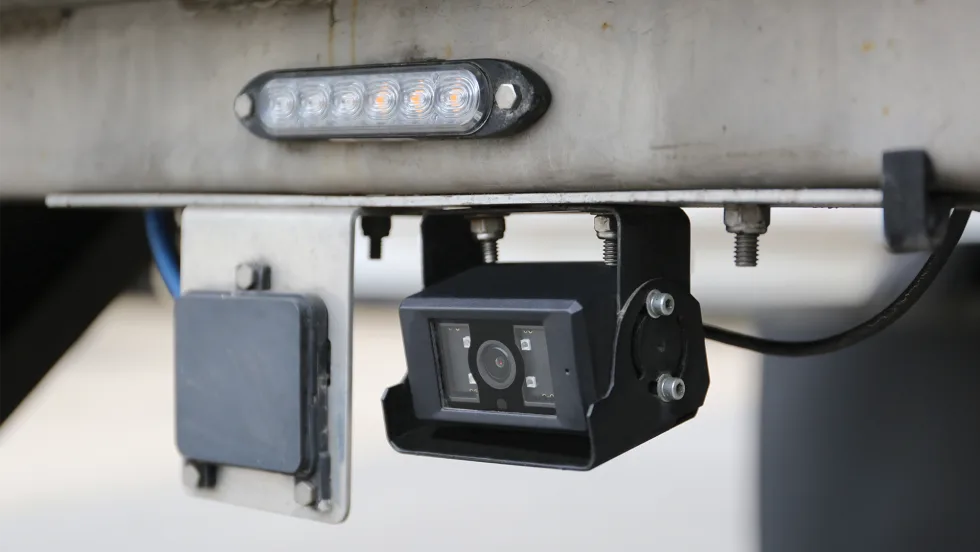
Grote: More Cameras, Same Seven-Way Connector
The next-generation 4See rear-view backup camera from Grote uses the standard seven-way connector and supports additional cameras and other trailer data.
Read More →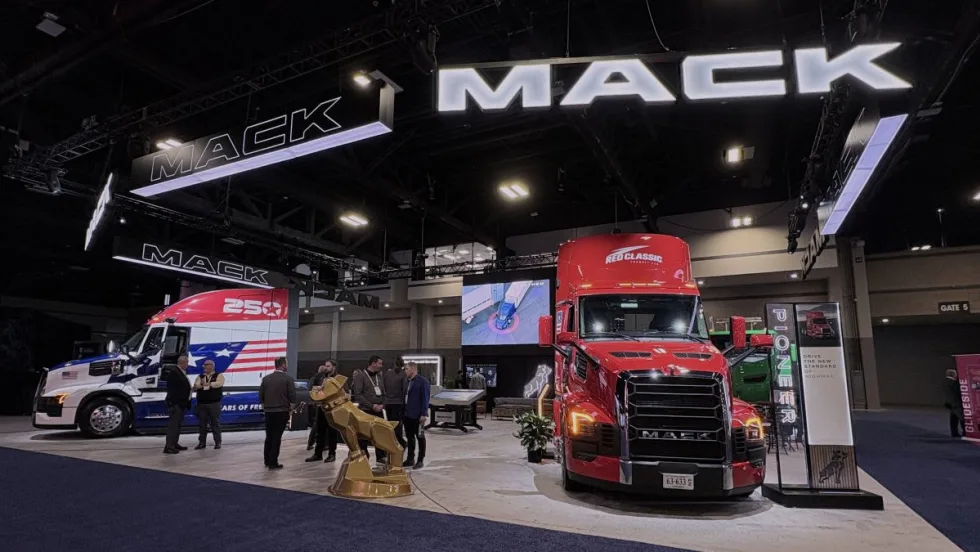
Trucks at ATA's 2026 MC&E in Charlotte, North Carolina [Photos]
From rigs decked out in patriotic America's 250 paint schemes to autonomous trucks and more, check out these photos from ATA's 2026 Management Conference & Exhibition.
Read More →
Help HDT Find Trucking’s Top Products
Have you come across a new product that could make a difference for trucking fleets? Nominate it for HDT’s 2027 Top 20 Products Awards by November 9.
Read More →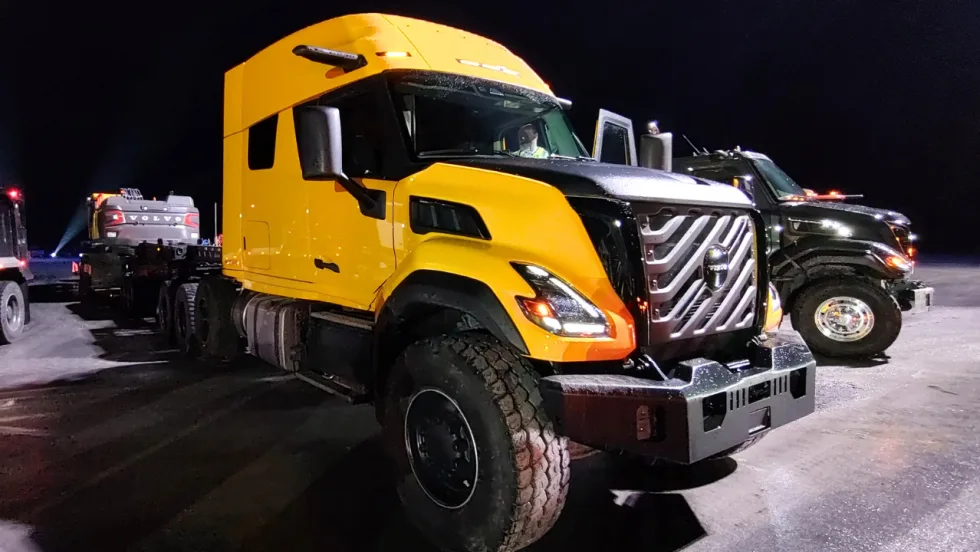
Volvo Unveils New VNX Heavy-Haul and Vocational Truck
Volvo Trucks has launched the VNX, a new vocational truck also available as a tractor in day cab and two sleeper configurations, with one heavy-haul model. The Volvo VNX is powered by Volvo's D13 platform, which delivers up to 540 horsepower and 1,950 pound-feet of torque and is EPA 2027-compliant.
Read More →
How GP Transco Cuts Trucking Fuel Costs, a Tenth of a Gallon at a Time
What’s another tenth of a mile per gallon worth? GP Transco shares how equipment upgrades and driver coaching turn small gains into meaningful fuel savings.
Read More →
Electric Yard Tractors Move Beyond Pilots
Operating-cost savings have overtaken sustainability goals as the leading reason surveyed fleets are adopting battery-electric terminal tractors, according to new NACFE research.
Read More →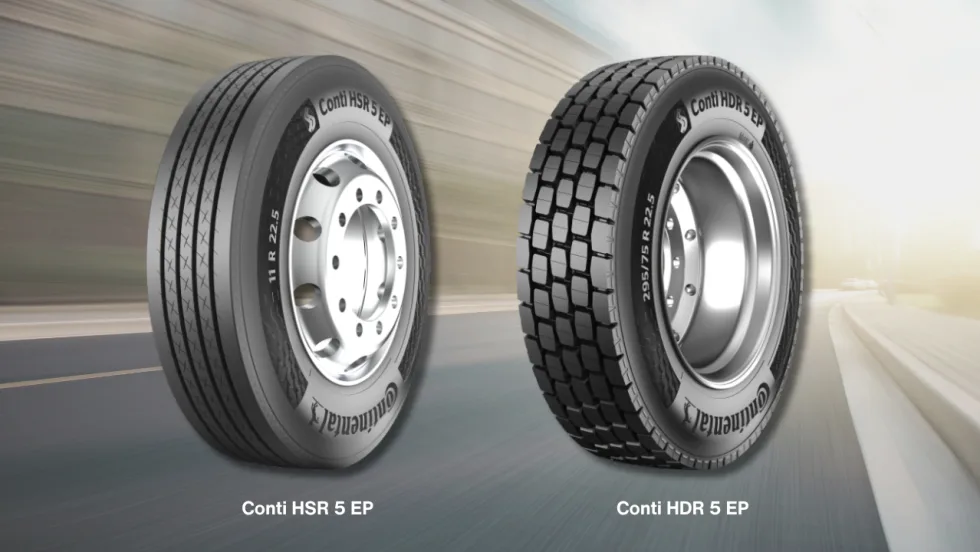
Continental Introduces New Regional Truck Tires
Continental says its new Generation 5 steer and drive tires for regional operations offer longer tread life, with estimated mileage gains of 22% and 19%, respectively.
Read More →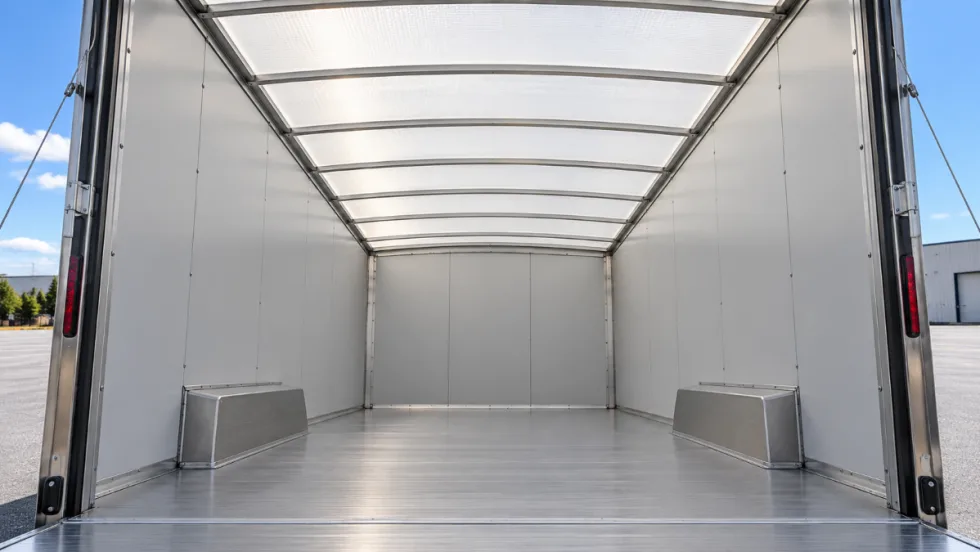
Tekmodo Introduces CargoBright Brand for Translucent Trailer Roofs
CargoBright is designed to diffuse daylight across the cargo area while performing as a working vehicle roof.
Read More →
Fleet Economics Shape Electric Truck Outlook
ACT Research expects costs, charging infrastructure, and technology improvements to drive zero-emission commercial vehicle adoption as federal regulations and incentives retreat.
Read More →