




Aurora Adds 1,000-Mile Driverless Run from Fort Worth to Phoenix
Aurora announced it has validated a 1,000-mile driverless lane beyond Hours of Service limits and plans to have more than 200 self-driving trucks on the road by the end of the year.

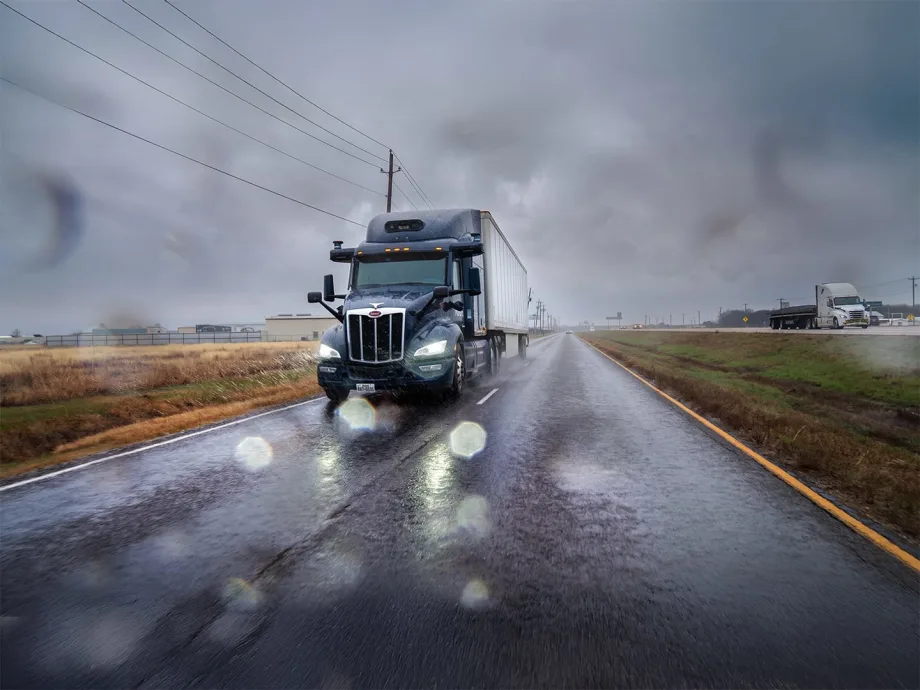
Without required rest breaks for human drivers, Aurora said it can now significantly reduce transit times while increasing equipment utilization.
Aurora Innovtion
Aurora Innovation said it has tripled its driverless trucking network to 10 routes as it prepares to expand autonomous freight operations across the southern United States.
The Pittsburgh-based company said its latest software release enables its Aurora Driver autonomous control system to operate on longer lanes, serve direct customer endpoints, and navigate a wider range of adverse weather conditions.
The company touted these as key steps as the company moves toward scaling commercial operations.
With the addition of Phoenix to its network, Aurora now operates driverless freight lanes between Dallas and Houston, Fort Worth and El Paso, El Paso and Phoenix, Fort Worth and Phoenix, and Dallas and Laredo.
“Expanding across the Sun Belt and introducing customer endpoints enables us to provide our customers with the capacity they need to move goods at a scale that wasn't possible before,” said Chris Urmson, co-founder and CEO of Aurora. “Being a carrier is a game of margins and if autonomy can work around the clock, it will be key to growing our customers' businesses.”
1,000-Mile Driverless Lane Beyond HOS Limits
Aurora also said it has validated driverless operations on the approximately 1,000-mile lane between Fort Worth, Texas, and Phoenix. This corridor exceeds current federal hours-of-service limitations for a single driver.
Without required rest breaks, the company said the Aurora Driver can significantly reduce transit times while increasing equipment utilization.
Hirschbach is among the early customers using the Fort Worth -- Phoenix lane, supporting freight that moves coast to coast.
Aurora said it has accumulated more than 250,000 driverless miles as of January 2026 with zero Aurora Driver-attributed collisions.
In addition to highway expansion, Aurora is working to extend autonomous operations directly to customer facilities.
Using what it calls “Verifiable AI,” the company said it can automate much of the route-mapping process after a single manual drive, allowing cloud-based algorithms to generate semantic map components with limited human input. The goal is to accelerate deployment to new routes and customer endpoints.
Aurora has begun supervised autonomous deliveries for several customers, including:
- Hirschbach Motor Lines between Dallas and Laredo for Driscoll’s
- Detmar Logistics between Midland and Capital Sand’s mining site in Monahans, Texas
- A Phoenix-based facility for one of the largest carriers in the U.S.
The latest software release also expands the Aurora Driver’s ability to operate in inclement weather, including rain, fog, and heavy winds.
Aurora said weather constraints limited its driverless operations in Texas roughly 40% of the time last year.
The new validation is intended to increase asset uptime and improve utilization across the varied climate conditions found throughout the Sun Belt.
Scaling Toward 200+ Driverless Trucks
Aurora plans to launch its next-generation hardware kit on the International LT Series platform without a ride observer in the second quarter of 2026.
The company expects to have more than 200 driverless trucks operating by the end of the year.
Aurora also said its commercial truck capacity is fully committed through the third quarter of 2026, signaling what it described as accelerating demand for autonomous freight capacity.
More Equipment
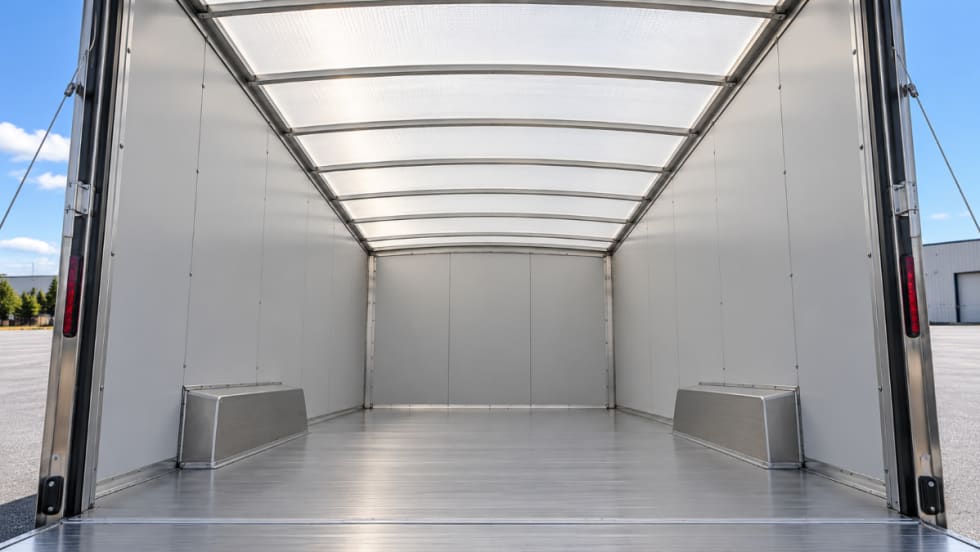
Tekmodo Introduces CargoBright Brand for Translucent Trailer Roofs
CargoBright is designed to diffuse daylight across the cargo area while performing as a working vehicle roof.
Read More →
Fleet Economics Shape Electric Truck Outlook
ACT Research expects costs, charging infrastructure, and technology improvements to drive zero-emission commercial vehicle adoption as federal regulations and incentives retreat.
Read More →
Kodiak Targets Dallas–Houston for Driverless Trucks
The company says its autonomous trucks are completing the I-45 run without a safety observer taking control. It plans to remove the observer by the end of 2026.
Read More →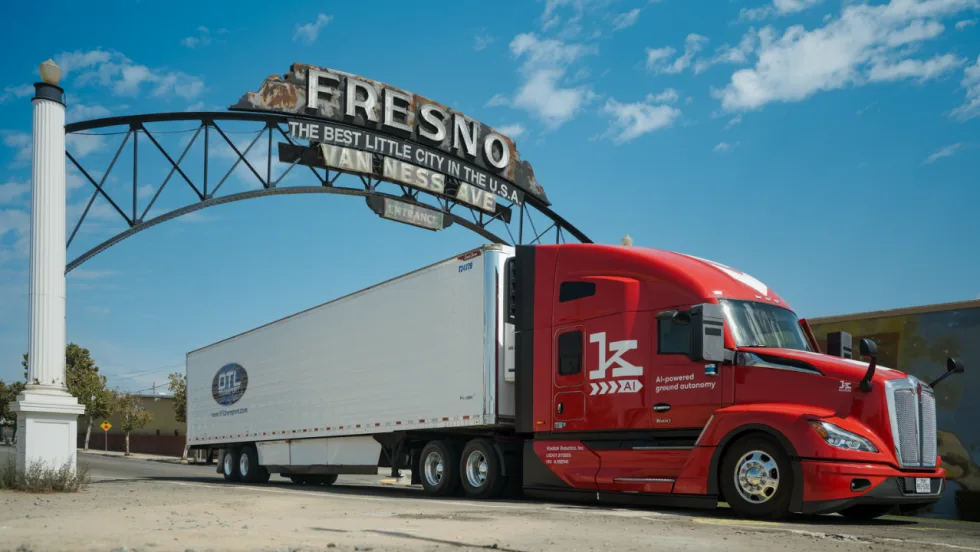
Kodiak Hauls Produce in California Autonomous Truck Pilot
Kodiak AI and DTL Transport have begun hauling produce between Fresno and Los Angeles under California’s new rules for testing heavy-duty autonomous trucks. A safety driver remains behind the wheel.
Read More →
Used-Truck Remarketing Math Is Changing
Used-truck value is no longer just a concern at trade-in. Decisions made throughout a truck’s first life can influence what it’s worth years later.
Read More →
How Volvo Updated Its D13 for EPA 2027 [Watch]
Volvo’s updated D13 promises lower emissions without sacrificing performance or fuel economy. Take a closer look at what changed inside the engine in this HDT Spotlight video.
Read More →
Michelin Tire Improves Efficiency and Durability for Regional Fleets
The Michelin X Multi Energy D2 is a regional haul drive tire engineered to help fleets improve fuel efficiency, durability and traction in demanding stop-and-go operations.
Read More →
ZF Expands Commercial Vehicle Push in North America
ZF is expanding its North American commercial-vehicle presence with new transmission applications, electrification, trailer technology and autonomous-driving systems.
Read More →
Tesla Wants a Self-Driving Semi. Are Cameras Enough?
Could Tesla’s camera-only autonomous driving technology work on an 80,000-pound Semi? In this commentary, HDT's Deborah Lockridge takes a look at Tesla, Cybercab, and how autonomous trucks see the road.
Read More →Kodiak: Driverless Long-Haul Truck Launch on Track for 2026
Kodiak AI says its driverless long-haul safety case is 93% complete and it remains on track to begin commercial operations by year-end 2026.
Read More →