




Over-the-Air Updates and the Modern Powertrain Explained
Over-the-air updates are moving beyond recalls, and expanding how fleets manage performance, compliance, and uptime.

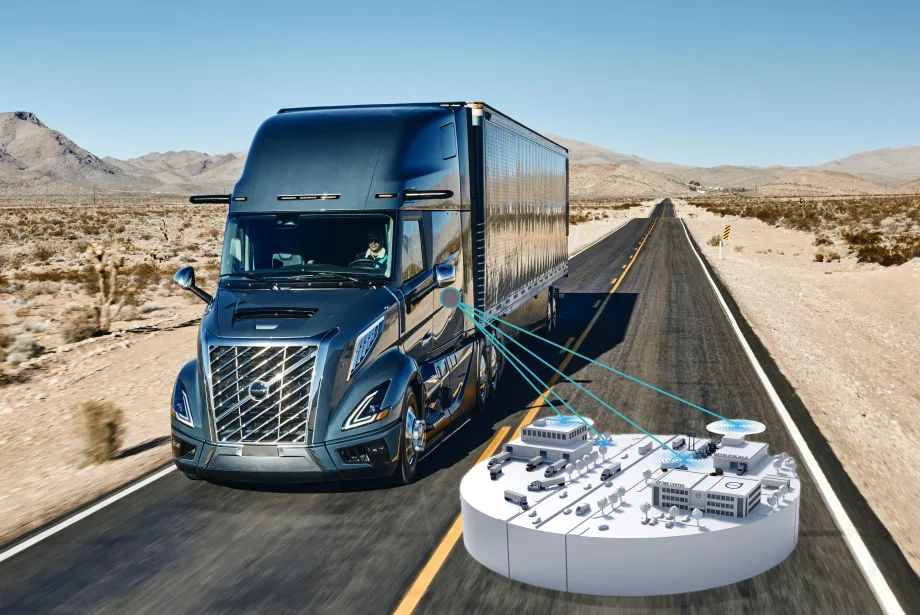
Today’s Class 8 truck increasingly resembles a rolling data platform.
Volvo Trucks North America
Telematics gave fleets visibility. Over-the-air updates give them action.
For more than a decade, connectivity has allowed fleets to monitor fault codes, fuel economy, idle time, and vehicle location in real time. But the next phase of that digital transformation is about intervention. That means remotely updating, refining, and optimizing how trucks and powertrains operate throughout their lifecycle.
Today’s Class 8 truck increasingly resembles a rolling data platform. Like a smartphone, it no longer remains static from the day it leaves the factory. Software can be patched, calibrated, and improved remotely.
For fleets, the result is less downtime and fewer service visits. For manufacturers and suppliers, it opens the door to continuous product improvement long after a truck leaves the assembly line.
"Over-the-air technology has really matured over the last five to seven years,” says Kerry-Leigh Goodier, director of digital market strategy and management at Cummins.
“Today, fleets can remotely update engine control module software and adjust select engine parameters without bringing trucks into the shop. That’s a significant shift from where we were even a decade ago.”
What once required a scheduled service event can now be delivered proactively via connected-vehicle platforms.
Uptime Tool
The immediate value of OTA technology is more uptime for truck owners.
Dan Chase, product manager of remote updates for Daimler Truck North America, echoes Goodier's statement about the recent advancements.
DTNA’s firmware-over-the-air capabilities allow fleets to address field service campaigns and emissions recalls without scheduling a workshop visit, he says. Through the Detroit Connect portal, fleets can see which vehicles qualify for updates and initiate the process remotely.
Once the driver receives an in-cab prompt and the vehicle's preconditions are met — typically when the truck is parked — the software is installed on the targeted controller.
But the capabilities of this technology have evolved beyond recall campaign management into broader powertrain software maintenance.
“Today, OTA updates allow fleets to deploy engine and transmission software, apply calibration refinements, address known field issues, and maintain regulatory compliance without requiring a dealership visit,” says Ashish Sadhu, director of truck services for Mack. “OTA has become an uptime enabler rather than just a convenience feature.”
Volvo Trucks North America takes a similar view.
“Keeping your truck up to date is the main defender against unplanned downtime,” says Maddie Sullivan, product marketing manager for VTNA.
Across Volvo’s lineup, roughly three dozen parameters and software kits can be updated remotely, she says, and many fleets receive automatic updates several times a year.
Those software packages often contain efficiency improvements, bug fixes, and operational refinements that help trucks run more consistently.
At International, OTA capabilities also extend to adjustable performance parameters.
“Today, over-the-air capabilities include remote software calibration updates and programmable parameters like top speed and cruise control limiters,” says David Bullen, senior technology program manager at International. “These capabilities allow fleets to strike an optimal balance between performance, efficiency, and safety.”
Cummins sees OTA technology playing an increasingly central role in how powertrains are managed over time.
“Over-the-air updates are no longer just a convenience feature,” Goodier explains. “They are becoming foundational to how modern powertrains are supported throughout their life.”
How OTA Updates Work
Although the user experience may seem simple, OTA updates rely on a sophisticated digital infrastructure.
At a high level, updates originate in secure backend systems, where software packages are validated, digitally signed, and assigned to eligible vehicles.
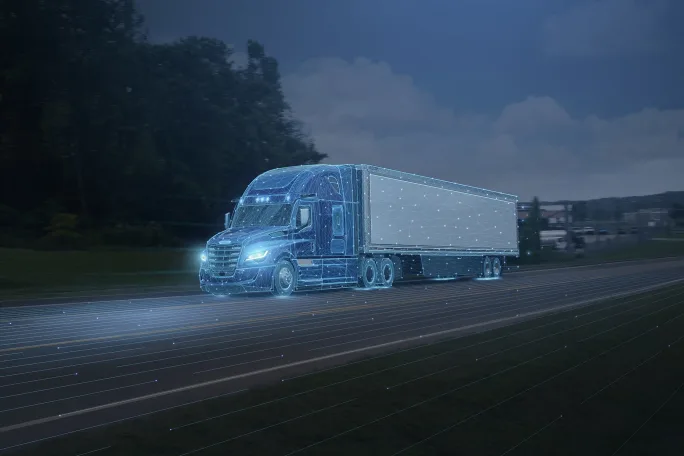
Like a smartphone, a new truck no longer remains static from the day it leaves the factory. That's because its software can be patched, calibrated, and improved remotely.
Daimler Truck North America
“When a software update is released, it’s transmitted from the cloud through a secure encrypted channel to the vehicle’s connectivity module,” Goodier explains. That could be via a cellular or satellite connection.
“The module stages the calibration, and then the engine control module installs it once safety conditions are met.”
Those safety checks typically include ensuring the truck is stationary, verifying battery voltage, and validating authentication protocols. Behind the scenes, multiple safeguards confirm file integrity, compatibility with the vehicle configuration, and system readiness.
“From the fleet’s perspective, it feels simple,” Goodier says. “But behind the scenes, there’s a lot of cybersecurity, validation logic, and engineering rigor making sure the update is delivered safely and correctly.”
International describes a similar process involving multiple verification steps between the telematics module and the vehicle’s electronic control units.
“The telematics control unit essentially acts as a gatekeeper,” Bullen says. “It authenticates with the OEM, downloads the update, verifies signatures, and safely delivers it to the appropriate controller.”
At Mack, the system includes additional safeguards such as digital signatures, checksum validation, and rollback capability to make sure a truck can recover safely if an update fails.
What Can Be Updated?
OTA capabilities have expanded significantly in recent years, particularly in the powertrain domain, reaching across multiple functions.
“OTA powertrain programming means remotely updating software that runs the engine, transmission, motor inverters, battery management, and torque control systems,” Bullen says.
Cummins supports remote updates to engine control module software and selected parameters such as cruise control settings, idle shutdown, and road-speed governors.
“At a practical level, fleets can deploy updates across a single vehicle or an entire fleet,” Goodier explains. “That allows product improvements and calibration changes to be rolled out much faster than traditional service cycles.”
Connectivity also enables remote diagnostics, predictive maintenance insights, and early fault detection.
“So, while people often focus on software flashing, the broader ecosystem includes fault insights, maintenance monitoring, and proactive service recommendations,” Goodier adds.
At Mack, OTA-capable systems include engine control modules, transmission controllers, vehicle electronic control units, and exhaust aftertreatment systems.
As vehicle architectures evolve, truck and engine makers expect OTA capability to expand into other systems, such as advanced driver assistance technologies, human-machine interfaces, and energy management controls.
The Architecture Problem
The pace of OTA expansion depends heavily on how truck electrical architectures evolve, experts say.
Traditional trucks rely heavily on controller area network (CAN) systems that connect dozens of electronic control units. While reliable, CAN networks have relatively limited bandwidth.
“Traditional CAN architecture has inherent scalability limitations,” Bullen says. “That effectively limits which modules can be updated via OTA.”
Battery management considerations also play a role, since vehicles must have enough power to complete programming and still start afterward.
To address this challenge, manufacturers are gradually introducing hybrid architectures that combine CAN networks with higher-bandwidth Ethernet backbones.

Smartphones are becoming an increasingly vital driver-vehicle interface tool
Volvo Trucks North America
Ethernet-connected modules can be updated faster and sometimes in parallel rather than sequentially. Importantly, the modules on the Ethernet backbone are “smarter” and “faster,” and therefore more capable, Bullen adds, which will mean fewer ECUs, more powerful computing nodes, and easier OTA coordination across the entire network.
Mack’s Sadhu describes a broader shift toward centralized computing platforms and domain-based electronic architectures often referred to as software-defined vehicles.
In those systems, software becomes more modular and easier to update across multiple vehicle domains. As a result, vehicles will increasingly improve over their lifecycle rather than remain static from day one, Sadhu says.
Rolling Updates?
Despite these technological advances, most OTA updates still occur when trucks are parked.
“For safety reasons, we don’t want updates happening while the truck is operating,” Volvo’s Sullivan explains.
Also, many programming events require control units to reboot or temporarily suspend communication with other vehicle systems. Running those processes while a vehicle is moving could disrupt safety-critical functions.
“Core calibration installs will continue to occur when the vehicle is stationary,” says Cummins' Goodier. “That protects the driver, protects the asset, and ensures the update process is stable.”
However, portions of the update process already occur while trucks are operating. Files can be downloaded and authenticated in the background during a controlled key-off window before installation begins.
Future architectures may allow certain non-critical systems to update during operation, but full powertrain calibration flashes will likely continue to require a parked vehicle.
OTA Today
Beyond firmware updates, fleets increasingly rely on over-the-air updates to manage programmable vehicle parameters. Settings such as speed limiters, cruise control behavior, and idle shutdown timers can be adjusted remotely.
Parameter updates are small data packages that download quickly and install almost instantly.
In the near-term, on-the-move software updates are unlikely due to safety and operational concerns, OEMs say.
International Trucks
“Download time is measured in minutes and installation in seconds,” Bullen says.
That lets fleets experiment with different operating profiles across their vehicles and deploy new settings across an entire fleet without scheduling service visits. Bullen foresees an expansion of these OTA programmable parameters.
Cummins sees growing interest in automated update management.
“We’re moving toward more intelligent orchestration of updates,” Goodier says.
Fleets increasingly want the ability to schedule updates based on time or location. They also want to integrate approval workflows into fleet management systems and automate the update process once confidence in the system is established.
“Fleets don’t want surprises,” Goodier says. “They want predictability.”
Performance on Demand?
As OTA capabilities expand, fleets are beginning to ask whether trucks could someday adjust powertrain performance dynamically.
For example, could a truck operating in mountainous terrain automatically switch to higher horsepower settings and then revert to a fuel-efficient configuration on flat highways?
Volvo already deploys technologies such as dynamic torque management and predictive cruise control that adapt performance to terrain and load. But those adjustments occur within certified calibration limits.
International points to regulatory constraints as a key factor.
“OTA calibrations and parameter updates are limited to the ratings of the vehicle as built,” Bullen says.
OTA updates today allow fleets to deploy engine and transmission software, apply calibration refinements, address known field issues, and maintain regulatory compliance without requiring a dealership visit
Mack Trucks
Goodier adds that powertrain calibrations must comply with strict emissions certification requirements. “Any changes to rated horsepower or emissions-critical parameters require extensive validation and regulatory documentation.”
That means the industry is unlikely to see trucks automatically switching horsepower ratings while driving through different terrain anytime soon.
What is more realistic is the gradual use of operational data to optimize engine configurations within approved limits.
“The long-term vision is a powertrain that becomes smarter over time,” Goodier explains. “Not just through mechanical evolution, but through connected intelligence.”
Continuous Improvement
Even with those regulatory boundaries, OTA technology is evolving rapidly, and artificial intelligence comes into play.
Future applications may include AI-driven update deployment strategies. Also on the table are tighter integration with predictive maintenance systems and deeper connectivity between tractors, trailers, and vocational equipment.
International envisions digital twin simulations that validate OTA updates against a specific vehicle’s duty cycle before deployment. "OTA updates will eventually be virtually tested against your exact vehicle, with the real load/duty cycle/wear to components with sensors being included in the evaluation," Bullen explains.
Ultimately, OTA may become less about delivering software fixes and more about continuously refining how trucks perform in the real world.
For fleets, that represents a fundamental shift. The truck that leaves the factory is no longer the final version of that vehicle.
Through secure, connected updates, it can continue to improve throughout its service life, one carefully validated software release at a time.
More Maintenance

Color Match Smarter: Tools That Restore & Perform
For fleet managers and collision repair professionals keeping heavy-duty trucks on the road, getting the color right the first time isn't just about appearance — it's about efficiency, turnaround time, and bottom-line results. Discover how today's digital color tools are transforming the repair process from guesswork to precision.
Read More →
Wrong Repair Prompts Recall of Freightliner, Western Star 4x2 Trucks
DTNA is recalling more than 2,400 trucks that received an incompatible software fix instead of the hardware repair required to address brake valve corrosion.
Read More →
Truck Drivers Need More Than Another Alert
Fleets have more visibility into truck health, safety events, and driver activity than ever. The next challenge is turning all that information into useful guidance for the person who has to decide what to do next.
Read More →
The Maintenance Checks Trucking Fleets Should Prioritize Before Fall Freight Picks Up
Making it through August isn’t the same as being ready for the next several months of operation. Find out what systems may have suffered from summer heat and need to be checked out before fall.
Read More →
What Three Fleets Are Doing Differently When Buying Truck Parts in 2026
With freight improving but costs still climbing, fleet maintenance executives explain how they're balancing price, quality, and supplier relationships.
Read More →
Paccar Recalls 2027 Trucks Built This Summer for Possible Electrical Problem
The nearly 6,000 Kenworth and Peterbilt trucks in the recall could potentially lose engine power, among other things.
Read More →
Could New Engine Oils Mean Longer Drain Intervals?
New CL-4 and FB-4 engine oils are coming in 2027. Foodliner wants to know whether they could support longer oil drains, but it won’t change its maintenance schedule without data from its own trucks.
Read More →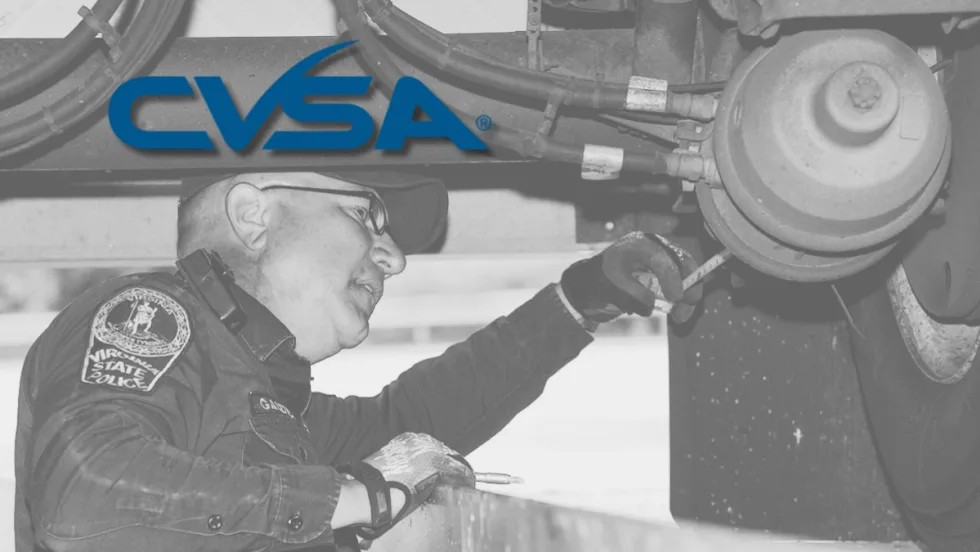
Brake Safety Week to Focus on Drums and Rotors
Commercial vehicle inspectors are focusing on truck brakes during CVSA's Brake Safety Week, August 23-29.
Read More →
Possible Battery-Cable Fires Prompt Recall of 15,000+ International MV and HV Trucks
On the recalled vehicles, manufacturing variations can cause the battery interconnect cable to contact the auxiliary stud and hold down the bracket.
Read More →
Rush, MCT Team Up to Grow Refrigeration Service Network
The joint venture will operate MCT's network of Carrier Transicold dealerships and mobile service locations, with the companies promising greater service capacity and uptime for refrigerated fleets.
Read More →