





Related: Commentary: Good News Coming?
Optimizing Engines To Improve Fuel Efficiency
The engine is an often underused fuel-saving device. Optimizing the engine parameters of new trucks could improve fuel efficiency by 5 to 8%.
March 19, 2015
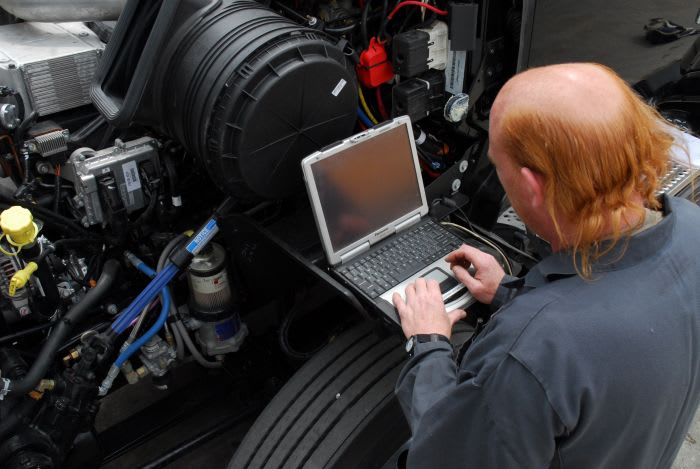
Technicians can set various engine parameters with a laptop or a specialized reader, often dedicated to a particular engine maker. Generic tools are available as well. Photo: Jim Park
4 min to read

Technicians can set various engine parameters with a laptop or a specialized reader, often dedicated to a particular engine maker. Generic tools are available as well. Photo: Jim Park
What’s the most underutilized fuel-saving device on the truck? Strangely enough, it’s the engine itself.
There are hundreds of engine operating parameters, from road speed limiters to idle-time limiters and a lot more in between, that fleets can and should be programming themselves.
The fifth and latest Confidence Report from the North American Council for Freight Efficiency finds that most fleets don’t take advantage of anywhere near all the engine optimization that is available through programmable ECM settings.
According to the Electronic Engine Parameters report, released in February at the annual meeting of the American Trucking Associations’ Technology & Maintenance Council, multiple barriers have stymied industry adoption of such technologies. The report cites both a lack of data about the true performance gains offered by these technologies and a lack of confidence in the data that publicly exists today.
NACFE says a fleet that truly optimizes the parameters of its new trucks by tailoring them to its operations could obtain fuel efficiency improvements of 5-8% compared to leaving those trucks set to the factory default settings. By changing just a handful of key setting, savings of 3-5% are easily obtainable. In some extreme cases, fleets have reported mpg gains for certain individual trucks of as great as 20%.
Best of all, tweaking the settings to suit your operation costs nothing, it weighs nothing, requires no maintenance and only has to be done once.
“It’s pretty well money in the bank,” says Mike Roeth, executive director of NACFE.
In developing this confidence report, Roeth says NACFE first consulted with the engine manufacturers to gain a better understanding of all the customer-programmable parameters. Then the team fanned out to get the fleets’ take on which of the parameters they were aware of and which they actually set themselves.
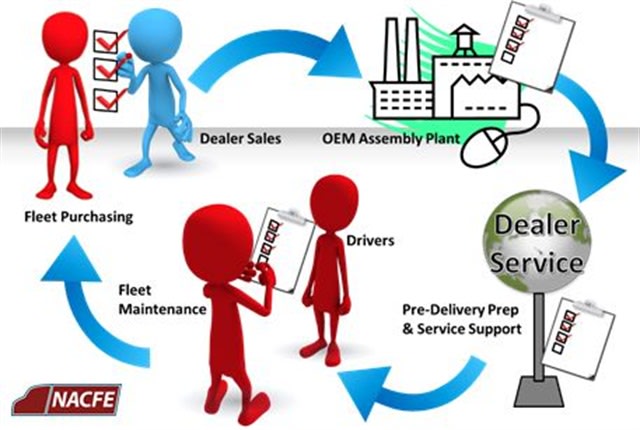
NACFE’s Confidence Matrix indicates a high confidence that programmable parameters, if optimized, greatly enhance fuel economy with a short payback period.
NACFE found three tiers of acceptance among fleets: those that left the factory default settings unchanged; those that recalibrated a few key settings such as top road speed and idle time limiters, pedal/cruise power settings etc.; and fleets that dug right into the ECM to optimize their engines.
“Unfortunately, we found that OEs and dealers do not actively promote customizing the settings,” Roeth says. “The process itself can be daunting given the hundreds of settings and the way many of them are inter-related. It can take lot of effort to understand, but dealer should be able to help you through it.”
NACFE identified eight barriers to changing the settings that arise at three specific points during the optimization process, among them:
Understanding Parameters
The large number of parameters available requires extra effort to fully understand.
Interrelations between multiple parameters and/or between parameters and other systems on the truck.
Selecting and Ordering
Parameters:
Each engine OEM has its own terminology and brand names for its parameters, and even some slight differences in how they function. Even within a single OEM there will be differences from one engine model to the next.
The majority of fleets have multiple years and models of engines in active operation, sometimes from multiple OEMs.
Maintaining Parameters
Variation in service tools and lack of telematics: Changes in duty cycles or even insights from new truck performance data may indicate that a certain parameter should be altered on a group of trucks. But right now changing parameters requires someone physically connecting with the truck. This can be a time-consuming task for a large fleet. Telematics technology would allow for parameters to be updated remotely.
Negative reactions from drivers: Fleets must communicate the benefits of parameters to their drivers, as often a driver’s initial reaction to anything that places restrictions on vehicle operation is quite negative.
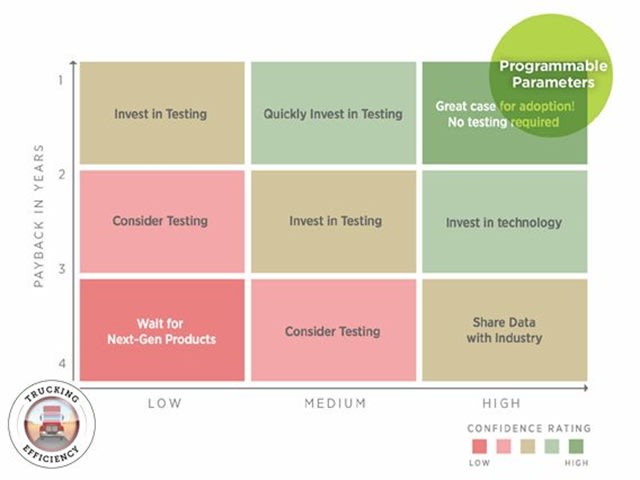
More fleets might be willing to optimize various engine parameters if they knew what they were doing or had better support from OEs and dealers. Fear of driver criticism might be keeping some fleets from changing certain performance parameters.
The full report, available on the www.truckingefficiency.org website, offers a suite of best practices to help fleets, large and small, get the most from the fuel-saving potential of their engine’s electronic controls.
These include spending time with OE reps and dealers to discuss parameter settings, building parameter templates that cover a group of similarly specified trucks, keeping detailed records of the setting changes and conducting checks to verify the setting are correct.
“It was a bit surprising to hear from fleets that believed the parameters they had access to change were mostly safety or compliance related,” says Roeth. “There are so many more ways to set up an engine so that it can deliver best performance with the least possible fuel consumption. We saw documented proof that savings of up to 8% are achievable and at really no additional cost. I hope more fleets take a serious look at what they can do on their own, or maybe with a little help from their dealers. It’s worth asking those questions.”
The full list of Confidence Reports can be found at www.truckingefficiency.org
Subscribe to Our Newsletter
More Fuel Smarts

Wex Adds Cardless Fuel Payments for Over-the-Road Customers
A new fuel card feature for Wex customers offers convenience and security.
Read More →
New California Law Could Shed Light on Electric Truck Prices
Why do battery-electric Class 8 trucks remain so expensive? A California bill signed by Gov. Gavin Newsom would give fleets and state agencies more visibility into what manufacturers charge.
Read More →
How Volvo Updated Its D13 for EPA 2027 [Watch]
Volvo’s updated D13 promises lower emissions without sacrificing performance or fuel economy. Take a closer look at what changed inside the engine in this HDT Spotlight video.
Read More →

Diesel Price Spike Shortens Payback for Natural Gas Trucks, Report Says
Energy Vision estimates fleets could recover the higher purchase price of an RNG-fueled Class 8 tractor in 1.3 to 2.8 years under current fuel-price scenarios.
Read More →
Calstart Becomes Catalyst Mobility, Reflecting Broader Focus
Calstart is now Catalyst Mobility, reflecting the nonprofit’s growing national role in clean transportation, including zero-emission trucks, infrastructure and incentive programs.
Read More →
Record Diesel Prices Squeeze Trucking Fleets
Average U.S. diesel prices have climbed to nearly $6 a gallon, surpassing the 2022 record as tight refinery capacity and Middle East disruptions keep fuel costs elevated.
Read More →
Sponsored•September 9, 2026
How Fuel Delivery Shapes Engine Performance
Fuel delivery depends on more than what happens at the injector. For fleet, maintenance and technical professionals, looking at the full path from pump to injector can provide useful context for understanding engine performance.
Read More →
East Coast Port Launches $45M Electric Truck Push
The Port Authority of New York and New Jersey announced millions in incentives for zero-emission drayage trucks, yard tractors, and new charging hubs near the port.
Read More →
Detroit Opens Orders for EPA 2027 Engines
Detroit isn’t starting from scratch to meet EPA 2027 diesel emissions standards. Its Gen 6 DD13 and DD15 engines keep much of today’s platform while updating the fuel and aftertreatment systems.
Read More →
Zero-Emission Truck Corridor Planned for West Coast
California, Oregon, Washington, British Columbia and Baja California are coordinating plans for truck charging and hydrogen fueling from Canada to Mexico.
Read More →