




Opening New Doors: Harry Muhlschlegel, New Century Transportation
This former owner-operator, a 2006 HDT Truck Fleet Innovator, is constantly re-inventing typical trucking practices.

Harry Muhlschlegel isn't content to do things the way everyone else does. In the years following deregulation, when traditional less-than-truckload companies were being pounded by entrepreneurial truckload pioneers, Harry Muhlschlegel re-invented the LTL model. He combined elements of the truckload and less-than-truckload models in a regional company he and his wife named after their children: New Jersey-based Jevic.
Jevic was bought by Yellow in 1999. Not content to rest on his laurels, Muhlschlegel started another trucking company. Initially intending it to be a regional truckload carrier, Muhlschlegel was soon at it again, adding non-traditional LTL service to the mix at New Century Transportation.
Before he started Jevic, Muhlschlegel was an owner-operator for 11 years, operating in the regulated environment. "When deregulation came along, I applied for authority, and I started Jevic," he says. "It wasn't that easy, but it sounds easy on the phone."
At Jevic, he developed "breakbulk-free" LTL service. Trucks would pick up the LTL freight and take it to one of Jevic's 10 terminals for consolidation. From there, the freight would be loaded on a truck and delivered throughout the country.
"So it was not like your typical LTL carrier," he says. "It streamlines the handling process, and you deliver the freight faster. You're eliminating breakbulks. On one end you have more costs – our terminal sizes were typically very big, so you had a lot of overhead. The other side is, you didn't have as many terminals and didn't handle it as much, so you delivered it faster and eliminated the OS&D factor. (Over, short and damage claims.) You didn't get a chance to lose it or damage it, because you didn't handle it that much."
Retiring after he sold Jevic to Yellow, Muhlschlegel started looking around for a trucking company to buy. Not finding any to his liking, he started New Century Transportation in 2000.
"We wanted to be a regional truckload carrier," he says. "Because of customer requests, we started an LTL operation, but we only use one large terminal. We pick up LTLs in the Northeast, mainly between Baltimore and Boston, consolidate them here, and send them out throughout the country. Then we return with truckloads." New Century calls the system "Load-to-Deliver."
Truckload backhauls turned a negative into a positive, Muhlschlegel says. "Most truckload carriers don't want to go to the Northeast," he says. "Drivers who aren't familiar with the area don't want to come here, and return loads out of the Northeast are poor."
Then he took it one step further and added temperature-controlled service, including hazardous materials that must be kept at a certain temperature. At a time when many carriers are backing out of hazmat because of new cumbersome driver security requirements, Muhlschlegel says New Century is successful serving this niche.
"In order to succeed in this market, you either have to be very big, or a niche carrier that's very good at what you do – and take it to some size. Many people can't get past 10 or 20 trucks" serving a niche like this, he says, admitting it's not easy to manage.
New Century recently hired a division president to oversee the truckload portion of the operations, someone with both truckload and LTL experience. "After the first week here he said, 'I understand LTL and I understand truckload, but I don't have a clue how you guys do what you do,' " Muhlschlegel says.
"It's very difficult to run a hybrid operation this size," he says. "It takes a good management team, and I've been fortunate to have a good management team all my life – and the drivers and mechanics and dockworkers I have. I have a good team. People don't realize, this is a people business."
In fact, Muhlschlegel is known for how well he treats his drivers.
"I've always managed to pay my drivers way more than the average, plus personal days, holiday, four weeks of vacation. Our pay scale is north of 50 cents per mile."
However, he notes, "Money's not always the determining factor as much as enjoying what you do. [At big companies], it's literally impossible to make everyone feel at home."
Many Jevic drivers applied to work at New Century. Muhlschlegel says there are about 75 former Jevic drivers working for him now, out of about 600 total. "When I started New Century, one driver said he wanted to come work for me, and I told him, 'I don't know how I'm even going to pay you,'" Muhlschlegel recalls. The driver took that risk. "That's the kind of people that make companies successful, no bones about it."
Muhlschlegel also has made some innovative choices when it comes to equipment. Wide-base tires instead of duals have offered weight savings and an uptick in fuel economy. Automatic chassis lubrication systems have tripled trailer brake life. He has worked closely with Eaton and Caterpillar to develop a fuel-efficient powertrain combination using driver-friendly automatic transmissions. Muhlschlegel recently committed to putting auxiliary power units on all New Century's sleeper trucks, which he estimates will pay for themselves in two years or less in fuel savings and reduced engine wear.
While it may be a challenge running a niche company of this size, it's not stopping Muhlschlegel from growing. In 2003, he bought Rude Carrier Corp., a 40-truck West Virginia truckload carrier. In two years, he has seen it grow into a nice small fleet of 80 units with less than five percent turnover.
"We're excited about growth and actually looking for an acquisition going forward," he says, "but in this industry, you've got to kiss a thousand frogs to find a prince."
More Fleet Management

Geotab Links Fleet Card to Vehicle Data
The new card combines fuel discounts with telematics-based purchase controls. Geotab’s analysis also points to potential savings from choosing lower-priced fuel stops.
Read More →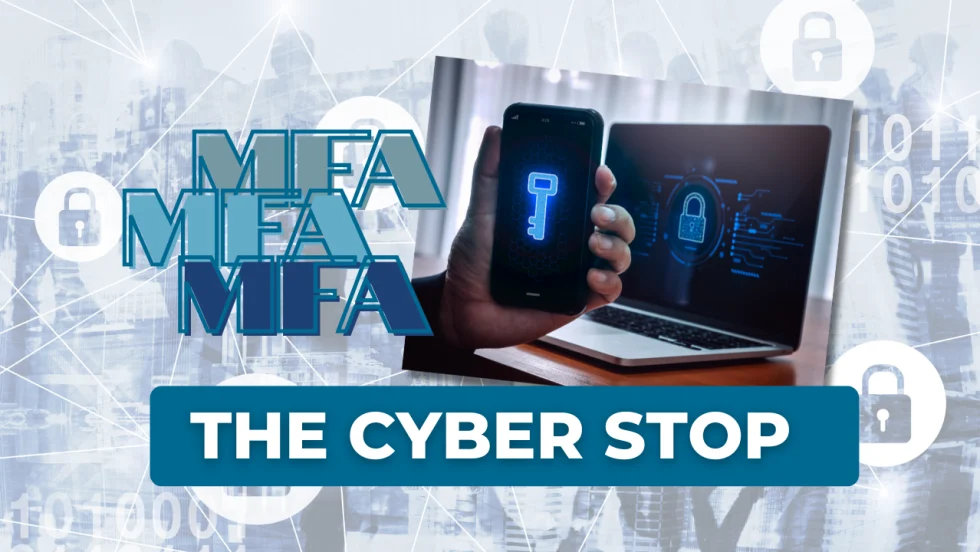
How MFA Helps Protect Trucking Fleets
Multi-factor authentication adds protection when passwords are stolen. Here’s how it works and where fleets should start.
Read More →
How Better Freight Data Helps Trucking Teams Get Ahead of Disruption
Trucking and logistics teams have plenty of data. The problem is getting the right information in front of the right people soon enough to act. Better-connected data can help teams spot trouble earlier and make smarter decisions before small problems become big ones.
Read More →

Trimble: Taking Artificial Intelligence in Trucking Beyond Faster Tasks
At Insight 2026, Trimble executives argued that fleets may need to redesign workflows to get more from AI as it introduced new products and enhancements. AI’s value will depend on how fleets combine automation with their people's knowledge.
Read More →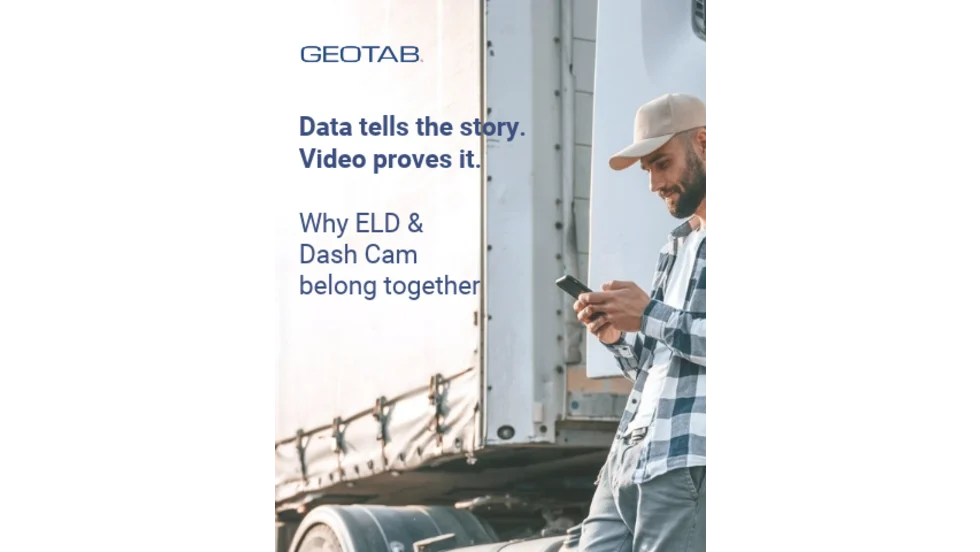
Build a bulletproof fleet: Uniting ELDs and dash cams for total compliance
An ELD can prove compliance, but it cannot always prove what happened on the road. Discover how uniting accurate ELD data with AI-powered dash cam video can help your fleet strengthen compliance, defend against liability, protect drivers and reduce operational costs.
Read More →
Nominations Open for HDT Emerging Leaders
Heavy Duty Trucking is looking for accomplished trucking fleet professionals under 40 who are making an impact and helping lead the industry forward.
Read More →
Why Private Fleets Are Taking More Freight
Private fleets are putting their own trucks on demanding customers and high-cost lanes as companies seek greater control over service, costs, and capacity.
Read More →
Color Match Smarter: Tools That Restore & Perform
For fleet managers and collision repair professionals keeping heavy-duty trucks on the road, getting the color right the first time isn't just about appearance — it's about efficiency, turnaround time, and bottom-line results. Discover how today's digital color tools are transforming the repair process from guesswork to precision.
Read More →
FMCSA Pauses Biennial-Update Enforcement Amid Motus Transition
Carriers whose updates were due on or after June 1 have more time, while FMCSA works to stabilize its new registration system and warns of phishing sites impersonating its new carrier registration system, Motus.
Read More →
2026 Blueprint for Countering Smarter Supply Chain Theft
Cargo theft is no longer just the cost of doing business. It's a multi-billion-dollar criminal enterprise exploiting vulnerabilities across your fleet, drivers, and supply chain.
Read More →