




Lease vs. Own: Re-thinking Truck Ownership As Technology Changes
Several years ago, many fleets thought owning their own trucks made the most financial sense
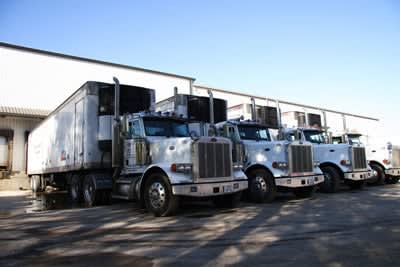
By leasing trucks, Mims Meat could update its fleet immediately without straining the corporate credit line. Dan Mims says buying 16 trucks would have been tough financially.
Several years ago, many fleets thought owning their own trucks made the most financial sense.
But numerous changes, including the increasing complexity of both heavy- and medium-duty trucks and tractors; stricter government regulations; and the need for financial flexibility have brought full-service leasing to the forefront.
Today, the profile of the leasing customer is evolving beyond manufacturers and distributors, says Bob Southern, president of Paccar Leasing Company (PacLease). "In the past, customers were typically small- to medium-sized private fleets," he says. "But today, all types of fleets are discovering the benefits of full-service leasing.
"More and more companies are considering leasing as a way to allow them to focus on their core competencies, not focusing on trucks and maintenance," says Southern. "Operating a fleet of leased trucks helps companies get their product to market in a timely, reliable and cost-effective way, while leaving the maintenance of the vehicles to trusted experts."
More Complex Trucks to Maintain
The trend to full-service leasing is expected to accelerate even faster in the next few years as the complexity of trucks continues to evolve. With hybrid diesel-electric trucks now more widely available and new models with 2010 engines about to enter the market, new technology is going to make maintenance and technician training an even higher priority. "With those influencers, more and more fleets will enter into a full-service leasing agreement," predicts Southern. "If you're running fewer than 50 trucks, it's going to be increasingly difficult to justify your own shop.
"Bottom line, with new technology in trucks, full-service leasing allows you to off-load maintenance to a trusted partner. It's the leasing company's job to make sure equipment is well maintained and running properly," Southern says. "You insulate yourself from unpredictable or erratic maintenance costs. That burden is shouldered by the leasing company."
Preservation of Capital
Given the turbulence in the capital markets and a shifting economy many firms have determined that they must preserve capital to fund other parts of their business that offer a better return, as opposed to sinking capital into rolling stock, he says. There are countless other companies taking a strong cash position so they can take advantage of acquisition and expansion opportunities in the market. "Bottom line, using a leasing company to fund trucks makes good financial sense when you are trying to preserve capital for other projects," Southern adds.
Avoiding Downtime
In the world of just-in-time deliveries, few fleets can afford to have a truck sitting on the side of the road for an extended period of time, particularly if it is loaded. Leasing helps eliminate this risk by increasing uptime. Many leasing contracts have a substitute vehicle feature that provides a replacement vehicle when it's needed.
"At PacLease, for example, if there is a down vehicle, we determine the nature of the problem and prescribe the best course of action to maximize uptime," says Southern. "Typically, the quickest solution is having the truck repaired at the roadside or taken to one of our more than 50,000 service points.
"When it comes down to it, leasing is not only about providing a truck -- it's about providing an efficient method for deliveries. Our customers are looking for a solution that assures an exceptional level of transportation service. PacLease focuses on preventive maintenance to avoid unplanned downtime and leases only the highest-quality, award-winning Kenworth and Peterbilt trucks."
Coping with Regulations
The work of technicians is more critical today than ever, but just as important is their understanding and training in dealing with government-mandated environmental regulations. And with every passing year, these regulations continue to grow in size, scope and complexity.
Today's truck fleet manager is faced with numerous compliance activities that can easily command several hours a day. "This is time that could be better used elsewhere," says Southern. "The outsourcing of maintenance, fuel tax reporting and other activities frees a manager's time for his or her primary business.
"And, don't forget the time involved in working with regulators," Southern says. "Are you sure that you're up to date on the criteria for each of the states in which you operate? Are you confident that the practices in your shop are in compliance with federal, state and local regulations? More and more companies are concluding that shifting these responsibilities to a third party may be a sound business decision for their company."
Avoiding 'Stranded Assets'
One last thing to consider: the crystal ball. Owning trucks is a bit like timing the stock market. Hit it right when it comes time to sell, and you'll reap high residual values. If your timing is wrong, the value of your equipment may be too low to make a much-needed move to new trucks.
"Leasing is an ideal way to remove the uncertainty of the used truck market from the equation," Southern says. "Plus, a leased truck has a greater chance of holding its value because of its maintenance record."
Given these changing times, you must evaluate all aspects of your business including transportation. A lease/ownership analysis helps determine the best fleet strategy for your specific needs. "From our perspective, there has never been a better time to lease vehicles," concludes Southern. "We take the risk out of operating a fleet of trucks and that's a comforting notion for our customers."
From a September 2009 PacLease White Paper.
More Fleet Management

Why Private Fleets Are Taking More Freight
Private fleets are putting their own trucks on demanding customers and high-cost lanes as companies seek greater control over service, costs, and capacity.
Read More →
Color Match Smarter: Tools That Restore & Perform
For fleet managers and collision repair professionals keeping heavy-duty trucks on the road, getting the color right the first time isn't just about appearance — it's about efficiency, turnaround time, and bottom-line results. Discover how today's digital color tools are transforming the repair process from guesswork to precision.
Read More →
FMCSA Pauses Biennial-Update Enforcement Amid Motus Transition
Carriers whose updates were due on or after June 1 have more time, while FMCSA works to stabilize its new registration system and warns of phishing sites impersonating its new carrier registration system, Motus.
Read More →


2026 Blueprint for Countering Smarter Supply Chain Theft
Cargo theft is no longer just the cost of doing business. It's a multi-billion-dollar criminal enterprise exploiting vulnerabilities across your fleet, drivers, and supply chain.
Read More →
How Telematics Improves Visibility, Control, and Performance in Refrigerated Fleets
Explore how telematics help refrigerated fleets improve visibility, uptime, efficiency, compliance, and cargo protection across connected cold chain operations.
Read More →
What the U.S.-Canada Trade War Means for Trucking
Escalating U.S.-Canada tariffs could disrupt cross-border freight, reduce truck volumes, raise costs, and create new uncertainty for carriers on both sides of the border.
Read More →
What Are Trucking’s Top Concerns for 2026?
The American Transportation Research Institute wants to know what's worrying trucking fleet managers, drivers, and other stakeholders in its annual Industry Issues survey.
Read More →
American Trucking Associations Looks for a New Leader
ATA President and CEO Chris Spear abruptly left his job at the association on August 21, at a pivotal time for the trucking industry.
Read More →
Public Wi-Fi Cybersecurity Risks: How Truck Drivers and Fleets Can Protect Their Data
Public Wi-Fi can expose truck drivers and fleets to credential theft, malware, and other cyber threats. Here’s how to reduce the risk on the road.
Read More →
For Nicky Cupp, Fleet Innovation Starts With Frustration
HDT Truck Fleet Innovator Nicky Cupp turns everyday pain points at Fraley & Schilling into opportunities for better technology and smarter processes.
Read More →