




How to Use Facebook to Retain Drivers
Driving a truck can be a lonely, stressful job. But no driver has to be completely isolated in the age of social media. Facebook, in particular, can be a powerful tool in making drivers feel like they’re part of a team and connected to family and friends even on the road.

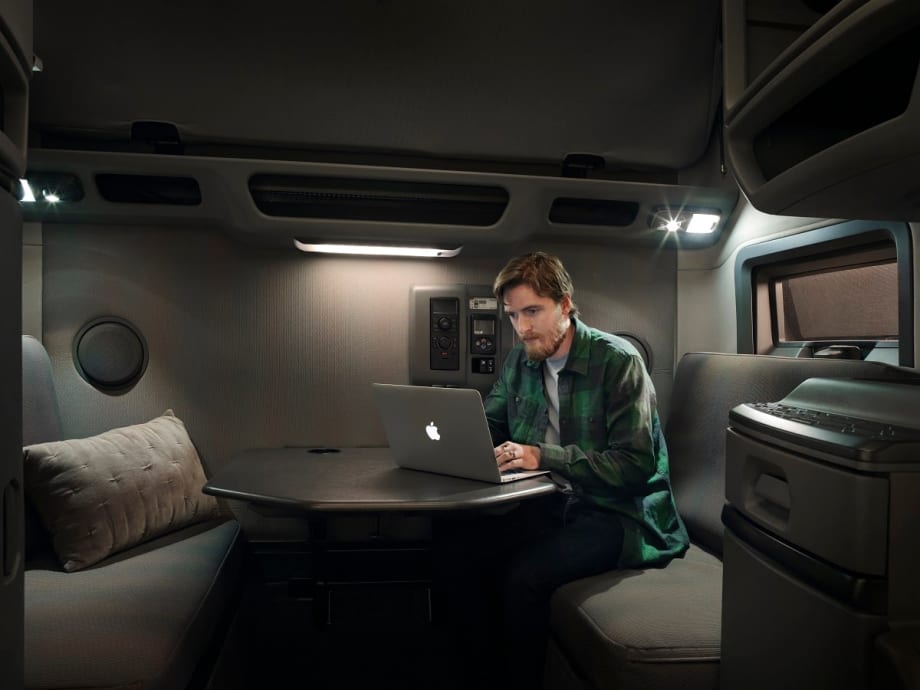
Driving a truck can be a lonely, stressful job. But no driver has to be completely isolated in the age of social media. Facebook, in particular, can be a powerful tool in making drivers feel like they’re part of a team and connected to family and friends even on the road.
Photo via Volvo Trucks
If used properly, social media is an excellent tool that fleets can use not only to communicate with drivers and potential drivers, but also leverage to boost their overall visibility in a crowded, competitive and dynamic industry.
A recent webinar hosted by Tom Robb, associate director of education for the Truckload Carriers Association, outlined the various ways social media platforms, particularly Facebook, can be used to attract new driving talent to fleets and retain current ones.
Perhaps the most powerful aspect of Facebook for fleets is its ability to take the edge off the isolation and loneliness many long-haul drivers and their families feel during extended periods away from home. Moreover, Facebook can create a sense of unity among drivers and their families, be a morale booster and offer much-needed advice — or even just a sympathetic ear — during stressful times.
According to webinar moderator Jane Jazrawy, CEO of CarriersEdge, which helps produce TCA’s Annual Best Fleets to Drive For program, many of the same strategies that help fleets recruit drivers on Facebook can be used to retain them after they’ve been hired.
These tactics can include pages with information on company initiatives, promotions, awards and other milestones that can foster a team philosophy and boost morale. Other posts can offer tips and help for managing money and heath and give relationship advice to help drivers and their families to adjust to and deal with the realities of life for long-haul truckers.
Melissa Nishan, vice president of driver recruiting, Epes Transportation noted that a good, general Facebook strategy for a fleet is to use it as a way to communicate and engage drivers. Don’t focus too much on trucks, business content and other “shop talk.” Bear in mind that drivers are human.
And like any person, being bombarded with a glut of work-related content after a grueling 8 to 10 hour day is unlikely to entice any tired employee. That’s why she stresses using Facebook in other ways, such as sharing news, oddball or humorous posts or interactive posts that encourage “likes,” commentary and online conversations.
But the most powerful ways that Facebook can help retain drivers often spring up organically, said Callie Heathscott, marketing director for Maverick Transportation. These often begin as closed, private groups, she noted.
“To begin with, don’t limit your company to just one, single, Facebook page or group,” she explained. “Your main Facebook page is a public site that is really like a full-blown online ad for your company. Your primary focus there should be on public relations or driver recruiting. But that may not be the best way to communicate more company and lifestyle specific information and related interactions with your driver force.”
Heathscott said Maverick has had great success with other, more specific Facebook pages that deal exclusively with driver-related topics. “Maverick Aces” is probably the most high-profile example of this approach — a Facebook page that tells stories about, honors and promotes the company’s safest and most fuel efficient drivers.
Other unique Maverick Facebook pages, such as Maverick Wellness, tackle specific issues, such as driver health, with articles, advice and encouraging online conversations on making healthy choices and staying active away from home.
Another popular Maverick Facebook destination is the “Driver Q&A” page where drivers can go to seek help, information and advice about aspects of their job they do not understand or need help dealing with.
Heathscott also mentioned the organic pages that spring up on their own. A prime example of this is the “Maverick Wives” Facebook page, which was started as a kind of online support and advice page for driver spouses who still have to manage a household, finances and raise children while their partner is away.
“That page was actually started by a driver’s wife who wanted to reach out to other spouses for help, to lend support and advice,” Heathscott said. “And we want to respect the boundaries of that group. It’s not an official Maverick page, per se, and while we support the group and make sure new drivers and their wives are aware of its existence and encourage them to join, we don’t attempt to monitor or direct the content or the conversations on that page.”
Kenneth Moore, a former driver who is now the fleet’s operations analyst, said that currently, Maverick is administering at least 12 different Facebook groups dealing with some aspect of driver safety, wellbeing, home life or just good, fun, stress relief.
“You still get negative posts on these pages,” he said. “Anyone can have a bad day. So we try not to get too involved as the fleet when those posts show up. We see these situations as good opportunities for other drivers to step up and defend us. So they turn into self-regulated groups and we’ve found that’s good for morale, too.”
Social media — Facebook in particular — is intended to encourage the free expression of ideas and conversation, Moore stressed. So Maverick’s policy is — in most cases — to not attempt to guide a conversation in one way or another.
“We see our role in these discussions as presenting fact-based information so we can give drivers direct answers to their questions and let them know what’s going on,” he said. “That has been a particularly useful approach with live Facebook sessions where we can take and answer questions in real time.”
The key to making Facebook an effective tool for retaining drivers, said Moore, is to always keep the human aspect in mind.
“Drivers don’t get a lot of personal connections outside of a telephone call when they’re away from home,” he said. “But using Facebook to provide a human aspect that helps them feel like they’re on a team, get answers to questions and stay informed, is a powerful way of keeping them connected, engaged and a valuable member of your team.”
More Drivers

Why Hiring Truck Drivers Is Getting Harder
Higher recruiting costs, a shrinking driver pool, and renewed pay competition are raising the stakes for fleets heading into 2027.
Read More →
Roehl Offers Truck Drivers $10,000 Retention Incentive
Payments begin after the first load and continue in mileage-based installments for eligible experienced drivers joining the fleet.
Read More →
Platform Science Adds Dispatch and Safety Tools
Four additions to PS Fleet help fleets monitor loads, manage driver coaching, share truck locations and adjust video system settings.
Read More →
When Language Stops the Truck: The Return of ELP Out-of-Service Orders
English language proficiency rules for commercial drivers aren’t new, but renewed out-of-service enforcement has raised the stakes. Here’s what carriers need to know before a driver reaches a roadside inspection.
Read More →
Samsara Launches Custom AI Agent Builder
Agent Studio lets fleets create AI tools for hours-of-service monitoring, reporting and driver support, including agents that communicate by phone.
Read More →
Trucker Path Expands Reserved Parking Network
Trucker Path has added close to 6,000 more truck parking spaces to its Trucker Path Reserved Parking Network with the addition of Safe Truck Parking.
Read More →
EEOC Sues Texas Trucking Company Over Driver Age Limits
The agency says Trancasa USA rejected applicants over 65 and applied tougher driving-record standards to those over 60.
Read More →
Nussbaum, Roehl Announce Second Driver Pay Increase This Year
This year has seen a swath of major truck driver pay increases as freight capacity has tightened.
Read More →
From One Generation to the Next: How Mentorship Builds Safer Truck Drivers
After three decades in trucking, Harold Perry shares what he's learned about driver safety, mentorship, and helping the next generation build confidence behind the wheel.
Read More →
Truck Drivers Need More Than Another Alert
Fleets have more visibility into truck health, safety events, and driver activity than ever. The next challenge is turning all that information into useful guidance for the person who has to decide what to do next.
Read More →